
A lead in outbound sales is a targeted prospect your sales team contacts proactively to initiate a business relationship, before that prospect has expressed any interest in your product. Unlike inbound leads, who find you through content or ads, outbound leads are identified by your team based on Ideal Customer Profile (ICP) fit and then approached directly. Sales development representatives (SDRs) own this process, using channels like cold calls, cold emails, and LinkedIn outreach to generate first contact. Understanding what is a lead in outbound sales is the foundation of any repeatable sales prospecting workflow and the starting point for pipeline control.
What is a lead in outbound sales, and how does it differ from other leads?
An outbound sales lead is any person or company your team has identified as a potential buyer and reached out to without a prior request. The company initiates contact based on ICP fit and strategic prospecting, not on any signal from the prospect. That distinction shapes everything: the messaging, the timing, and the sales approach.
Inbound leads arrive with built-in intent. They searched for a solution, read a blog post, or clicked an ad. Outbound leads, by contrast, haven't engaged before contact, so your first message must create interest and deliver a compelling value proposition fast. Outreach messages that work tend to be 75–125 words, focused on buyer pain points and ICP match.
The practical differences between outbound and inbound leads break down clearly:
- Origin: Outbound leads come from your prospecting list. Inbound leads come from marketing channels.
- Prospect awareness: Outbound prospects may not know your company exists. Inbound prospects have already shown curiosity.
- Sales control: Outbound reps control timing, targeting, and messaging. Inbound reps respond to prospect-driven timelines.
- Conversion rate: Outbound leads typically convert at lower initial rates than inbound leads, but they give you direct pipeline control.
- Outreach channels: Cold calls, cold emails, LinkedIn direct messages, and targeted paid campaigns are the primary outbound channels.
The lower initial conversion rate is not a flaw. It reflects the reality that outbound prospects start cold. The trade-off is speed and targeting precision: you choose exactly who to contact and when.
How do you qualify outbound leads effectively?

Lead qualification is where most outbound programs succeed or fail. 80% of new leads never convert to sales. That number tells you that chasing volume without a qualification filter wastes time and budget.
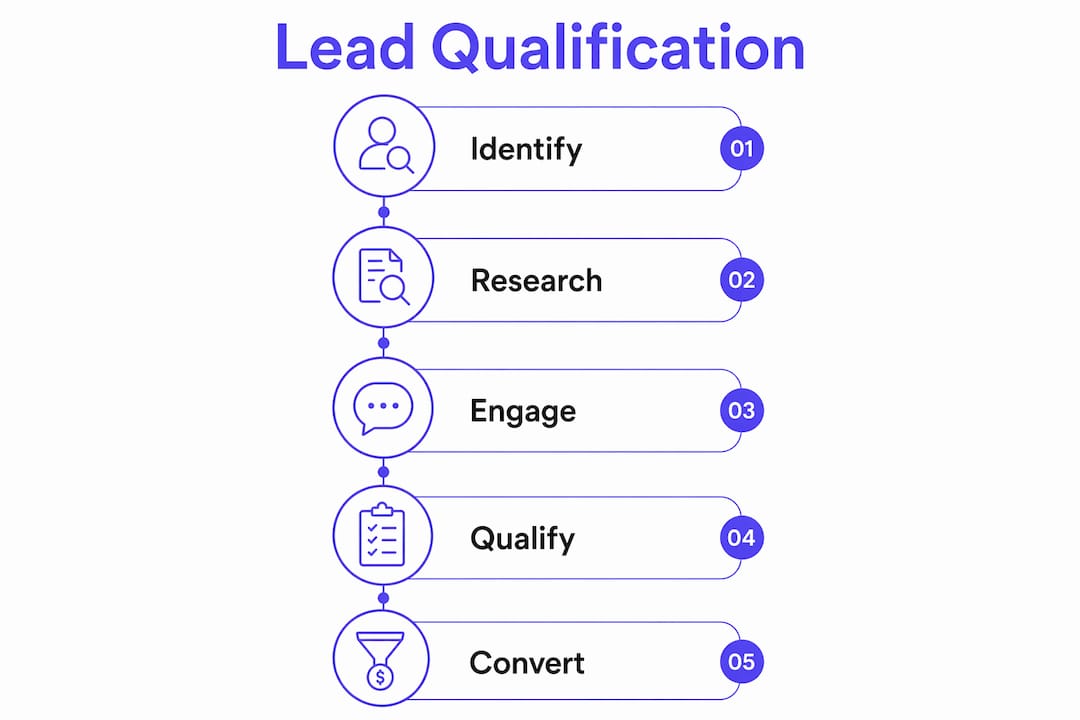
The most widely used qualification framework in outbound sales is BANT: Budget, Authority, Need, and Timing. A prospect qualifies when they have the budget to buy, the authority to decide, a real need your product addresses, and a timeline that matches your sales cycle. BANT is not a checklist you run through in one call. It is a set of signals you gather across multiple touchpoints.
Here is how to apply qualification systematically:
- Define your ICP before you prospect. Your Ideal Customer Profile specifies the company size, industry, job title, and pain points that predict a good fit. Prospecting without an ICP means you are qualifying randomly.
- Separate MQLs from SQLs. A Marketing Qualified Lead (MQL) meets demographic criteria. A Sales Qualified Lead (SQL) has shown buying signals or passed a BANT screen. Outbound teams often skip MQL status entirely and move directly to SQL qualification through discovery calls.
- Use BANT to prioritize, not to eliminate. A prospect who lacks budget today but has authority and need is worth a nurture sequence. A prospect who has none of the four criteria is not worth a second call.
- Track qualification outcomes by channel. Cold calls and cold emails produce different quality leads. Knowing which channel delivers more SQLs lets you allocate time where it pays off.
- Review your disqualification rate weekly. If you are disqualifying more than half your leads after the first call, your ICP definition or your list source needs adjustment.
BANT-qualified appointments produce 3X better conversion rates and 60% lower cost per customer compared to chasing MQL volume. That is the clearest argument for quality over quantity in outbound lead generation.
Pro Tip: Build a one-page ICP document that your entire team uses before pulling any prospect list. Include firmographic criteria (company size, industry, revenue), technographic signals (tools they use), and the specific pain points your product solves. Revisit it every quarter.
What are the best strategies for outbound lead generation?
Effective outbound lead generation uses multiple channels simultaneously: cold calls, cold emails, targeted social outreach, and paid campaigns tailored to your ICP. Single-channel outbound is fragile. Multi-channel outreach increases reach and keeps your message in front of prospects across the platforms they actually use.
The core outbound channels and their strengths:
- Cold calling: The fastest way to qualify a lead. A two-minute conversation reveals budget, authority, and need faster than any email thread. Use a high-volume cold calling approach with a structured script and clear disqualification criteria.
- Cold email: Scales well and works asynchronously. Effective cold emails are short, specific, and reference a real pain point tied to the prospect's industry or role.
- LinkedIn outreach: Best for reaching senior decision-makers who ignore cold calls. Connection requests with a personalized note outperform generic InMail.
- Paid campaigns: Targeted ads on LinkedIn or Google can warm up a prospect before your SDR makes contact, increasing response rates on cold outreach.
Personalization is the variable that separates high-performing outbound teams from average ones. Successful outbound teams create a "warm" outreach experience by using ICP data to make unsolicited contacts feel highly relevant. A cold email that references a prospect's recent funding round or a specific challenge in their industry performs far better than a generic pitch.
The volume-versus-personalization tension is real. Sending 200 generic emails a day produces fewer qualified conversations than sending 40 personalized ones. The math works in favor of personalization when you track outcomes by message type.
Pro Tip: Run a 30-day test: split your outreach list into a high-volume generic group and a smaller personalized group. Track SQL conversion by group. The data will tell you exactly where to invest your time.
How do outbound leads drive pipeline control and sales cycle management?
Outbound leads give sales teams something inbound leads cannot: the ability to choose who enters the pipeline and when. Outbound sales allows precise account targeting and pipeline predictability, which is especially valuable for early-stage and high-growth B2B companies that cannot wait for inbound demand to mature.
Outbound sales is uniquely effective for reaching specific named accounts and highly targeted prospects that inbound flows simply cannot reach. When your pipeline needs to grow within the current quarter, outbound is the only channel that delivers immediate control.
The trade-off between outbound and inbound is real and worth understanding clearly:
| Dimension | Outbound leads | Inbound leads |
|---|---|---|
| Pipeline speed | Fast. You build it now. | Slow. Demand builds over months. |
| Targeting control | High. You choose the accounts. | Low. Prospects self-select. |
| Initial conversion rate | Lower. Prospects start cold. | Higher. Prospects arrive with intent. |
| Cost per lead | Higher upfront. | Lower at scale. |
| Best use case | Specific accounts, fast growth, new markets. | Brand-driven, high-volume, long-term. |
Combining outbound with inbound creates a hybrid approach that balances fast pipeline building with long-term demand generation. Most mature sales organizations use outbound to close pipeline gaps while inbound builds brand and demand over time. The two are not competing strategies. They are complementary.
Pipeline visibility is what makes outbound sustainable. When you track every outbound lead from first contact through close, you can calculate your conversion rate at each stage and forecast revenue with confidence. Without that tracking, outbound becomes a guessing game.
Garrett's take: the outbound lead mistake most reps make
Most sales reps confuse outbound prospecting with outbound sales, and that confusion costs them. Outbound prospecting is the top-of-funnel work: identifying targets, making first contact, and booking a discovery call. That is the SDR's job. Outbound sales is the full cycle, from that first meeting through negotiation and close. Mixing the two means SDRs spend time closing instead of prospecting, and account executives spend time prospecting instead of closing.
The second mistake I see constantly is treating ICP as a one-time exercise. Teams build an ICP in Q1, ignore it by Q3, and wonder why their lead quality has dropped. Your ICP should be a living document. Every disqualified lead is a data point. Every closed deal is a signal. Review it quarterly and update it based on what is actually closing.
The reps who consistently hit quota are not the ones making the most calls. They are the ones who qualify fast, follow up on time, and track every outcome. A lead you forget to follow up on is a lead your competitor will close. Consistent follow-up practices are not optional in outbound. They are the difference between a pipeline and a list of names.
— Garrett
How Dialedsales helps you manage outbound leads
Tracking outbound leads manually means missed callbacks, forgotten follow-ups, and a pipeline you cannot trust.
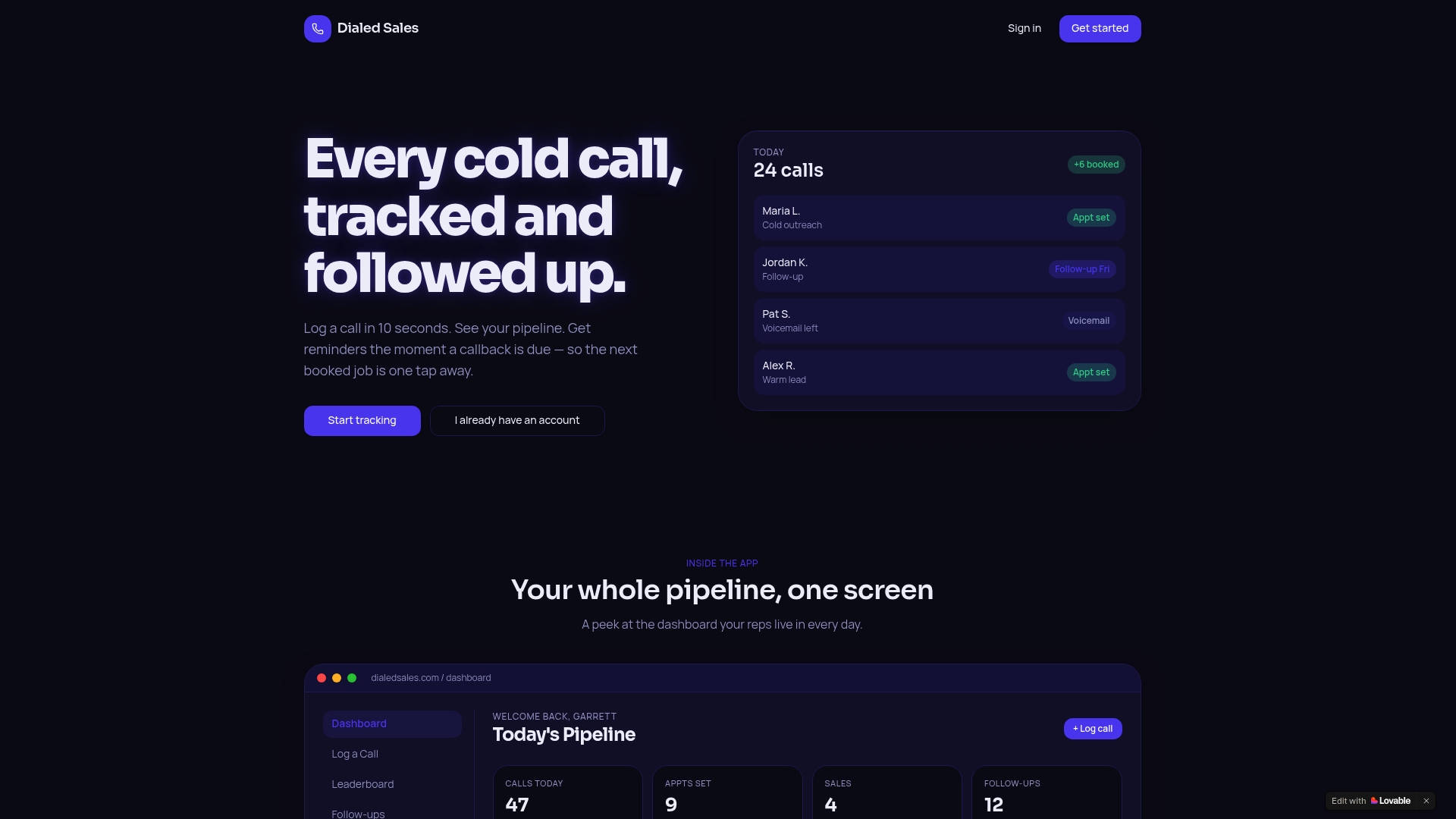
Dialedsales is a lightweight cold call tracking app built for sales reps and field teams across every sales-based industry. You log a call in 10 seconds, record the outcome and notes, and set a follow-up date that surfaces automatically on your dashboard when it is due. Every call outcome feeds into your close rate tracking, so you can see exactly where leads are dropping and fix it. If you are serious about outbound lead management, Dialedsales gives you the structure to turn a cold prospect list into a predictable pipeline.
FAQ
What is an outbound sales lead?
An outbound sales lead is a prospect your sales team identifies and contacts proactively, before the prospect has expressed interest in your product or service. Contact is initiated by the company based on ICP fit, not by the prospect.
How is an outbound lead different from an inbound lead?
Outbound leads are sourced and contacted by your team. Inbound leads come to you through marketing channels after showing interest. Outbound leads typically convert at lower initial rates but give your team direct control over pipeline timing and targeting.
What is the best framework for qualifying outbound leads?
BANT (Budget, Authority, Need, Timing) is the most widely used qualification framework for outbound leads. Teams that shift from MQL volume to BANT-qualified appointments see significantly better conversion rates and lower customer acquisition costs.
What channels work best for outbound lead generation?
Cold calls, cold emails, LinkedIn outreach, and targeted paid campaigns are the primary outbound channels. Multi-channel outreach outperforms single-channel approaches by keeping your message in front of prospects across multiple touchpoints.
Why do early-stage companies rely on outbound leads?
Early-stage B2B companies use outbound sales to build a predictable, controlled pipeline before inbound demand matures. Outbound allows precise account targeting and delivers faster pipeline results than content or brand-driven inbound strategies.
Key takeaways
An outbound sales lead is a proactively sourced prospect, and qualifying those leads with BANT and a defined ICP is what separates a productive pipeline from a wasted call list.
| Point | Details |
|---|---|
| Outbound lead definition | A prospect your team contacts first, before they show any interest, based on ICP fit. |
| Qualification over volume | 80% of leads never convert; BANT qualification cuts waste and raises close rates. |
| Multi-channel outreach | Cold calls, emails, and LinkedIn together outperform any single outbound channel. |
| Pipeline control advantage | Outbound lets you choose who enters your pipeline and when, unlike inbound. |
| Tracking drives improvement | Logging every call outcome reveals where leads drop and where follow-up pays off. |