
Cold calling high volume prospects is the practice of systematically reaching large numbers of potential customers through targeted, efficient outreach designed to maximize connection rates and booked meetings. The industry term for this discipline is high volume prospecting, and the gap between average and top-performing teams is striking. Top-performing teams achieve 6%–11% meeting booking rates by prioritizing Ideal Customer Profile precision over raw dial count. Teams dialing 120–150 numbers daily with an 8% connect rate and a 50%+ grant rate book roughly one to two meetings per rep per day. That math only works when your list, your tools, and your cadence are all pulling in the same direction.
What tools and technologies amplify cold calling high volume prospects?
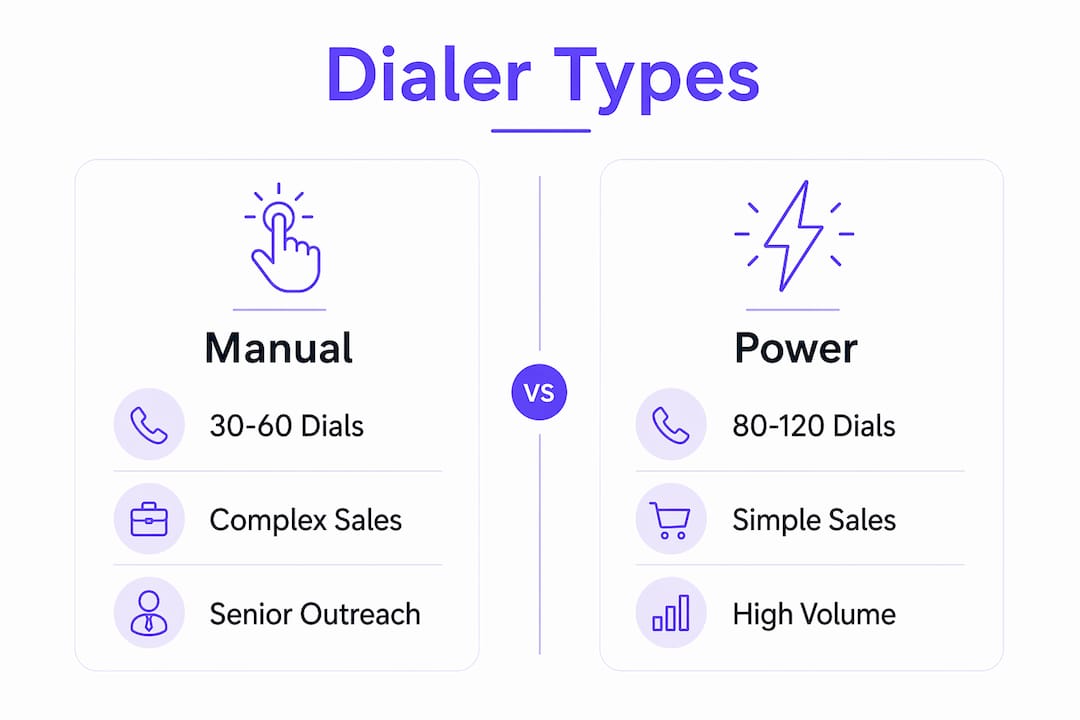
The dialer you choose sets the ceiling on your daily output. Manual dialers yield 30–60 dials per hour, power dialers reach 60–120, and parallel dialers push 200–400 or more. That difference is not incremental. It is the difference between a rep who books one meeting a week and one who books one a day.

Comparing dialer types by output and fit
| Dialer type | Dials per hour | Best fit |
|---|---|---|
| Manual | 30–60 | Senior account outreach, complex sales |
| Power | 60–120 | Mid-market prospecting, warm lists |
| Parallel | 200–400+ | Top-of-funnel SMB, high-volume campaigns |
Parallel dialers come with trade-offs. They introduce brief bridge delays and carry regulatory compliance nuances, so they suit top-of-funnel SMB outreach far better than senior executive engagement. Use them to qualify fast, then hand warm prospects to a human rep for discovery.
AI cold calling agents add another layer of scale. AI agents cost $11–$35 per appointment versus $147–$310 for human SDRs, and they scale outreach volume by 10–15x. The catch is that AI handles initial qualification well but fails at complex closing. The AI-human hybrid model solves this: automate the top of the funnel, then pass qualified leads to human reps for trust-building and close.
Caller ID management is the most overlooked lever in high volume prospecting. Rotating local-matching numbers can triple connection rates by avoiding spam flags and carrier blocks. A brilliant script means nothing if the call never connects.
Pro Tip: Audit your caller ID reputation monthly using a carrier lookup tool. A number flagged as "Spam Likely" kills your connect rate regardless of dial speed or list quality.
One more tool that separates high performers: a cold call tracking app that logs outcomes in real time. When you can see your connect rate, grant rate, and meeting conversion in one place, you know exactly where to fix the funnel.
How to define and source an ICP for targeted high volume calling
ICP precision and list quality drive better B2B cold calling outcomes than dialing speed or sheer volume. That is the single most important insight in high volume prospecting, and most teams ignore it. They buy a broad list, dial everyone on it, and wonder why their connect-to-meeting rate is flat.
A well-defined Ideal Customer Profile includes four parameters:
- Industry and company size: Target segments where your solution has proven ROI, not every business in a zip code.
- Geography: Local-matching numbers work best when your prospect list is geographically clustered.
- Role and seniority: Decision-makers answer calls differently than gatekeepers. Know who you are calling before you dial.
- Trigger events: Recent funding rounds, new hires, or company expansions signal buying intent. Lists built around triggers convert at a higher rate than static databases.
The difference between a well-targeted list and a marginal-fit list is dramatic. Teams using precise ICPs book meetings at 5–10 times the rate of teams prospecting marginal-fit contacts. That multiplier makes list quality the highest-leverage investment in your entire outreach operation.
Phone-verified lists are non-negotiable for high volume campaigns. Unverified data wastes dial capacity on disconnected numbers and inflates your daily call count without improving your meeting count. Source lists from providers that verify numbers within 30 days of delivery, and refresh your data quarterly. A clean list of 500 contacts outperforms a dirty list of 5,000 every time.
Pro Tip: Build a "trigger event" segment in your CRM for prospects who just changed jobs or received funding. These contacts are 3–4 times more likely to take a meeting than cold contacts with no recent activity.
What is the best cadence for maximizing prospect engagement?
Persistence is the most underused asset in high volume prospecting. 93% of successful conversions happen on or after the 6th contact attempt. Most reps quit after two tries. That gap is where meetings are lost.
A structured multi-touch cadence over 21 days looks like this:
- Day 1: Cold call plus a same-day email referencing the call attempt.
- Day 3: Second call attempt, voicemail if no answer, LinkedIn connection request.
- Day 7: Third call, follow-up email with a specific value point relevant to their industry.
- Day 14: Fourth call, LinkedIn message referencing a piece of their content or a company announcement.
- Day 18: Fifth call and email with a direct ask for a 15-minute call.
- Day 21: Final call and a "breakup" email that leaves the door open.
Combining calls with email and LinkedIn in a coordinated sequence turns wary prospects into engaged ones. Each channel reinforces the others. A prospect who ignores a call may respond to a LinkedIn message that references it.
Timing matters more than most reps realize. Tuesday through Thursday between 8:00 AM and 10:00 AM, and again between 4:00 PM and 6:00 PM, consistently produce higher connect rates across B2B industries. Avoid Monday mornings and Friday afternoons. Prospects are either catching up or mentally checked out.
Your opening script determines whether the conversation continues. Permission-based openers increase conversation rates by 50–70%. An opener like "Do you have 27 seconds?" disarms defensiveness immediately. It signals respect for the prospect's time and creates a micro-commitment that keeps them on the line. Pair it with a one-sentence value statement tied to a specific pain point in their industry.
Pro Tip: Keep your opening under 15 seconds. State who you are, ask for 27 seconds, and deliver one specific benefit. Anything longer triggers the "sales call" mental filter and ends the conversation.
How to troubleshoot and optimize your high-volume cold calling results
Tracking the right metrics separates reps who improve from reps who just dial more. The three numbers that matter most are connect rate, grant rate, and meeting conversion rate.
- Connect rate: The percentage of dials that result in a live conversation. Target 5%–9% for a well-managed list.
- Grant rate: The percentage of connected calls where the prospect agrees to keep talking. A rate above 50% signals a strong opener and good list fit.
- Meeting conversion rate: The percentage of granted conversations that end with a booked meeting. Top reps hit 12% or higher.
If your connect rate is below 5%, the problem is your caller ID or your list quality. If your grant rate is below 30%, your opener is failing. If your meeting conversion is low but your grant rate is solid, your pitch or qualification questions need work. Each metric points to a different fix.
"The first 8–30 seconds determine 80% of the call outcome. Reps who treat every call as the start of a relationship, not a performance pitch, consistently outperform those who treat it as a numbers game."
Caller ID reputation deserves its own monitoring process. Carriers flag numbers that generate too many short calls or unanswered callbacks. Rotate your numbers regularly and manage your call reputation to avoid being blocked before the prospect even hears your voice.
Rep burnout and lead fatigue are real performance killers in high volume environments. Build structured re-engagement cooldowns into your cadence. If a prospect has gone through a full 21-day sequence without responding, remove them from active rotation for 60 days before re-engaging. This preserves pipeline longevity and keeps reps from burning through their best leads too fast. A well-structured follow-up process is what separates a sustainable outreach operation from one that exhausts itself in 90 days.
Key Takeaways
High volume cold calling succeeds when ICP precision, dialer technology, multi-touch cadences, and real-time metric tracking work together as a single system.
| Point | Details |
|---|---|
| ICP precision beats volume | Teams with exact ICPs book meetings at 5–10 times the rate of marginal-fit prospecting teams. |
| Dialer choice sets your ceiling | Parallel dialers reach 200–400+ dials per hour, far outpacing manual or power options for top-of-funnel work. |
| Persistence drives conversions | 93% of successful conversions happen on or after the 6th contact attempt; most reps quit after two. |
| Caller ID management is critical | Rotating local-matching numbers can triple connection rates by avoiding spam flags and carrier blocks. |
| Track three core metrics | Connect rate, grant rate, and meeting conversion each point to a different bottleneck in your funnel. |
Why volume without precision is just noise
I have worked with high-volume outreach teams across multiple industries, and the pattern is always the same. The reps who dial the most are rarely the ones who book the most meetings. The reps who book the most have two things locked in: a tight ICP and a disciplined cadence.
The biggest mistake I see is treating high volume prospecting as a brute-force activity. Teams buy a 10,000-contact list, set up a parallel dialer, and expect the math to work itself out. It does not. Volume amplifies whatever is already in your process. If your list is weak, you just reach more wrong people faster.
What actually works is building a smaller, cleaner list of 300–500 contacts who match your ICP precisely, then running a full 21-day multi-touch sequence on every single one of them. That approach feels slower at first. The results are not. I have seen teams cut their list size by 60% and double their meeting count in the same month.
The future of this discipline is AI handling the first two or three touches, with human reps stepping in the moment a prospect shows real interest. That handoff, done well, is where the meeting gets booked. The technology is ready. The teams that figure out the handoff protocol first will have a significant edge in 2026 and beyond.
— Garrett
How Dialedsales fits into a high-volume outreach operation
Running 120–150 dials a day across a multi-touch cadence generates a lot of data. Knowing which prospects need a callback today, which ones are mid-sequence, and which ones just booked a meeting is the operational backbone of any serious outreach effort.
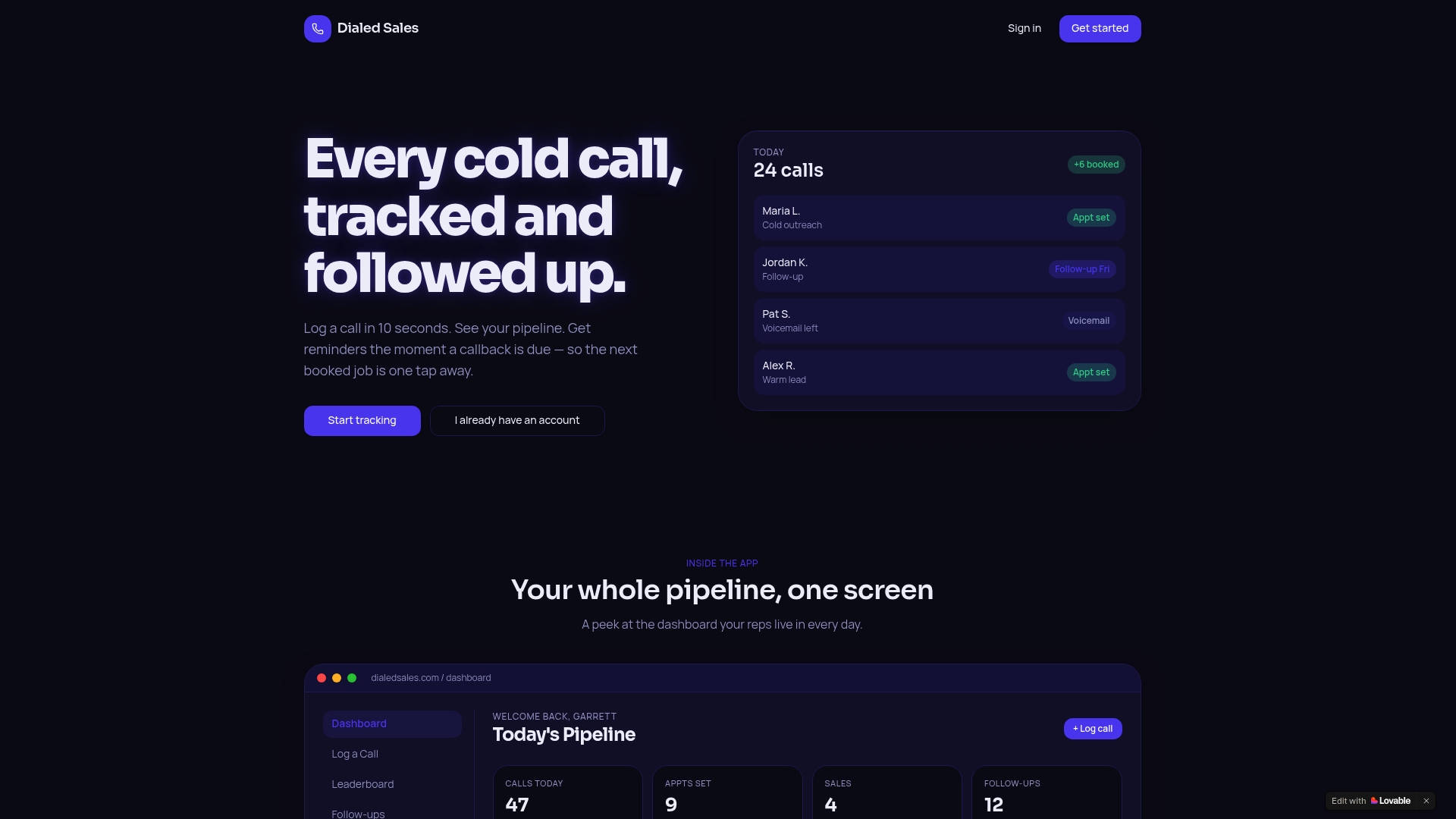
Dialedsales is built for exactly this workflow. Log a call in 10 seconds, set a follow-up date, and let the dashboard surface callbacks the moment they are due. Every outcome is tracked, so your close rate data builds automatically as you work. Sales reps in field teams and inside sales roles across every industry use Dialedsales to keep their pipeline visible without the overhead of a full CRM. If you are running high-volume prospecting and losing track of who needs a callback, Dialedsales solves that problem directly.
FAQ
What is a good connect rate for high-volume cold calling?
A connect rate of 5%–9% is the target for a well-managed list with proper caller ID rotation. Rates below 5% typically signal a caller ID reputation problem or poor list quality.
How many times should you call a prospect before giving up?
93% of conversions happen on or after the 6th contact attempt. Run a full 21-day, 6-touch sequence before removing a prospect from active outreach.
What is the best time to make cold calls?
Tuesday through Thursday between 8:00 AM and 10:00 AM, and again between 4:00 PM and 6:00 PM, consistently produce the highest connect rates in B2B cold calling.
Do permission-based openers actually improve results?
Yes. Permission-based openers boost conversation rates by 50–70% by reducing prospect defensiveness. Asking for 27 seconds creates a micro-commitment that keeps prospects engaged long enough to hear your value statement.
How does an ICP improve high-volume prospecting outcomes?
A precise ICP filters out marginal-fit contacts before you dial, which means every call has a higher baseline probability of converting. Teams with exact ICPs book meetings at 5–10 times the rate of teams using broad, unfiltered lists.