
Sales coaching using call outcomes is the most direct method for converting raw call data into measurable behavior change on your sales team. Rather than coaching from gut feel or quota numbers alone, outcome-driven coaching ties every session to specific, recorded evidence. AI call scoring now processes calls in under five minutes, giving coaches accurate, repeatable data before each session. The result is faster skill development, higher appointment ask rates, and a team that improves week over week instead of plateauing.
What tools and metrics are essential for sales coaching using call outcomes?
Call outcome analysis starts with the right metrics. The four most coachable call-level metrics are talk-to-listen ratio, objection handling score, discovery question rate, and appointment ask rate. These metrics reveal behavior patterns that quota numbers never show. Coaching to call-level metrics leads outcome metrics by 60–90 days, which means you can spot and fix a problem long before it shows up as a missed quota.
AI call scoring is the engine behind this approach. AI-driven call classification reaches roughly 95% accuracy, with manual overrides needed on fewer than 5% of calls. That level of precision means coaches spend time on interpretation and conversation, not on manually scrubbing through recordings. The data is ready before the rep walks into the room.

Understanding how each metric connects to behavior is what separates good coaches from average managers. A low talk-to-listen ratio tells you the rep is dominating the conversation. A weak discovery question rate tells you the rep is pitching before qualifying. Each metric points to one specific behavior to fix.
| Call Metric | What It Reveals | Coaching Priority |
|---|---|---|
| Talk-to-listen ratio | Rep dominance vs. prospect engagement | High |
| Objection handling score | Ability to address resistance without losing the call | High |
| Discovery question rate | Depth of qualification before pitching | Medium |
| Appointment ask rate | Confidence in closing for next step | High |
| Call outcome classification | Overall call result accuracy and trend | Medium |
Pro Tip: Track one metric per rep per week. Coaching five metrics at once produces zero improvement on any of them.
How to conduct a sales coaching session based on call outcomes
Preparation is the single biggest lever in coaching effectiveness. Reviewing AI call scoring data for ten minutes before a session triples its impact. Pull the rep's scores for the week, select one call they handled well and one where a key behavior broke down, and walk in with a clear focus area. A session without prep is just a conversation.
The session itself follows a proven structure. Open by playing the win call first. Starting with a successful call builds psychological safety and makes the rep far more receptive to feedback on the coaching call that follows. This "win-first" rule is not a nicety. It is the difference between a rep who defends their behavior and one who genuinely reflects on it.
After the win call, play a short segment from the coaching call and ask questions instead of telling. Question-led coaching produces more lasting behavior change than directive feedback because the rep owns the insight. Ask: "What did you hear yourself doing there?" or "What would you change on the next call?" The rep's answer tells you how self-aware they are and where to focus.
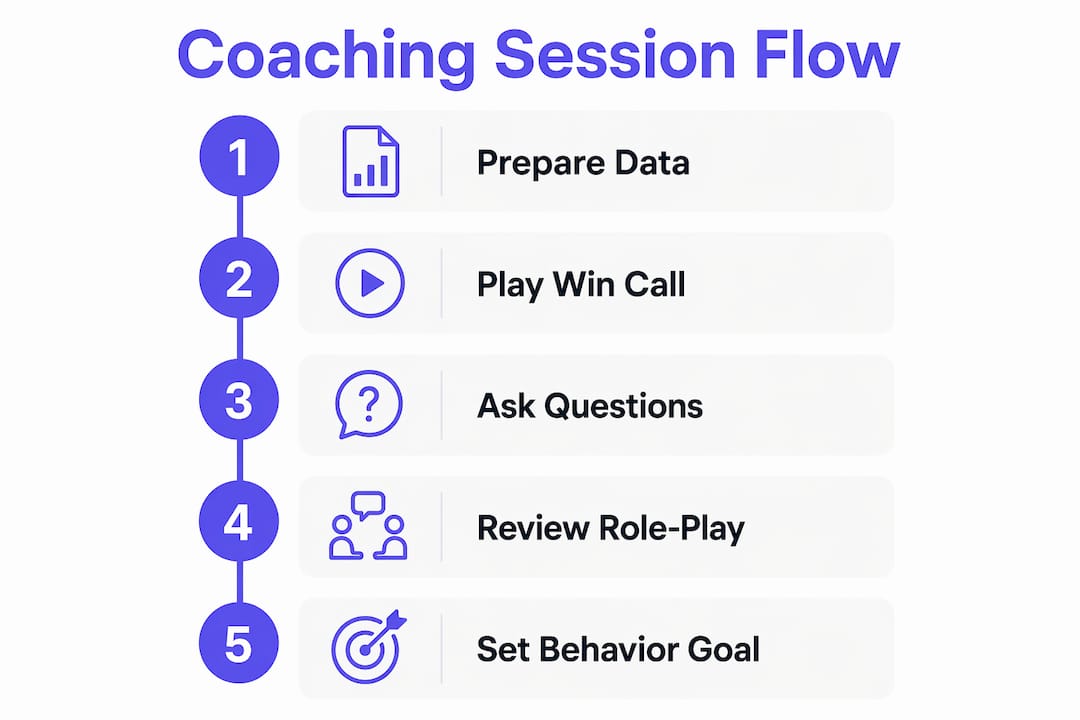
The session should run 12–15 minutes and cover two to three specific calls. Weekly 1-on-1 coaching using scored call data improves appointment ask rates by 15–25% within 30 days. That result comes from consistency, not from marathon sessions.
Step-by-step session structure
- Pull AI call scores and select one win call and one coaching call (10 minutes before the session).
- Open the session by playing 60–90 seconds of the win call.
- Ask the rep what they did well. Let them name it.
- Play 60–90 seconds of the coaching call segment that shows the target behavior.
- Ask the rep what they hear and what they would change.
- Agree on one specific behavior to work on for the next week.
- Document the focus behavior and set a checkpoint for the following session.
Pro Tip: Record a short video role-play mid-week where the rep practices the target behavior. Reviewing it together at the next session accelerates habit formation faster than verbal feedback alone.
Common pitfalls in sales coaching using call outcomes
The most common mistake coaches make is trying to fix everything at once. Coaching one behavior at a time over 8–12 weeks produces better results than scattering attention across five skills in a single session. Cognitive overload kills progress. When a rep leaves a session with three things to fix, they typically fix none of them.
A second major error is confusing coaching with managing. Sales coaching is distinct from sales management and training. Management focuses on quota outcomes. Training delivers new knowledge. Coaching changes behavior through repeated, evidence-based feedback tied to real calls. Mixing all three in one session leaves the rep unclear on what they are supposed to do differently.
Common mistakes and how to correct them:
- Coaching too many skills at once. Fix: pick one behavior per rep per coaching cycle and hold the line.
- Skipping the win call. Fix: always open with a call the rep handled well before reviewing a miss.
- Telling instead of asking. Fix: use the GROW framework (Goal, Reality, Options, Will) to guide reps to their own answers.
- Coaching monthly instead of weekly. Fix: weekly shorter sessions outperform monthly longer ones for behavior retention.
- Using vague feedback. Fix: tie every observation to a specific call timestamp and metric score.
- Ignoring psychological safety. Fix: build trust by celebrating wins publicly and keeping coaching conversations private.
Cadence matters more than most coaches realize. Weekly sessions keep the target behavior top of mind and prevent learning decay. A monthly session, no matter how thorough, gives the rep three weeks to revert to old habits before the next checkpoint.
How does AI improve coaching effectiveness with call outcome analysis?
AI reduces the manual work of call review from hours to minutes. A coach managing a team of eight reps would previously spend a full day listening to calls before each round of sessions. With AI transcription and call outcome classification, that same review takes under an hour. The time savings directly increase how often coaches can run sessions.
AI also surfaces patterns that humans miss. A single call review tells you what happened on that call. AI aggregated across 50 calls tells you that a specific rep asks discovery questions on only 30% of calls, but only when speaking to decision-makers. That level of pattern recognition changes the coaching conversation entirely.
The limits of AI are real and worth naming. AI scores behavior. It does not understand motivation, confidence, or the personal context a rep brings to a call. Human coaching interpretation remains the deciding factor in whether a rep acts on feedback or dismisses it. AI gives you the data. You supply the judgment and the relationship.
| Coaching Method | Call Review Time | Pattern Detection | Behavior Targeting |
|---|---|---|---|
| Traditional (manual review) | 3–5 hours per week | Limited to reviewed calls | Based on memory and notes |
| AI-enabled coaching | Under 1 hour per week | Aggregated across all calls | Tied to scored metrics and trends |
Tools that support data-driven sales decisions give coaches dashboards that show metric trends over time, not just snapshots. That longitudinal view is what lets you confirm a behavior has actually changed, rather than improved on one call and regressed on the next.
Key Takeaways
Sales coaching using call outcomes works because it ties every session to specific, scored evidence rather than memory or quota results.
| Point | Details |
|---|---|
| Coach call-level metrics first | Talk-to-listen ratio and objection handling scores predict quota results 60–90 days in advance. |
| Prepare before every session | Ten minutes reviewing AI call scores before a session triples its effectiveness. |
| Use the win-first rule | Opening with a successful call builds psychological safety and increases receptivity to feedback. |
| One behavior per cycle | Coaching a single skill over 8–12 weeks outperforms coaching multiple behaviors at once. |
| Weekly cadence beats monthly | Shorter, weekly sessions drive better behavior retention than longer, infrequent ones. |
What I've learned from coaching reps on call data
The biggest shift I made as a coach was stopping the habit of walking into sessions with a list of things to fix. I used to come in with four or five observations from the week's calls, and I would work through all of them. Reps nodded, said the right things, and then called exactly the same way the following week. Nothing changed.
When I committed to one behavior per rep per cycle, the results were immediate. A rep who had been struggling with her appointment ask rate went from asking for the next step on roughly a third of her calls to asking on nearly every call, within six weeks. The only thing that changed was that we stopped talking about everything else and focused entirely on that one moment at the end of the call.
The question-led approach took me longer to trust. Telling feels faster. But asking "what did you hear yourself doing there?" produces something telling never does: the rep's own recognition of the problem. When they name it, they own it. When you name it, they defend against it.
I also underestimated how much cadence matters. Moving from monthly sessions to weekly ones felt like a big time commitment. The reality is that a 12-minute weekly session is far more effective than a 45-minute monthly one. The rep never has more than a week to drift before you reset the focus. Learning decay is real, and weekly check-ins are the only reliable way to fight it.
The cold call follow-up discipline that comes from tracking outcomes consistently is what makes coaching sustainable. When reps see their own data improving week over week, they stop needing you to motivate them. The numbers do it.
— Garrett
How Dialedsales supports your call outcome coaching workflow
Dialedsales is built for sales reps and field teams who need clean, fast call tracking without the overhead of a full CRM. Log a call in 10 seconds, capture the outcome and notes, and set a follow-up date that surfaces automatically when it is due.
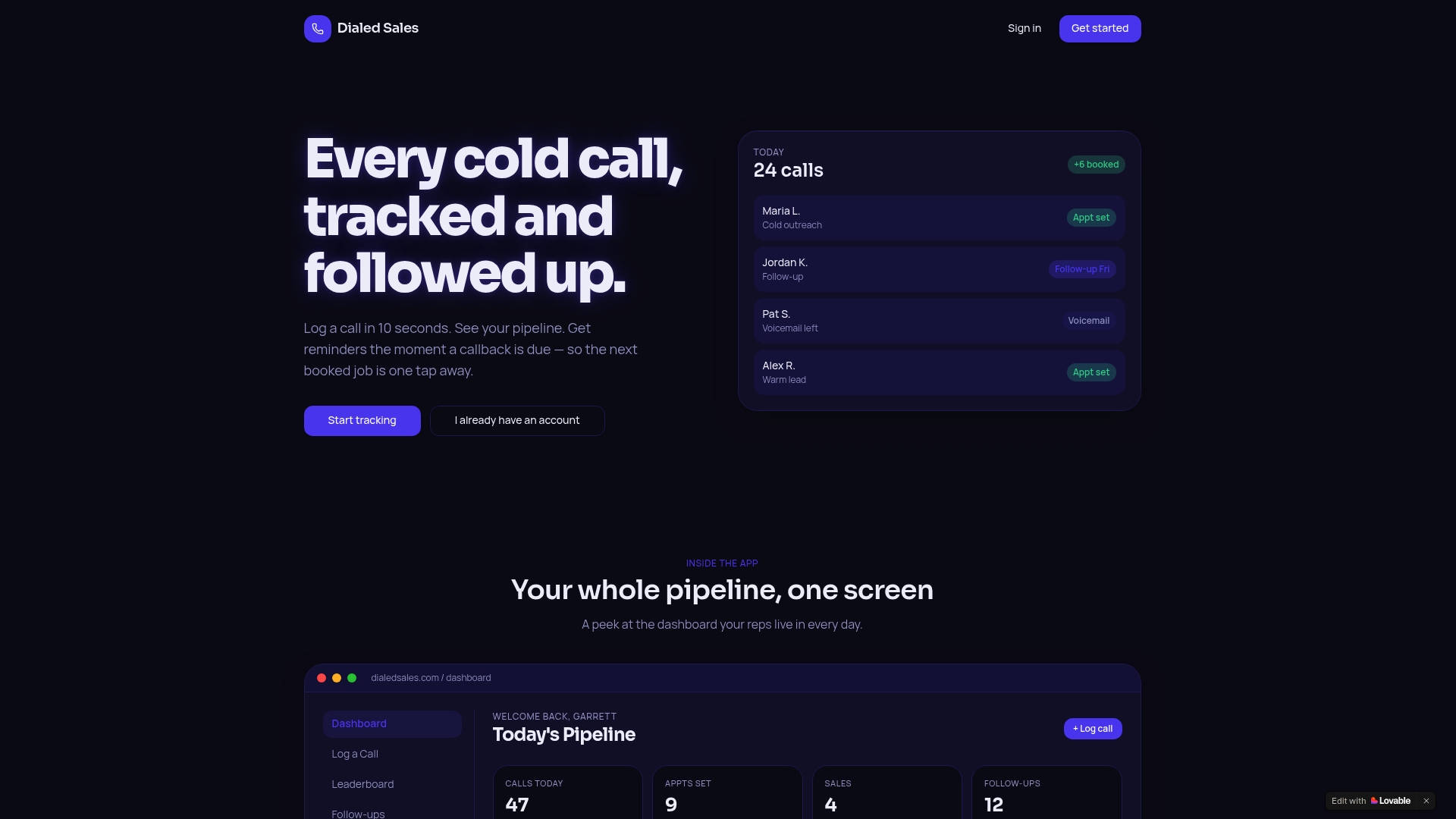
For coaches, that logged outcome data becomes the foundation of every weekly session. You can see which reps are generating callbacks, which calls are ending without a clear next step, and where the pipeline is stalling. The Dialedsales call tracker gives you the outcome visibility you need to run focused, evidence-based coaching sessions without spending hours digging through spreadsheets. If your team is making calls, you should be tracking every result and coaching from that data.
FAQ
What is sales coaching using call outcomes?
Sales coaching using call outcomes is a behavior-focused coaching method that uses recorded call data and scored metrics to identify specific skills to improve. It replaces opinion-based feedback with evidence tied to real calls.
How often should sales coaching sessions happen?
Weekly sessions outperform monthly ones for behavior retention. Sessions of 12–15 minutes using two to three scored calls are the standard format for consistent improvement.
What call metrics matter most for coaching?
Talk-to-listen ratio, objection handling score, discovery question rate, and appointment ask rate are the four metrics that most directly reveal coachable behaviors. These metrics lead quota results by 60–90 days.
How accurate is AI call scoring for coaching purposes?
AI-driven call classification reaches roughly 95% accuracy. Manual overrides are needed on fewer than 5% of calls, typically due to ambiguous call outcomes rather than AI error.
What is the "one call, one skill" coaching principle?
The "one call, one skill" principle means focusing every coaching cycle on a single behavior for 8–12 weeks. This approach avoids cognitive overload and produces faster, more durable skill improvement than coaching multiple behaviors at once.