
Cold call follow-up best practices define the difference between a forgotten conversation and a booked meeting. The standard industry term for this process is sales follow-up cadence, and mastering it is the single most reliable way to convert cold outreach into revenue. Delaying follow-up to the next morning can reduce reply rates by up to 11%. That number tells you everything: speed, personalization, and a clear next step are not optional extras. They are the foundation of every conversion.
1. Why timing your follow-up within two hours matters
Speed is the most underrated variable in the cold call follow-up process. Sending a follow-up within two hours of a cold call increases engagement significantly compared to waiting until the next day. The reason is simple: your prospect's memory of the conversation is sharpest right after it ends.
Mindshare fades fast. A prospect who felt genuine interest during your call will have moved on to three other priorities by the following morning. Reaching them while the conversation is still fresh keeps your name at the top of their mental stack.

The two-hour rule also signals professionalism. A rep who follows up quickly communicates that they are organized, serious, and worth a second conversation. That impression compounds over time.
Pro Tip: Set a phone alarm or use a tool like Dialedsales to trigger a follow-up reminder the moment you hang up. Logging the call takes 10 seconds, and the reminder surfaces automatically when it's due.
2. How to craft personalized, value-driven follow-up messages
Generic follow-ups get deleted. The most effective messages reference something specific from the call, deliver on any promise you made, and end with one clear ask.
A strong follow-up email structure looks like this:
- Subject line: Include the prospect's company name and the key topic you discussed. Personalized subject lines that are short and specific drive higher open rates than vague ones.
- Opening line: Name the exact pain point or goal the prospect mentioned. "You mentioned that your team is losing time on manual data entry" beats "Hope this email finds you well" every time.
- Value delivery: Attach the resource, case study, or insight you promised during the call. If you promised nothing, share one relevant piece of information that directly addresses their challenge.
- Single call to action: Ask for one thing only. A single clear CTA roughly doubles reply rates compared to messages that ask the prospect to do multiple things.
- Closing line: Confirm the next step you agreed on, or propose a specific time for a follow-up call.
Decision fatigue is real. When a prospect reads your message and sees two or three different asks, they often choose none of them. One ask removes that friction entirely.
Pro Tip: Write your follow-up email in a note app immediately after the call, while the details are still fresh. Send it within the two-hour window, not after you've finished your next three calls.
3. Building a structured, multi-touch follow-up sequence
A single follow-up rarely closes a deal. The cold call follow-up process works best as a multi-touch sequence that combines calls, emails, and social channels over several weeks.
A proven cadence structure looks like this:
- Day 1 (within 2 hours): Send a personalized follow-up email referencing the call.
- Day 3: Connect on LinkedIn with a short, relevant note. No pitch.
- Day 7: Send a second email with a new piece of value, such as a relevant case study or industry insight.
- Day 14: Make a second call. Reference your previous email and ask a direct question.
- Day 21: Send a third email with social proof, such as a client result relevant to their industry.
- Day 28: Send a gentle breakup email. Give the prospect an easy out while leaving the door open.
Typical effective sequences use a 3-7-7 day cadence with different message types at each touchpoint. Varying the channel prevents your outreach from feeling like a flood of identical emails.
Timing within the day matters too. Tuesday, Wednesday, and Thursday mornings produce higher engagement because prospects are settled into their week but not yet mentally checking out for the weekend. Avoid Monday mornings and Friday afternoons. Those windows are where emails go to die.
Pro Tip: Map your sequence in a spreadsheet or a call tracker before you start. Knowing exactly what you will send on day 7 means you never stall out mid-sequence wondering what to say next.
4. The role of consistency in sales outreach
Consistency is what separates reps who close from reps who almost close. Most effective B2B cold email campaigns average 5–6 total emails across the full sequence. That means most deals require sustained effort, not a single brilliant message.
The reps who give up after two touchpoints leave the majority of their pipeline untouched. Prospects are busy. A non-reply is almost never a hard no. It is usually a "not right now" or "I haven't had time."
Consistency also builds familiarity. Each touchpoint adds a small layer of recognition. By the time a prospect is ready to buy, the rep who showed up repeatedly and delivered value at each step is the one they call back.
5. Why cold call notes matter for every follow-up
Notes taken immediately after a call are the raw material for every personalized follow-up you send. Without them, you are guessing at what the prospect said, and prospects notice when you get it wrong.
Effective cold call note-taking captures four things: the prospect's stated pain point, any objection they raised, the specific next step you agreed on, and any personal detail that came up naturally. That last category, a mention of a conference they're attending or a product launch they're preparing for, is often the most powerful detail to reference in a follow-up.
Logging calls and automating reminders in a CRM or call tracker ensures no follow-up opportunity gets missed. Dialedsales is built exactly for this: log the call with the outcome and notes, set a follow-up date, and the dashboard surfaces it automatically when it's due.
6. Using micro-commitments to set up stronger follow-ups
The purpose of a cold call is not to close a deal. The purpose is to gain a micro-commitment, a small agreement that justifies the follow-up. That micro-commitment is what your follow-up then transforms into a calendar event.
A micro-commitment can be as simple as "Can I send you a quick overview of how we solved this for a similar company?" or "Would it be worth a 15-minute call next week to dig into this?" Both create a reason for the follow-up that the prospect has already agreed to.
When you reference that agreement in your follow-up, you are not cold anymore. You are following through on something the prospect said yes to. That shift in framing changes the entire dynamic of the conversation.
7. Common pitfalls that kill follow-up effectiveness
Most follow-up failures come from a short list of repeatable mistakes.
- Waiting too long: Anything beyond 24 hours after a cold call is a missed window. The two-hour rule exists for a reason.
- Sending generic messages: "Just checking in" is the fastest way to get ignored. Every message needs a specific reference to the prospect's situation.
- Stacking multiple CTAs: One ask per message. Always.
- Giving up too early: Most reps stop after two or three touchpoints. The data on B2B sequences shows that deals often close on the fifth or sixth contact.
- Ignoring channel variation: Sending five emails in a row is not a sequence. Mixing calls, emails, and LinkedIn creates a more natural and less intrusive pattern.
- Skipping the breakup email: A well-written breakup email often generates replies from prospects who went silent. It gives them permission to say no, and that clarity sometimes prompts a yes instead.
The conversion rate impact of fixing these mistakes is significant. Reps who follow a structured cadence consistently outperform those who follow up ad hoc.
Key takeaways
Cold call follow-up cadence works when it combines speed, personalization, and a structured multi-touch sequence across multiple channels.
| Point | Details |
|---|---|
| Follow up within two hours | Delaying to the next morning can cut reply rates by up to 11%. |
| Use one CTA per message | A single clear ask roughly doubles reply rates versus multiple requests. |
| Run a multi-touch sequence | Effective B2B sequences average 5–6 total touchpoints across calls, email, and LinkedIn. |
| Log notes immediately | Specific call details power personalized follow-ups that prospects actually respond to. |
| Send a breakup email | Closing the loop on silent prospects often generates replies and preserves the relationship. |
What I've learned about follow-up after years in the field
The conventional wisdom says persistence wins. That's true, but it misses the more important half of the equation: persistence without relevance is just noise.
I've watched reps send six follow-ups in a row and get nothing back, not because they followed up too much, but because every message said the same thing in a slightly different way. The prospect stopped reading after the second one.
The follow-ups that actually work are the ones where the rep clearly listened during the call. When you reference a specific detail, a budget cycle the prospect mentioned, a competitor they're frustrated with, or a goal they named, the message reads completely differently. It reads like a conversation, not a campaign.
The other thing I'd push back on is the idea that you need a complex system to do this well. You need three things: a note from the call, a reminder set for the right time, and a message that delivers one clear piece of value. That's it. Reps who build that habit, even imperfectly, outperform reps with elaborate sequences they never actually execute.
Discipline beats sophistication every time. Pick a cadence, log every call, and show up consistently. The reps who do that are the ones still in the game when the prospect is finally ready to buy.
— Garrett
How Dialedsales fits into your follow-up system
Building a follow-up system that actually runs requires one thing most reps skip: a reliable place to log what happened and when to call back.
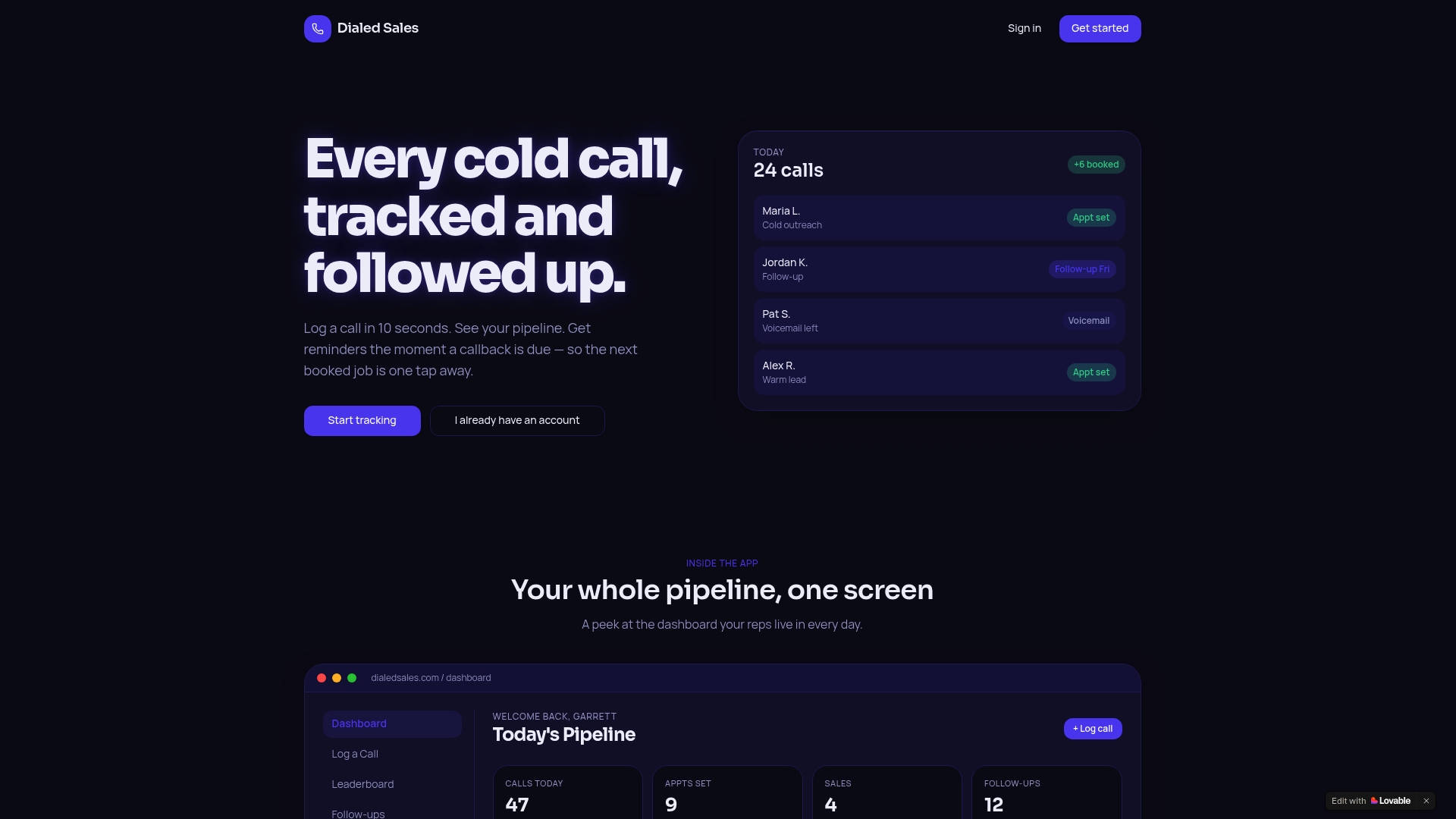
Dialedsales is a cold call tracker built for sales reps and field teams across every sales-based industry. Log a call in 10 seconds, add your notes and outcome, and set a follow-up date. The dashboard surfaces that callback the moment it's due, so nothing falls through the cracks. No complex setup, no steep learning curve. Just a clean system that keeps your pipeline visible and your follow-up timing sharp. If you're serious about turning cold calls into closed deals, Dialedsales gives you the structure to make it happen.
FAQ
How soon should you follow up after a cold call?
Follow up within two hours of the call. Waiting until the next morning can reduce reply rates by up to 11%.
How many follow-up touches should you send?
Most effective B2B sequences include 5–6 total touchpoints. Stopping after two or three leaves most of your pipeline untouched.
What should a cold call follow-up email include?
Reference a specific detail from the call, deliver any promised resource, and end with a single clear ask. One CTA per message roughly doubles reply rates.
What are the best days to send follow-up emails?
Tuesday, Wednesday, and Thursday mornings produce the highest engagement. Avoid Monday mornings and Friday afternoons.
What is a breakup email in a sales sequence?
A breakup email is the final message in a sequence that gives the prospect a clear way to opt out. It often generates replies from prospects who had gone silent.