
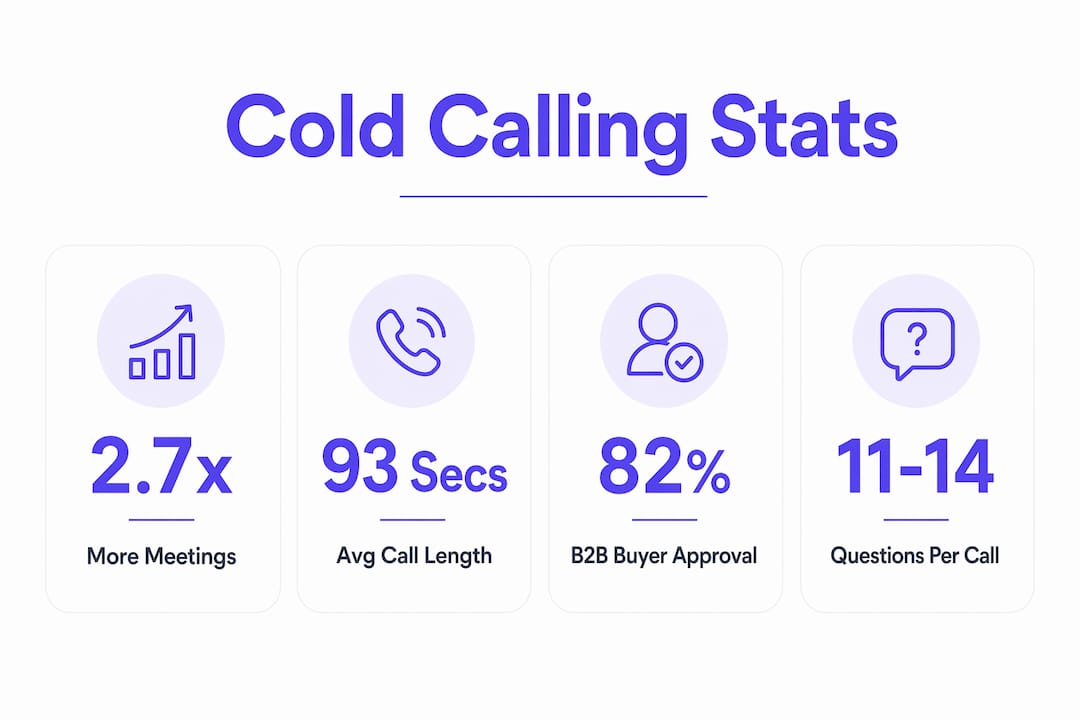
Cold calling is the practice of reaching out by phone to potential buyers who have never expressed interest in or engaged with your company. It is the foundational outreach method in B2B and B2C sales, predating email and social media by decades yet still producing results that digital channels struggle to match. 82% of B2B buyers will agree to meet with a salesperson when the outreach is relevant and personalized. That single statistic dismantles the most common objection to cold calling: that nobody picks up anymore. The technique works when it is done with preparation, timing, and genuine relevance.
What is cold calling and why does it still work in 2026?
Cold calling is defined as unsolicited, direct phone contact with a prospect who has no prior relationship with the caller. The industry also uses the term "outbound prospecting" to describe this broader category of proactive outreach, which includes cold calling as its most direct form. Understanding both terms matters because modern sales teams often blend cold calling into wider outbound sequences rather than treating it as a standalone tactic.
The phone remains the fastest channel for getting a real answer. Phone contact enables real-time interaction that email and LinkedIn messages simply cannot replicate. A prospect can ignore three emails and still pick up a call on a Tuesday morning. That immediacy lets you qualify a lead, handle an objection, and book a meeting in a single conversation.

Cold calling also forces clarity. You cannot hide behind a polished email template when someone is live on the line. That pressure sharpens your pitch and your listening skills faster than any other sales activity.
The data behind cold calling effectiveness
Top-performing salespeople generate 2.7x more meetings through targeted, research-backed outreach than average performers. The gap is not talent. It is preparation. Reps who research a prospect's company, role, and recent news before dialing convert at a dramatically higher rate than those who work a raw list.
Successful cold calls average 93 seconds in length. That number is counterintuitive. Most reps assume longer calls mean better calls. The data says the opposite: the goal of a cold call is to earn a qualified next step, not to close a deal on the spot.
Core cold calling techniques that actually produce results
Effective cold calling in 2026 runs on precision, not volume. The reps who dial the most numbers are rarely the reps who book the most meetings. The reps who win are the ones who treat every call as a diagnostic session.
Use pattern-interrupt openers
The first 30 seconds determine whether a prospect stays on the line. Pattern-interrupt openers like "How have you been?" break the prospect's expectation of a scripted pitch. That brief moment of surprise buys you the time to demonstrate relevance before they mentally check out.
Avoid openers that announce you are a salesperson with something to sell. Instead, lead with a specific observation about the prospect's business. "I noticed your team expanded into the Southeast market last quarter" lands differently than "I'm calling to introduce our solution."
Ask more questions than you answer
Top reps ask between 11 and 14 questions per call and spend more time listening than talking. This approach treats the call as a discovery session rather than a pitch. The goal is to surface the prospect's actual pain point, not to recite product features.
Active listening also signals respect. When a prospect feels heard rather than sold to, their resistance drops. The SPIN Selling framework, developed by Neil Rackham, structures this approach around Situation, Problem, Implication, and Need-payoff questions. It remains one of the most effective call structures for complex B2B sales.
Pro Tip: Record your calls and count how many seconds you talk versus how many seconds the prospect talks. If you are talking more than 50% of the time, you are pitching when you should be listening.
Build cold calling into a multichannel sequence
Cold calling integrated with LinkedIn, email, and research into a coordinated sequence significantly increases the likelihood of reaching a prospect. A prospect who has seen your name on LinkedIn and received a relevant email is far more likely to engage when your call comes through.
A practical multichannel sequence looks like this:
- Research the prospect's company, role, and recent news.
- Connect or engage on LinkedIn with a relevant comment or message.
- Send a short, personalized email referencing a specific business challenge.
- Call within 24–48 hours of the email, referencing it directly.
- Follow up with a voicemail if there is no answer, then repeat the cycle.
This approach treats cold calling as one part of a coordinated outreach effort rather than an isolated tactic. The sales prospecting workflow behind this sequence matters as much as the call itself.
Common challenges and misconceptions about cold calling
Cold calling is mentally demanding work. It requires mental stamina and carries real risk to your brand reputation if executed poorly. Rejection is constant. A rep who makes 50 calls in a day will hear "no" or silence far more often than they hear "yes." That reality discourages many sales professionals before they develop the skill.
The most persistent misconception is that cold calling is dead. The data does not support that claim. What is dead is the old model of high-volume, low-research dialing. Reps who call 200 random contacts per day with a generic script do get poor results. That is not a cold calling problem. It is a preparation problem.
"Cold calling done well is not about interrupting someone's day. It is about finding the right person at the right moment with the right message. When those three things align, the phone is still the most powerful sales tool available."
Legal considerations every rep must know
The FTC's Telemarketing Sales Rule governs cold calling practices in the United States and makes certain behaviors illegal. Calling numbers on the National Do Not Call Registry, misrepresenting your identity, and using deceptive tactics are all violations that carry significant fines.
Cold calling is legal when done correctly. B2B calls to business numbers operate under different rules than consumer calls. Reps should verify their call lists against the Do Not Call Registry before dialing and maintain clear records of consent where required. Compliance is not optional, and ignorance of the FTC's rules is not a defense.
How to implement cold calling effectively today
Effective cold calling starts before you pick up the phone. Targeting verified, well-qualified leads is the single highest-leverage activity in any cold calling program. Calling a poorly qualified list wastes time and erodes confidence. Calling a tight, well-researched list produces results even with a modest daily call volume.
Timing and scripting frameworks
Call timing affects connection rates. Mid-morning calls between 10:00 AM and 11:00 AM and late-afternoon calls between 4:00 PM and 5:00 PM consistently outperform calls made at other times. Wednesday and Thursday show higher answer rates than Monday or Friday in most B2B contexts.
Scripting frameworks give structure without making calls sound robotic. The insight-led approach opens with a relevant observation, transitions into a diagnostic question, and closes with a specific ask. The specific ask is critical. "Can I send you some information?" is not a next step. "Can we schedule 20 minutes on Thursday to walk through how this applies to your team?" is a next step.
Pro Tip: Write your call opener and your closing ask before you dial. Leave everything in between open for the prospect to fill. The best calls are conversations, not performances.
Track every call and follow up with intention
Cold call follow-up is where most reps lose deals they already earned. A prospect who says "call me back next month" is a warm lead. A rep who forgets that callback loses the opportunity entirely. Structured follow-up cadences, logged in a tracking tool, prevent that from happening.
Effective cold calling also requires preparation, respect, and sharp insight, with regular practice improving skills over time. Tracking outcomes by call type, time of day, and prospect segment reveals patterns that improve your approach over weeks, not just days.
Key Takeaways
Cold calling works when it combines targeted research, disciplined questioning, and structured follow-up into a repeatable process.
| Point | Details |
|---|---|
| Cold calling is defined as direct outreach | It involves contacting prospects by phone with no prior relationship or expressed interest. |
| Relevance drives meeting acceptance | 82% of B2B buyers agree to meet when outreach is personalized and relevant to their situation. |
| Successful calls are short and focused | The average successful cold call lasts 93 seconds and aims to secure a next step, not close a deal. |
| Questions outperform pitches | Top reps ask 11–14 questions per call and listen more than they talk to surface real pain points. |
| Follow-up and tracking close the loop | Logging every call outcome and scheduling callbacks prevents warm leads from falling through the cracks. |
Why cold calling still deserves a place in your sales process
Cold calling gets dismissed by reps who tried it without preparation and by managers who confuse volume metrics with quality metrics. I have watched teams abandon outbound calling entirely after a bad quarter, only to rebuild it two years later when their inbound pipeline dried up.
The reps I have seen succeed at cold calling share one trait: they treat every call as a chance to learn something, not just to sell something. They go into each conversation with a hypothesis about the prospect's problem and they test it through questions. When they are wrong, they adjust. When they are right, the conversation opens naturally.
The mistake I see most often is treating cold calling as a numbers game. It is not. Dialing 300 contacts with no research is not cold calling. It is noise. The reps who generate real pipeline from cold outreach dial fewer numbers, prepare more thoroughly, and follow up with discipline. They also combine calling with email and LinkedIn so that their name is familiar before the phone rings.
Cold calling is not for every rep or every product. But for anyone selling a solution that requires a real conversation to explain, the phone remains the shortest path between a stranger and a signed contract.
— Garrett
How Dialedsales helps you turn cold calls into closed deals
Cold calling only compounds when you track what happens after every dial.
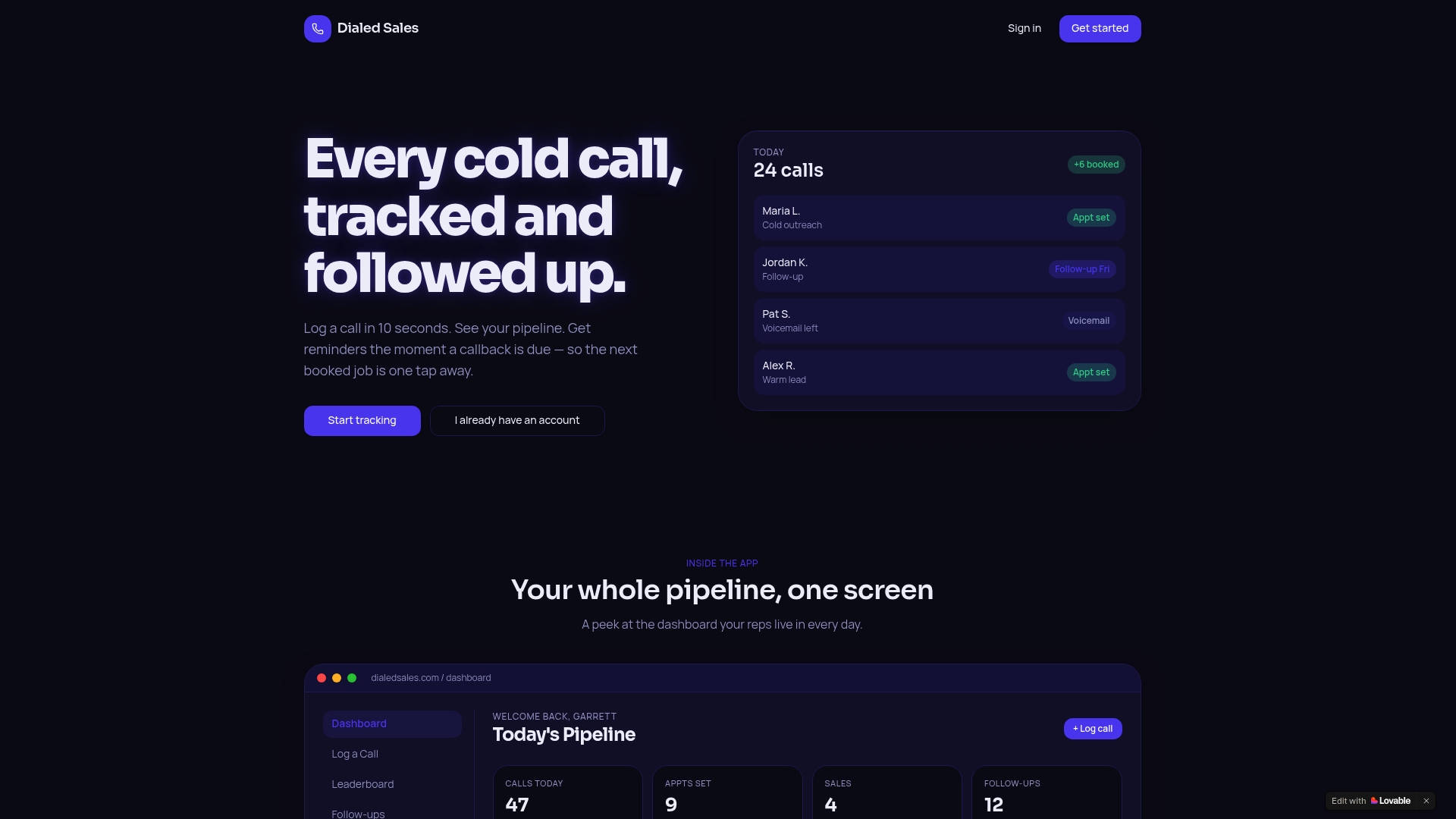
Dialedsales is a lightweight cold call tracker built for sales reps and field teams across every sales-based industry. Log a call in 10 seconds, capture the outcome and notes, and set a follow-up date that surfaces automatically on your dashboard when it is due. You see your full pipeline at a glance, and your close rate climbs as you spot patterns in your own call data. No complicated setup. No bloated features you will never use. Just a clean system that keeps every callback on time and every deal moving forward.
FAQ
What is cold calling in simple terms?
Cold calling is when a salesperson contacts a potential buyer by phone without any prior relationship or expressed interest from that buyer. The goal is to start a conversation that leads to a qualified next step, such as a meeting or demo.
Is cold calling still effective in 2026?
Cold calling remains effective when outreach is relevant and personalized. Research shows 82% of B2B buyers will agree to meet with a salesperson whose call addresses a genuine business need.
How long should a cold call last?
Successful cold calls average around 93 seconds. The objective is to qualify the prospect and secure a specific next step, not to close the sale on the first call.
What is the difference between cold calling and telemarketing?
Cold calling is a direct sales technique focused on qualifying prospects and booking meetings. Telemarketing is a broader term that includes promotional calls, surveys, and sales pitches, often at higher volume and with less personalization.
How many calls does it take to reach a prospect?
Most prospects require multiple contact attempts across different channels before responding. Combining calls with email and LinkedIn outreach, as part of a structured sequence, significantly increases the likelihood of making contact.