
Call reminders are defined as scheduled prompts that trigger a sales rep to contact a prospect at a specific, agreed-upon time. They are the single most reliable mechanism for keeping deals alive between conversations. Without them, follow-up calls fall through the cracks, leads go cold, and reps default to working only the freshest names in their pipeline. The role of call reminders in sales is not administrative. It is structural. They enforce the persistence that closes deals.
How do call reminders improve sales persistence and meeting rates?
Persistence is the variable most reps underestimate. 80% of sales require five or more touchpoints to close. Most reps stop after one or two attempts. That gap is where deals die, and call reminders exist to close it.
The math on multi-call cadences is compelling. Running a six-call cadence with verified direct dials and structured outcome logging produces a 15%+ connect rate. That number drops sharply when reps rely on memory alone to decide who to call next. Reminders remove the cognitive load of tracking callbacks manually, so reps spend their time dialing instead of deciding.

Warm callbacks outperform cold outreach by a wide margin. Prospects who previously said "not now" are 2.26x more likely to schedule a meeting than a cold contact. That statistic reframes how you should think about your existing pipeline. Every logged outcome with a set callback date is a higher-probability opportunity than a brand-new name.
Timing also matters beyond just frequency. Responding to a high-intent signal within two hours produces 4–7x higher conversion compared to email-only follow-ups. A reminder that fires the moment a prospect revisits your proposal or replies to an email turns a passive signal into an active call. Speed plus structure beats volume every time.
What a reminder-driven cadence looks like in practice
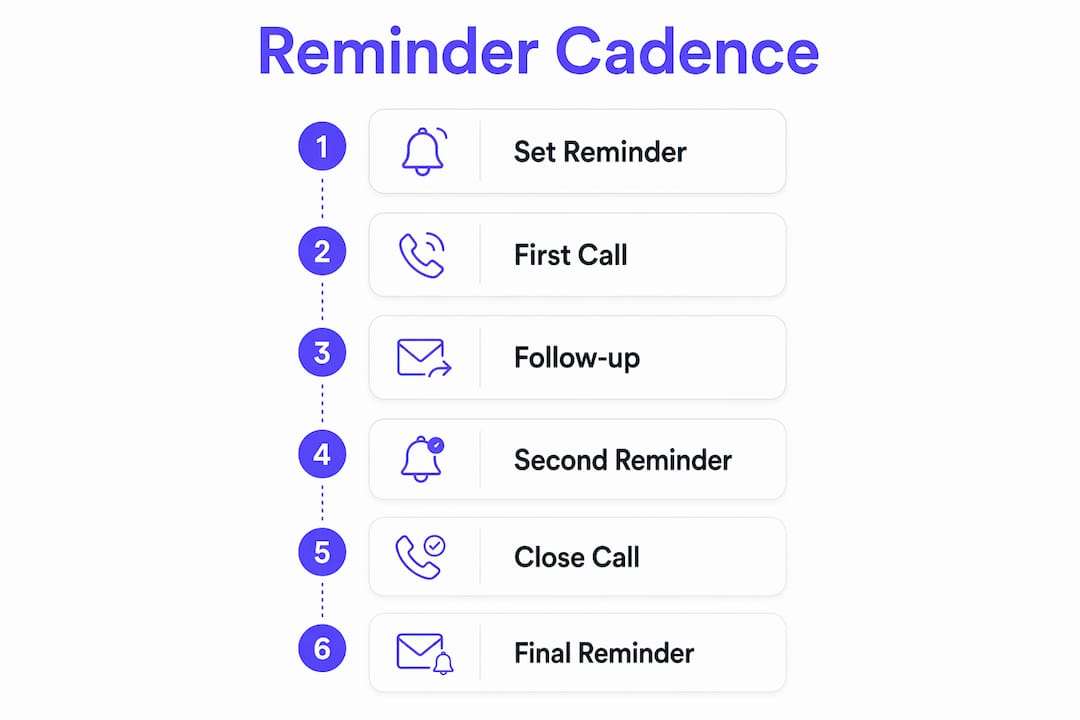
A well-built call cadence uses reminders at each stage, not just at the start. The first reminder fires within 24 hours of initial contact. A second fires three days later if there is no response. A third fires at the one-week mark. Each reminder carries context: the prospect's name, the last outcome logged, and the specific reason for calling again. Reps who work this way consistently outperform those who rely on inbox searches and sticky notes.
Balancing automation and human touch in reminder-driven workflows
Automation handles the scheduling. Humans handle the conversation. That division is the foundation of every effective sales workflow built around reminders.
The 80/20 rule applies directly here. Automating 80% of repetitive tasks, including reminder creation, scheduling, and outcome logging, frees reps to focus their energy on the 20% of interactions that require judgment, rapport, and negotiation. Full automation without human handoff produces cold, scripted exchanges that prospects recognize and reject. The reminder gets the rep to the phone. The rep has to earn the meeting.
Knowing when to automate and when to hand off is a skill most teams develop too slowly. These are the situations where automation works well:
- Logging a callback date after a "not now" response
- Sending an SMS confirmation after a booked appointment
- Triggering a follow-up task when a deal has been inactive for a set number of days
- Alerting a rep when a prospect opens a proposal or clicks a link
These are the situations where a human must take over:
- Negotiating price or contract terms
- Handling objections that require context and empathy
- Re-engaging a prospect who has gone cold after multiple touchpoints
- Any conversation where the outcome determines whether the deal advances or dies
Pro Tip: Set your automation to create the reminder and pre-fill the context. Let the rep decide the exact message. That combination gives you scale without sacrificing the personal quality that closes deals.
SMS and voice reminders work best when they are tied to a specific commitment the prospect already made. A confirmation message after booking an appointment reinforces the prospect's own decision. A generic "just checking in" message does not.
Why more reminders do not always reduce no-shows
The instinct to add more reminders when no-show rates climb is understandable. It is also usually wrong. High no-show rates stem from poor initial qualification and weak booking commitment, not from insufficient reminder volume. Sending five reminders to a prospect who was never truly committed produces five ignored messages, not a confirmed meeting.
Reminder fatigue is real. When prospects receive too many notifications, they habituate to them. The messages stop registering as signals and start functioning as noise. Over-notification causes alert fatigue that makes even well-timed reminders invisible. The fix is not fewer reminders across the board. It is better sequencing and stronger upfront commitment.
The research-backed sequence for B2B appointments follows three touches:
- Confirmation at booking. Send this immediately after the appointment is set. It reinforces the prospect's commitment while the conversation is still fresh.
- Reminder 48 hours before the meeting. This gives the prospect time to reschedule if needed, which is far better than a no-show.
- Final reminder 4 hours before the meeting. This is the last nudge before the call. Keep it brief and specific.
This three-touch sequence reduces no-shows from the typical 20–30% range down to 8–15%. Adding a fourth or fifth reminder beyond this sequence does not improve attendance. It trains prospects to wait for the last message before paying attention.
Pro Tip: During the booking call, ask the prospect to add the meeting to their calendar while you are still on the line. That single act of commitment reduces no-shows more than any reminder sequence can.
Best practices for integrating call reminders into your pipeline
The role of reminders in deal progression depends entirely on how they are written and where they sit in your pipeline. A reminder labeled "follow up with John" is a chore. A reminder labeled "call John to confirm budget approval before Friday deadline" is a strategic next step. The difference in outcome between those two tasks is significant.
Writing tasks as mini-hypotheses tied to deal blockers transforms reminders from administrative noise into decision points. Instead of "check in with prospect," write "call to test whether legal review is the real blocker or a stall." That framing forces the rep to think before dialing and to listen for specific information during the call.
Pipeline automation creates follow-up tasks and stale deal alerts that enforce accountability across the team. Research shows 40% of deals stall because of missed follow-ups. Automation that fires a reminder when a deal has been inactive for seven days catches those stalls before they become losses.
Prioritization prevents alert fatigue at the team level. Not every reminder deserves equal urgency. Segment your reminders by pipeline stage and deal value:
- High priority: Deals within 14 days of a close date, proposals sent but not reviewed, prospects who requested a callback at a specific time
- Medium priority: Warm callbacks from the past 30 days, deals that advanced one stage but have not moved in a week
- Low priority: Long-cycle nurture contacts, prospects who said "not now" more than 60 days ago
Shifting pipeline conversations from "where does this deal stand?" to "what is the next task and when is it due?" changes how managers and reps interact with the pipeline. It replaces optimistic guesswork with measurable progress. Top sales teams enforce a next-step contract: every call ends with a specific follow-up task due within 24 hours. That discipline, built into your reminder system, is what separates teams that forecast accurately from those that are always surprised at month-end.
Pro Tip: Use your pipeline visibility data to identify which pipeline stages have the longest average time between reminders. That gap is where your deals are dying.
Key Takeaways
Call reminders are the structural backbone of consistent follow-up, and their impact on close rates depends on how they are written, sequenced, and integrated into the pipeline.
| Point | Details |
|---|---|
| Persistence drives closes | 80% of sales need 5+ touchpoints; reminders are the only reliable way to hit that number consistently. |
| Warm callbacks outperform cold calls | Prospects who said "not now" are 2.26x more likely to book a meeting than a cold contact. |
| Three touches reduce no-shows | Confirmation at booking, 48 hours before, and 4 hours before cuts no-show rates from 20–30% to 8–15%. |
| Write reminders as next steps | Task descriptions tied to deal blockers move deals faster than generic "follow up" labels. |
| Automate scheduling, not the conversation | Use automation to create and fire reminders; keep human reps in charge of every actual call. |
What I've learned about reminders after years in the field
Most sales teams treat call reminders as a convenience feature. They set them up, let them fire, and then wonder why their pipeline still stalls. The teams I have seen close at the highest rates treat reminders as commitments, not suggestions.
The biggest mistake I watch reps make is setting a reminder without context. They log a call, pick a date, and move on. Two weeks later, the reminder fires and the rep has no idea why they are calling or what they are trying to learn. That call goes nowhere. The prospect feels it. The rep feels it. The deal dies quietly.
The fix is simple but requires discipline. Every reminder should answer three questions before the rep dials: What happened last time? What is the specific goal of this call? What does a successful outcome look like? When reps answer those questions at the time of logging, not at the time of calling, the quality of every follow-up conversation improves immediately.
I also think the industry underestimates buyer psychology in reminder design. A prospect who receives a reminder that references their specific situation feels recognized. A prospect who receives a generic notification feels processed. That distinction matters more than the channel you use or the time of day you send it.
The teams that win are the ones that treat every reminder as a small contract with the buyer. You said you would call. The reminder makes sure you do. That reliability builds the kind of trust that closes deals.
— Garrett
How Dialedsales keeps your follow-ups from falling through the cracks
Sales reps lose deals not because they lack skill, but because the follow-up never happened. Dialedsales is built to prevent exactly that.
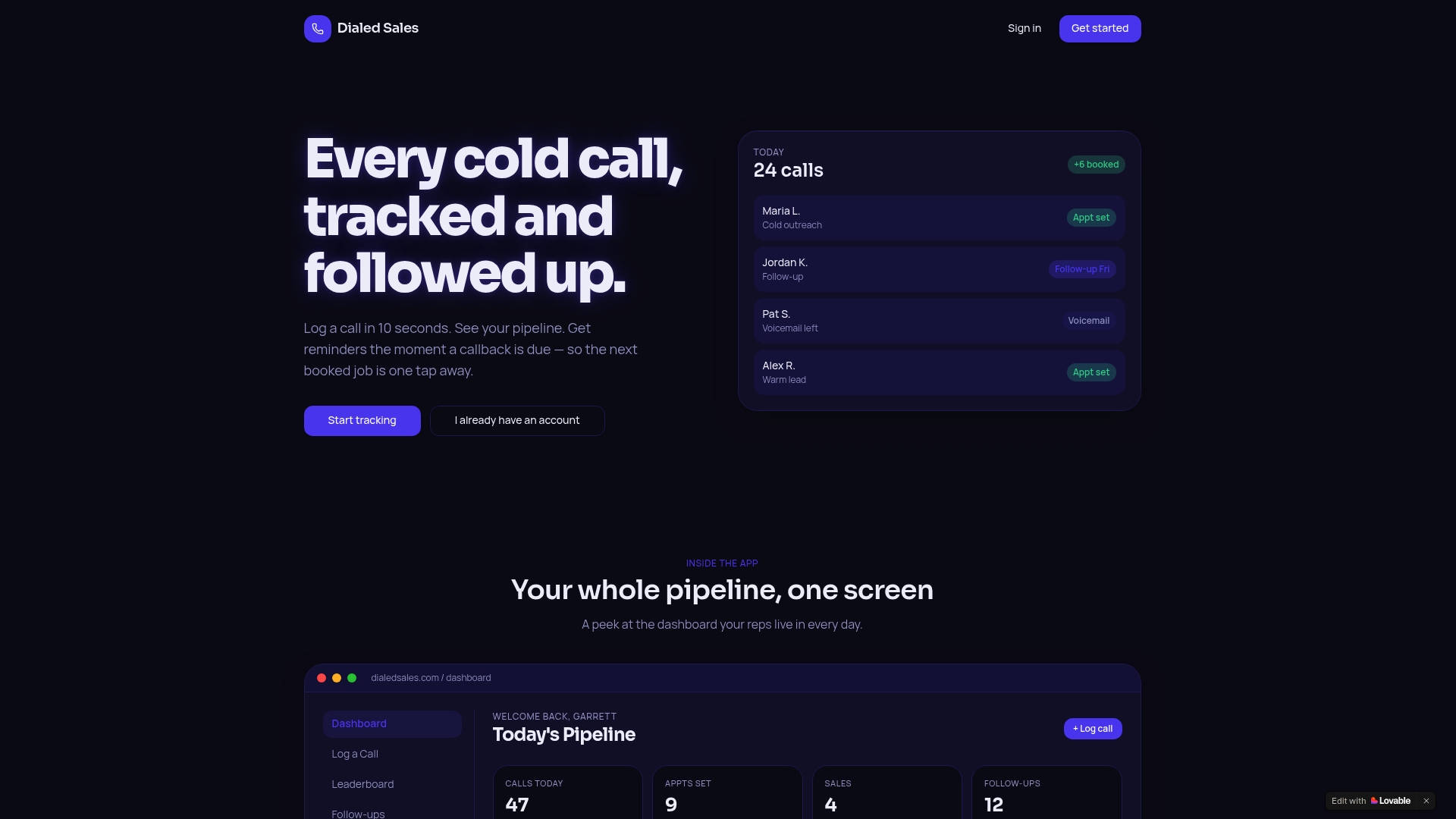
With Dialedsales, you log a call in 10 seconds, set a callback date, and the reminder surfaces automatically on your dashboard the moment it is due. No spreadsheets, no sticky notes, no searching through old notes to remember where a deal stands. The cold call tracker shows your full pipeline at a glance, flags overdue callbacks, and tracks every outcome so your close rate is always visible. If you want to build the kind of follow-up discipline that actually moves deals forward, Dialedsales gives you the structure to do it.
FAQ
What is the role of call reminders in sales?
Call reminders ensure sales reps follow up with prospects at the right time, maintaining the persistence needed to close deals. Research shows 80% of sales require five or more touchpoints, and reminders are the mechanism that makes consistent follow-up possible.
How many reminders should you send before a sales appointment?
Three reminders produce the best results: one at booking, one 48 hours before, and one 4 hours before the meeting. This sequence reduces no-show rates from 20–30% down to 8–15% without triggering reminder fatigue.
Does automating call reminders hurt the personal quality of sales?
Automation handles scheduling and task creation without replacing the human conversation. The 80/20 rule applies: automate repetitive reminder tasks and keep human reps focused on calls that require rapport, judgment, and negotiation.
Why do no-show rates stay high even with more reminders?
High no-show rates usually come from weak initial qualification or low booking commitment, not from too few reminders. Adding more messages trains prospects to ignore them. Stronger upfront commitment during the booking call reduces no-shows more effectively than any reminder sequence.
How should call reminder tasks be written for maximum effectiveness?
Write each reminder as a specific next step tied to a deal blocker, not as a generic "follow up" label. Task descriptions that answer what happened last time and what the rep is trying to learn produce better call quality and faster deal progression.