
Persistence is the single greatest differentiator between average cold callers and top performers. The role of persistence in cold calling comes down to one uncomfortable truth: 80% of sales require five or more follow-ups to close, yet 48% of sales reps never follow up after their first attempt. That gap is where deals are won and lost. Sales professionals who commit to structured, consistent outreach convert at rates that dwarf the industry average. The data is not ambiguous. Persistence pays, and quitting early is the most common and most costly mistake in cold calling.
How does persistence affect cold calling success rates?
The numbers tell a clear story. The baseline cold calling success rate sits at 2.3% for average teams, while top performers reach 6–15% by combining structured persistence with verified contact data. That is a 4x to 6x performance gap, and the primary driver is not script quality or voice tone. It is follow-through.
Most reps stop at two attempts. The average lead conversion actually requires 7–10 touches. That means the majority of sales teams are walking away from deals that are still very much in play. The prospect has not said no. They have just not said yes yet.

Connect rates, conversation rates, and meeting rates all improve with each additional touch, up to a point. 93% of all possible sales conversations happen by the third call, and over 98% occur by the fifth. After five attempts, diminishing returns set in fast. The practical implication: five well-timed, value-added touches cover nearly every realistic opportunity in a prospect list.
Pro Tip: Track your personal conversion ratios by attempt number. Knowing that your third call converts at twice the rate of your first call gives you a concrete reason to keep dialing.
| Attempt number | % of conversations captured |
|---|---|
| By attempt 1 | ~30% |
| By attempt 3 | 93% |
| By attempt 5 | 98%+ |
| Attempts 6+ | Minimal new opportunity |
What is structured persistence, and why does it outperform repeated calls?
Structured persistence is a planned sequence of 3–5 touches spread across days or weeks, where each contact adds new value to the prospect. It is not the same as calling the same number five times in a row and leaving the same voicemail. That approach annoys prospects and damages your credibility before a conversation even starts.
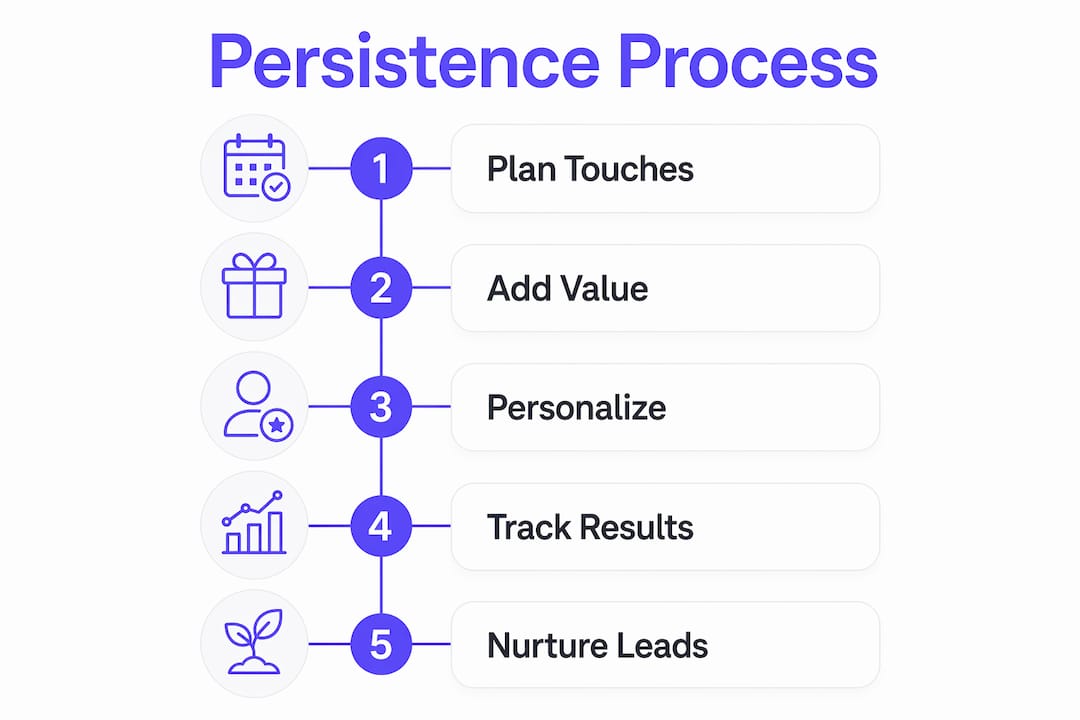
Helpful persistence means every follow-up delivers something the prospect did not have before. That could be a relevant industry statistic, a case study from their vertical, a short article that addresses a pain point they likely face, or a direct answer to an objection you anticipate they have. Each touch moves the relationship forward rather than simply marking time.
Here is what a structured persistence cadence looks like in practice:
- Day 1: Initial call with a clear, specific value proposition. Leave a voicemail if no answer.
- Day 3: Follow-up email referencing the voicemail and adding one piece of relevant insight.
- Day 7: Second call with a new angle, such as a recent industry development or a specific question about their business.
- Day 14: Third call or LinkedIn message with a brief case study or social proof.
- Day 21: Final touch. Make it clear this is your last outreach for now, and leave the door open.
Sequencing calls with personalized content and data-driven targeting consistently outperforms volume dialing. Sending 100 generic calls produces worse results than sending 30 targeted, value-added touches to the right prospects.
Pro Tip: After five touches with no response, move the prospect to a long-term nurture list rather than abandoning them entirely. Circumstances change, and a prospect who ignored you in March may be ready to buy in September.
Why does mindset determine whether persistence actually works?
Rejection is a statistical requirement in cold calling, not a sign of failure. Top performers treat their outreach as a numbers game with predictable ratios. Contacting 20 prospects yields roughly 6–7 conversations and 3–4 meetings. Knowing that ratio in advance changes how rejection feels. Each "no" is not a setback. It is one step closer to the next "yes."
Reps who internalize this framework sustain their effort far longer than those who take rejection personally. Building resilience in cold calling starts with reframing the math. If your ratio says you need 20 calls to get four meetings, then every call you make is productive, regardless of the outcome on that specific call.
Three mindset practices that support sustained persistence:
- Track ratios, not just results. Log every call outcome so you can see your personal conversion pattern. Patterns are motivating. Random outcomes are demoralizing.
- Set daily activity targets, not revenue targets. You control how many calls you make. You do not control when a prospect is ready to buy. Focus on the input.
- Celebrate the fifth call. Most reps never make it there. Reaching attempt five means you are already outperforming the majority of your competition.
The average close requires seven touches, but most sales teams stop at two. Reps who push past that threshold are not just more persistent. They are competing in a category where most of their rivals have already quit.
What practical techniques make persistent cold calling manageable?
Persistence at scale requires organization. A rep managing 50 to 100 active prospects cannot track follow-up timing, call notes, and cadence stages in their head or on a spreadsheet without things falling through the cracks.
Verified, up-to-date contact data is the foundation. Calling outdated numbers wastes time and erodes motivation. Before building a cadence, confirm that your contact list is current. Bad data is the fastest way to make persistence feel pointless.
Multi-channel outreach strengthens persistence without increasing call volume. 57% of C-level executives still prefer phone contact, but combining calls with email and LinkedIn touches increases the chance of reaching a prospect at the right moment. Different channels work at different times of day and for different personality types.
Technology is what makes persistence scalable. Automated reminders and call tracking compensate for the limits of human memory and attention. Dialedsales is built specifically for this workflow. Sales reps log a call in 10 seconds, set a follow-up date, and the dashboard surfaces that callback the moment it is due. No prospect falls off the radar. No follow-up gets missed because a rep was busy with another call.
The cold call follow-up best practices that separate top performers from average reps almost always include a consistent logging habit. Reps who track every outcome watch their close rate climb because they can see exactly where their pipeline stalls and adjust their cadence accordingly.
Time management is the final piece. Not every prospect deserves the same level of persistence. Score your leads by fit and intent signals, then allocate your five-touch cadence to the highest-value targets. Lower-fit prospects get two touches and move to a long-term list. This prevents burnout and keeps your energy focused where it converts.
Key Takeaways
Persistence in cold calling is a structured, data-driven practice that separates top performers from average reps by ensuring consistent follow-up across multiple touches before prospects are ready to buy.
| Point | Details |
|---|---|
| Five touches cover most opportunities | 98% of sales conversations happen by the fifth call attempt. |
| Most reps quit too early | 48% never follow up after the first attempt, leaving deals on the table. |
| Structured cadences outperform volume | Planned, value-added sequences convert better than repeated generic calls. |
| Mindset drives sustained effort | Tracking ratios reframes rejection as a statistical step, not a personal failure. |
| Technology makes persistence scalable | Tools like Dialedsales automate reminders so no follow-up gets missed. |
Persistence is the edge most reps refuse to use
I have watched sales reps with average scripts and mediocre lists outperform talented reps with great pitches and premium data. The difference was never the script. It was the willingness to make the fourth and fifth call when every instinct said to move on.
The uncomfortable truth about cold calling is that most of the competition quits before the deal is even close to being decided. Consistent weekly follow-ups create a competitive edge not because they are clever, but because they outlast everyone else. When a prospect finally reaches the point of buying, the rep who stayed in contact is the one who gets the call back.
The pitfall I see most often is reps confusing activity with persistence. Making 80 calls in a day to cold lists with no follow-up plan is not persistence. It is volume without structure. Real persistence means returning to the same prospect with something new to say, on a schedule, until the timing is right or the door is clearly closed.
Combine that discipline with clean data and a sales prospecting workflow that keeps your pipeline organized, and you have a repeatable system. Persistence stops feeling like grinding and starts feeling like a process with predictable outcomes. That shift in perception is what separates reps who burn out from reps who build consistent pipelines year after year.
— Garrett
How Dialedsales helps you stay persistent without the chaos
Knowing you need to make five touches per prospect is one thing. Executing that across 80 active leads without missing a single callback is another problem entirely.
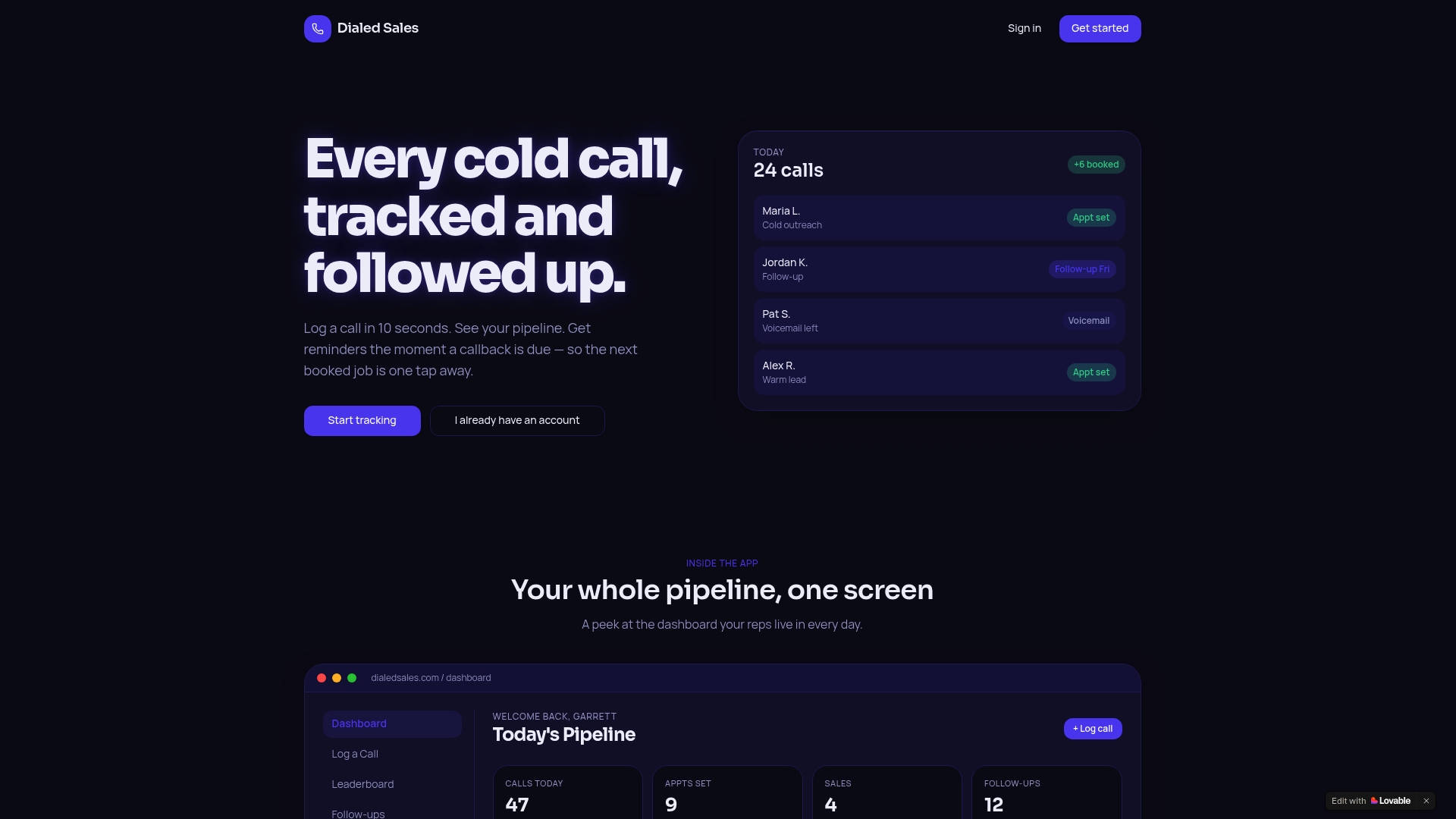
Dialedsales is built for exactly this situation. Log each call in 10 seconds, set the follow-up date, and let the dashboard tell you who to call and when. Every outcome gets tracked, so you can see your close rate improve as your cadence tightens. Sales reps using Dialedsales stop losing prospects to forgotten callbacks and start working a pipeline that actually reflects their effort. Try Dialedsales and put your persistence to work with a system that keeps up with you.
FAQ
How many follow-up calls does it take to close a sale?
The average close requires 7–10 touches, and 80% of sales need five or more follow-ups to close. Most reps stop at two, which means the majority of deals are left unclosed.
What is the average cold calling success rate?
The industry average cold calling success rate is 2.3%. Top-performing teams reach 6–15% by using structured persistence and verified contact data.
How do you avoid annoying prospects with too many calls?
Each follow-up must add new value, such as a relevant insight, case study, or industry update. Prospects disengage from repetitive check-in calls but respond to outreach that addresses their specific situation.
When should you stop following up with a prospect?
After five touches with no response, the realistic opportunity for a near-term conversation is largely exhausted. Move the prospect to a long-term nurture list rather than abandoning them completely.
Does persistence in cold calling work for reaching senior executives?
57% of C-level executives still prefer phone contact over other channels, making persistent, well-timed calls one of the most direct ways to reach decision-makers.