
A sales pipeline review checklist is a structured evaluation framework that ensures every deal in your pipeline gets assessed on facts, not gut feel. Used correctly, it replaces vague status updates with targeted questions, clear next steps, and measurable deal health. The best teams run stage conversion analysis as the core of every review, pinpointing exactly where deals stall before they die quietly. This guide gives you a practical, step-by-step checklist built on 2026 best practices, covering preparation, meeting structure, key questions, and follow-up prioritization.
1. How to prepare for a sales pipeline review
Preparation is what separates a productive review from a 45-minute status report. Both reps and managers carry distinct responsibilities before the meeting starts.
Rep preparation:
- Update every deal in your CRM before the meeting. Stale data turns reviews into guesswork sessions.
- Select 3–5 priority deals based on deal size, close date, or risk level.
- Know your deal details cold. You should be able to answer questions about stakeholders, next steps, and blockers without looking anything up.
- Prepare a brief summary of each deal: current stage, last meaningful activity, and the agreed next step.
Manager preparation:
- Pull a list of stalled deals, defined as any opportunity with no logged activity in the past two weeks.
- Review each rep's quota attainment and pipeline coverage ratio before the call.
- Flag deals that have not progressed in stage despite recent activity. Motion is not the same as progress.
- Prepare 2–3 stage-specific exit criteria questions for each deal you plan to discuss.
Pipeline reviews degrade into ineffective status updates when CRM data is stale. Enforcing rep preparation before the meeting prevents this entirely.
Pro Tip: Enforce a "no-look-up" rule during the review. Reps must answer every question from memory. If they cannot, that gap is the coaching opportunity.

2. Key checklist questions for every deal
Structured, stage-based questions move pipeline reviews from gut-feel updates to fact-based deal evaluations. The goal is to test whether a deal is genuinely progressing or just sitting in a stage.
Every deal discussion should anchor on one question first: "What is the specific next step, who owns it, and when does it happen?" If the rep cannot answer that clearly, the deal is at risk.
| Question | Purpose | Red flag answer |
|---|---|---|
| What is the next committed action and date? | Tests deal momentum | "We're waiting to hear back" |
| Who is the economic buyer and have you spoken with them? | Confirms decision-maker access | "I've only talked to the champion" |
| What is the biggest risk to this deal closing? | Surfaces hidden blockers | "I don't see any risks right now" |
| What does the prospect lose by not buying? | Tests urgency and business case | "They haven't mentioned a deadline" |
| What has changed since our last review? | Validates real progression | "Nothing new, still moving forward" |
Beyond the table above, these questions consistently surface the most useful information:
- "Has the prospect taken any buyer-committed action since we last spoke?"
- "Is there a formal evaluation process, and are we part of it?"
- "What competing priorities could push this deal past the close date?"
Deals that move through stages without clear exit criteria or buyer commitment represent pipeline motion, not real progress. Catching this early saves forecast accuracy and manager time.
3. Best practices for running focused review meetings
The most effective weekly pipeline reviews are 1:1 sessions lasting 30–45 minutes, focused on only the 3–5 highest-value or highest-urgency deals per rep. Team-wide reviews dilute focus and turn into performance theater rather than coaching.
What to do:
- Cap every session at 45 minutes. If you need more time, you are reviewing too many deals.
- Limit discussion to 3–5 deals per rep. Depth beats breadth every time.
- Document a written action item for every deal discussed, with a named owner and a specific deadline.
- Keep the CRM closed during the meeting. Updates happen before or after, not during.
What to avoid:
- Running group pipeline reviews where reps perform for peers instead of engaging honestly.
- Letting the meeting drift into deal storytelling without reaching a clear next step.
- Accepting vague commitments like "I'll follow up next week" as action items.
The 14-day deal progression rule is a reliable standard: any deal without a buyer-committed action in 14 or more days should receive a stage downgrade. This keeps your pipeline honest and your forecast accurate.
Pro Tip: Assign roles clearly. The manager's job is to coach and ask questions. The rep's job is to own the deal and drive next steps. Blurring these roles turns reviews into interrogations.
The table below shows how manager and rep responsibilities differ during the meeting:
| Role | Responsibility during review | What good looks like |
|---|---|---|
| Manager | Ask stage-exit questions, identify coaching gaps | Focused questions, no CRM updates |
| Rep | Own deal details, commit to next steps | Answers from memory, clear action items |
4. How to prioritize follow-up actions after the review
A pipeline review only creates value if it produces a clear action plan. Follow-up actions after reviews should be categorized by timeline: quick wins within 30 days, structural fixes within 60–90 days, and long-term adjustments over 12 months.
Quick wins (within 30 days):
- Re-engage stalled deals with a specific, value-driven outreach message.
- Schedule discovery calls with economic buyers who have not yet been contacted.
- Update deal stages in the CRM to reflect actual progress, not optimistic assumptions.
- Send a written summary of agreed next steps to every prospect discussed.
Structural fixes (60–90 days):
- Revise stage exit criteria for any stage where deals consistently stall.
- Build or update a shared call prep template so reps arrive ready every week.
- Introduce a sales process audit using a 34-question diagnostic framework. Scores above 60 indicate a mature, low-risk process. Scores below that threshold reveal specific gaps worth fixing.
Long-term adjustments (over 12 months):
- Align pipeline stage definitions with actual buyer behavior, not internal milestones.
- Build rep coaching plans based on patterns identified across multiple review cycles.
- Establish a consistent review cadence and hold it without exceptions.
Prioritizing fixes requires knowing which seller capability gaps are driving the most deal risk. Pipeline health depends not just on deal volume but on whether reps are engaging meaningfully with economic buyers. That distinction changes which fixes you tackle first. For more on executing follow-up after calls, a structured approach makes the difference between a stalled deal and a closed one.
Key takeaways
A sales pipeline review checklist works only when preparation, structured questioning, and written follow-up actions are treated as non-negotiable steps, not optional habits.
| Point | Details |
|---|---|
| Preparation drives quality | Reps must update CRM and know deal details before the meeting starts. |
| Focus on 3–5 deals per session | Reviewing fewer deals with more depth produces better coaching outcomes. |
| Use stage-exit questions | Structured questions replace gut-feel updates with fact-based deal assessments. |
| Apply the 14-day rule | Downgrade any deal without buyer-committed action in 14 or more days. |
| Categorize follow-ups by timeline | Sort actions into 30-day wins, 60–90-day fixes, and 12-month adjustments. |
What I've learned from running pipeline reviews the hard way
The biggest mistake I see managers make is confusing activity with progress. A rep who logs five calls a week and sends three follow-up emails looks busy. But if none of those touches moved the economic buyer closer to a decision, the pipeline is full of noise, not opportunity.
The second mistake is treating the review as an interrogation. When reps feel like they are being grilled, they start managing the manager instead of managing the deal. They pick safe deals to discuss, frame everything optimistically, and avoid surfacing real risks. That dynamic destroys the entire point of the review.
The reviews that actually improve close rates share three traits. First, the CRM is clean before anyone walks in. You cannot coach from bad data. Second, the manager asks questions and listens. The rep does the talking. Third, every session ends with written commitments, not verbal agreements that evaporate by Thursday.
One thing I track closely is whether reps can name the economic buyer and describe a real conversation they have had with that person. Engagement with economic buyers often predicts deal viability better than any stage label in the CRM. If a rep has never spoken to the person who controls the budget, that deal is not as far along as the pipeline suggests.
Consistency matters more than perfection. A weekly review that is 80% effective and happens every single week will outperform a perfect review that gets skipped whenever the quarter gets busy. Build the cadence first. Refine the questions second. The discipline compounds over time.
— Garrett
How Dialedsales supports your pipeline review process
Running a tight pipeline review requires clean, current data. That is exactly where most teams fall short before the meeting even starts.
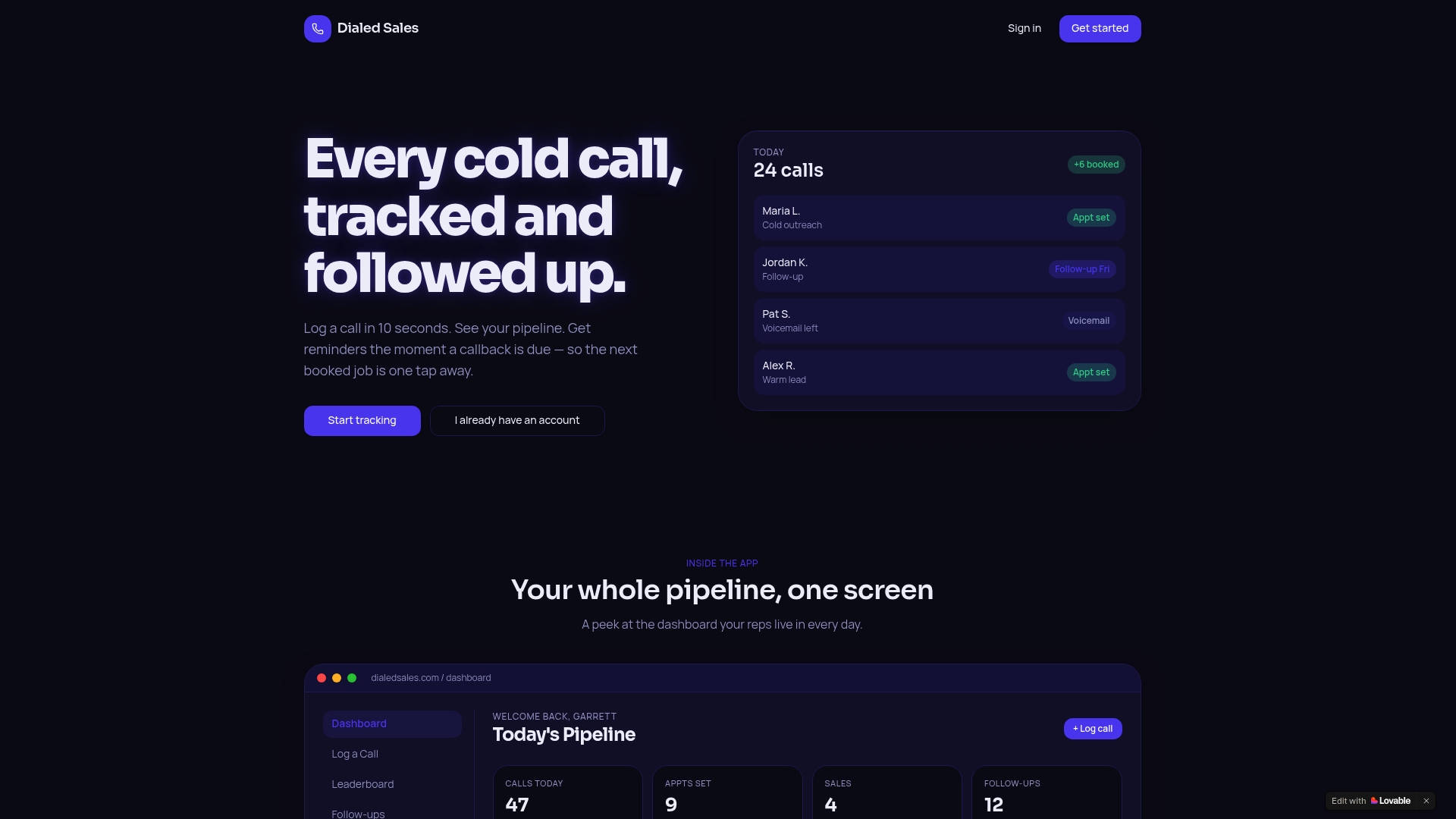
Dialedsales is a lightweight cold call tracking app built for sales reps and field teams across every sales-based industry. You can log a call in 10 seconds, capture the outcome and notes, and set a follow-up date that surfaces automatically on your dashboard when it is due. That means when your weekly review rolls around, your pipeline data is already current. No scrambling to update the CRM five minutes before the call. No guessing which deals need attention. Dialedsales keeps your activity log honest so your reviews stay focused on improving close rates rather than cleaning up stale records.
FAQ
What is a sales pipeline review checklist?
A sales pipeline review checklist is a structured set of preparation steps, deal evaluation questions, and follow-up actions used to assess pipeline health and drive deal progression. It replaces ad-hoc status updates with consistent, fact-based deal reviews.
How often should you run a pipeline review?
Weekly 1:1 reviews lasting 30–45 minutes are the most effective cadence for active sales teams. Consistency matters more than frequency; a weekly review that happens every week outperforms a monthly deep-dive that gets skipped.
How many deals should you review per session?
Limit each session to 3–5 highest-value or highest-urgency deals per rep. Reviewing fewer deals with greater depth produces better coaching and more reliable action items than covering the entire pipeline.
What is the 14-day deal progression rule?
Any deal without a buyer-committed action in 14 or more days should receive a stage downgrade. This rule keeps your pipeline accurate and prevents stalled deals from inflating your forecast.
How do you measure pipeline health after a review?
Track stage conversion rates to identify where deals consistently stall or drop out. A 34-question sales process audit, where scores above 60 indicate a mature process, provides a reliable diagnostic baseline for measuring improvement over time.