
What is outbound prospecting in sales?
Outbound prospecting is the proactive process of identifying and contacting potential customers before they've shown any interest in your product or service. You pick the target, you pick the moment, and you write the message. That control is exactly what makes it different from every other pipeline source.
The core mechanics are straightforward:
- Identify accounts that match your ideal customer profile
- Research the right contact inside each account
- Initiate outreach via cold email, phone, or LinkedIn
- Qualify interest and book a meeting with a decision-maker
- Hand off to an Account Executive for closing
Inbound interest is unpredictable. Outbound is not. When your marketing pipeline slows down, outbound is the lever you can pull immediately, because you control who gets contacted and when.
How outbound prospecting differs from inbound

The clearest way to understand outbound vs. inbound is buyer temperature. Inbound prospects are warm: they filled a form, downloaded a guide, or requested a demo. Outbound prospects are cold: they don't know you exist yet.
Key contrasts:
- Who starts the conversation: In inbound, the buyer does. In outbound, you do.
- Buyer intent: Inbound leads have already shown interest. Outbound targets have shown fit, not intent.
- Volume vs. conversion: Inbound converts faster per lead. Outbound gives you a larger, more controllable pipeline.
- Timing: Inbound timing is set by the buyer. Outbound timing is set by you, ideally triggered by a buying signal.
- Effort per conversation: Outbound requires more research and personalization upfront because you're interrupting someone's day.
Neither approach works well alone. Inbound is capped by demand you don't control. Outbound can open a brand-new segment this week, at the cost of doing the targeting work properly. The strongest sales teams run both.
Who actually does outbound prospecting on a sales team?
Three roles own most of the outbound prospecting work in B2B sales organizations:
- Sales Development Reps (SDRs): The most common outbound practitioners. SDRs cold call and email potential buyers, screen for fit, and build a short list of qualified leads for closers.
- Lead Development Reps (LDRs): Often focused on inbound-sourced leads, but frequently pulled into outbound sequences when pipeline gaps appear.
- Market Development Reps (MDRs): Similar to LDRs, MDRs typically support inbound operations by contacting prospects who've engaged with marketing but haven't converted.
SDRs collaborate closely with Account Executives, who handle discovery calls and closing. The SDR's job is not to sell the product. It's to book a qualified meeting with someone who has a real reason to take it.
Why outbound prospecting still matters in 2026
Inbound demand fluctuates with algorithm changes, ad budgets, and market cycles. Outbound doesn't. That's the core argument for keeping it central to your pipeline strategy.
Top-performing reps generate 47% of their pipeline through outbound activity, making it the single most controllable revenue lever available to a sales team. When inbound slows, outbound fills the gap. When you're entering a new market segment, outbound is the only way in.
Specific reasons outbound remains worth the investment:
-
Pipeline predictability: You set the volume. More qualified outreach means more meetings, which means more pipeline.
-
Market expansion: Inbound only reaches people already searching for you. Outbound reaches accounts that would never have found you organically.
-
Speed: You can launch an outbound sequence targeting a new segment in days, not months.
-
Signal-based timing: Modern outbound uses buying signals like funding rounds, executive hires, and intent data to reach prospects at exactly the right moment.
-
Competitive positioning: Reaching a prospect before a competitor does is a real advantage, especially when a new executive is evaluating vendors in their first 90 days.
Stat to know: Signal-based outbound teams using tiered personalization and multi-channel sequences see 3–5x higher reply rates than teams running volume-based playbooks.
What to do before you send a single outreach message
Preparation separates reps who book meetings from reps who generate spam complaints. Before any outreach goes out, get these foundations right:
- Build a layered ICP: Your Ideal Customer Profile should go beyond company size and industry. Add technographic data (what tools they use), firmographic signals (growth stage, headcount), and behavioral data (content consumption, review platform activity).
- Use fresh contact data: Contact lists go stale fast. By the time you've worked through a static list, roles have changed, budgets have shifted, and competitors have already gotten in the door. Prioritize signal-led targeting over static lists.
- Enrich before you reach out: Each contact should have a specific, real fact attached to it: a recent funding round, a new hire in the buying role, a job posting that signals a problem you solve.
- Authenticate your sending infrastructure: Clean contact data and authenticated domains are non-negotiable for inbox placement. Don't wait for open rates to drop before fixing deliverability.
- Plan your cadence: Map out the full sequence before touch one. Decide which channels you'll use, in what order, and at what intervals.
- Customize messaging per signal: A funding announcement opens differently than a competitor mention. Write the opener around the specific trigger, not a generic value proposition.
Pro Tip: Before building your outreach sequence, check whether the prospect's company has posted new roles in the past 30 days. Job postings are one of the clearest signals of active investment in a problem you might solve, and they give you a specific, non-generic reason to reach out.
Outbound prospecting strategies that actually work in 2026
Generic outreach is dead. Buyers recognize automated sequences instantly, and inbox providers penalize high-volume blasting. What works now is a tighter, signal-led approach.
- Lead with signals, not lists: Signal-based prospecting targets accounts when observable buying intent appears, not when a rep has time to work through a spreadsheet. Funding announcements, executive job changes, and third-party intent spikes are all valid triggers.
- Tier your personalization: Deep research on every prospect doesn't scale. Split your list into three tiers based on account fit, deal size, and signal strength. Top-tier accounts get fully customized outreach. Mid-tier gets signal-referenced templates. Lower-tier gets lighter sequences.
- Sequence channels deliberately: Email, LinkedIn, and phone each serve a different purpose. Don't run them simultaneously. Stagger them so each touch feels intentional, not automated. A prospect who gets an email, a LinkedIn request, and a phone call within hours knows it's a sequence tool.
- Use AI for the right tasks: AI handles research, enrichment, first-draft messaging, CRM updates, and cadence scheduling well. It does not replace the actual conversation. Buyers can identify AI-generated outreach, and messages that feel genuinely human consistently outperform those that don't.
- Follow up persistently with varied angles: Most reps give up too early. Top teams use multi-channel outreach with frequent touches over several weeks, varying the message angle each time so it doesn't feel like a copy-paste loop.
- Focus on qualified meetings, not closes: The goal of outbound prospecting is a booked meeting with a qualified prospect, not a signed contract. Use frameworks like MEDDIC or BANT early to filter out low-intent contacts before investing more time.
- Track LinkedIn as a channel: For B2B outbound, LinkedIn is often where context gets established before a cold call lands. Reviewing LinkedIn marketing tools built for B2B can sharpen how you use the platform as part of a coordinated sequence.
Stat to know: Teams using signal-based prospecting with multi-channel sequences see 3–5x higher reply rates than traditional volume-based approaches.
The foundational principles behind effective prospecting
Tactics change. These principles don't.
The four pillars of outbound prospecting:
- List building: Quality over quantity. A list of 50 well-researched, signal-matched contacts outperforms a list of 500 generic ones.
- Outreach: The message, the channel, and the timing all matter. Personalization must reference a real, observable trigger to move the needle.
- Metrics: Track outcomes, not activity. Emails sent is a vanity metric. Meetings booked and pipeline generated are what matter.
- Lead management: Every contact needs a clear next step logged. Prospects who don't convert today may be ready in 90 days.
The 5 Ps of prospecting:
- Purpose: Know exactly why you're reaching out to this specific person at this specific moment.
- Preparation: Research the account and the contact before writing a single word.
- Personalization: Reference something real. A name token is not personalization.
- Perseverance: Most deals require multiple touches. Giving up after two emails is leaving pipeline on the table.
- Practice: Outbound is a skill. Reps who review their call outcomes and refine their messaging get better over time.
Measuring outcomes over activity volume is the discipline that separates improving teams from busy ones. A rep sending 200 emails a week with a 0.5% reply rate is less effective than one sending 50 with a 6% reply rate.
How Dialedsales helps you manage outbound outreach

Outbound prospecting only works when follow-through is consistent. The biggest gap in most reps' processes isn't the first touch. It's everything that happens after.
Dialedsales is a lightweight cold call tracker built for sales reps and field teams across every sales-based industry. The workflow is fast by design: log a call in 10 seconds with the customer name, outcome, and notes, then set a follow-up date that surfaces automatically on your dashboard when it's due.
Key capabilities:
- Call outcome tracking: Log every result, whether it's a voicemail, a callback request, or a live conversation, so nothing falls through the cracks.
- Notes per call: Capture context while it's fresh. When you call back three days later, you know exactly where you left off.
- Follow-up reminders on the dashboard: Callbacks surface automatically when they're due. You don't need to remember. The app does.
- Pipeline visibility: See your full outreach pipeline at a glance, so you can prioritize the right accounts at the right time.
For reps running multi-touch outbound sequences, consistent follow-up management is what turns a good first call into a booked meeting. Dialedsales keeps that process organized without adding complexity to your day.
Common challenges in outbound prospecting and how to get past them
Every rep hits the same walls. Knowing what's coming makes them easier to clear.
Low reply rates: The most common complaint, and almost always a targeting or personalization problem. Generic outreach gets ignored. The fix is tighter ICP definition and outreach that references a specific, real trigger. Diligent prospect research before reaching out, referencing a recent funding round or a specific challenge the company faces, changes the response rate.
Deliverability issues: Emails landing in spam kill your outreach before it starts. Use authenticated sending domains, keep your contact data clean, and don't wait for open rates to collapse before auditing your infrastructure.
Prospect resistance: People dislike unsolicited outreach. That's not going to change. What changes is how relevant and timely your message feels. A prospect who sees you've done real homework responds differently than one who gets a mass template.
Inconsistent follow-up: Most reps give up after one or two touches. The contacts who eventually convert often needed five or more. Building a structured cadence and using a tracking tool to surface due callbacks removes the inconsistency.
Difficulty qualifying quickly: Spending time on low-fit prospects is expensive. Apply a qualification framework like BANT or MEDDIC early in the sequence to filter out accounts that aren't ready or aren't a real fit.
Metrics and KPIs that tell you if your outbound is working
Activity metrics feel productive. Outcome metrics tell the truth.
| Metric | What it measures |
|---|---|
| Reply rate | Percentage of outreach messages that get a response |
| Meeting booked rate | Percentage of replies that convert to a scheduled meeting |
| Show rate | Percentage of booked meetings where the prospect actually shows up |
| Pipeline generated | Total deal value sourced from outbound activity |
| Sequence completion rate | Percentage of prospects who receive all planned touches |
| Call-to-connect rate | Percentage of dials that reach a live person |
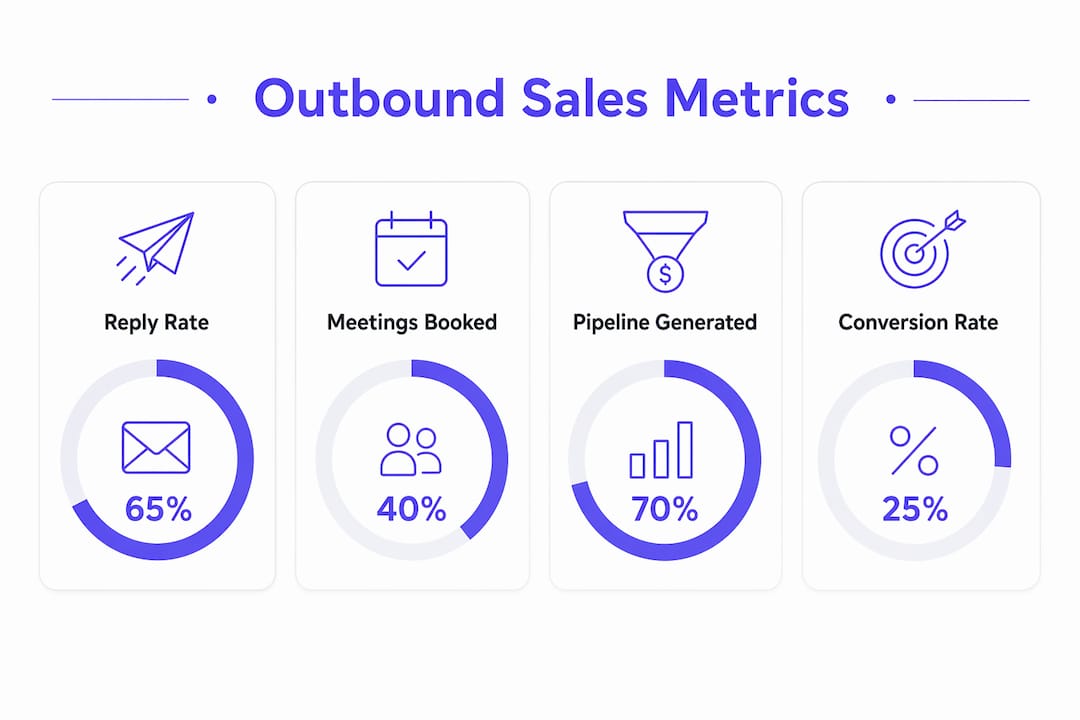
Reply rate and meetings booked are the two most telling early indicators. If reply rate is low, the problem is usually targeting or messaging. If meetings booked is low despite replies, the problem is usually qualification or the ask itself.
Pipeline generated is the metric that connects outbound activity to revenue. Tracking it by rep, by sequence, and by channel tells you exactly where to invest more and where to cut. For reps using sales data to drive decisions, this level of visibility is what separates a managed process from guesswork.
Tools and technologies used in outbound prospecting
The outbound tech stack has a few distinct layers, each serving a different part of the process.
Prospecting and data enrichment: Tools in this category help you build and enrich contact lists with firmographic, technographic, and signal data. They identify which accounts are showing buying intent and surface the right contact inside each one.
Sequencing and cadence management: These platforms automate the scheduling and delivery of multi-channel outreach sequences across email, LinkedIn, and phone. The best ones let you vary message angles per touch rather than repeating the same template.
CRM and pipeline tracking: A CRM stores contact records, deal stages, and activity history. For field reps and smaller teams, a lightweight call tracker like Dialedsales handles the day-to-day logging without the overhead of a full CRM setup.
LinkedIn as a channel: LinkedIn is the primary B2B social selling platform. It's where context gets established before a cold call, and where warm signals like content engagement and profile views appear. Pairing it with AI-driven sales analysis tools helps teams prioritize which LinkedIn signals actually predict conversion.
Email deliverability infrastructure: Authenticated domains, warm-up tools, and clean data management keep your emails out of spam folders. This layer is unglamorous but critical.
AI-assisted research and drafting: AI tools accelerate account research, contact enrichment, and first-draft message creation. They work best when a human reviews and edits before anything goes out.
The right stack depends on team size and deal complexity. A solo rep needs a tracker, a sequencer, and clean data. An enterprise team adds intent data platforms, conversation intelligence, and deeper CRM integration. Start with what you'll actually use consistently, and build from there.
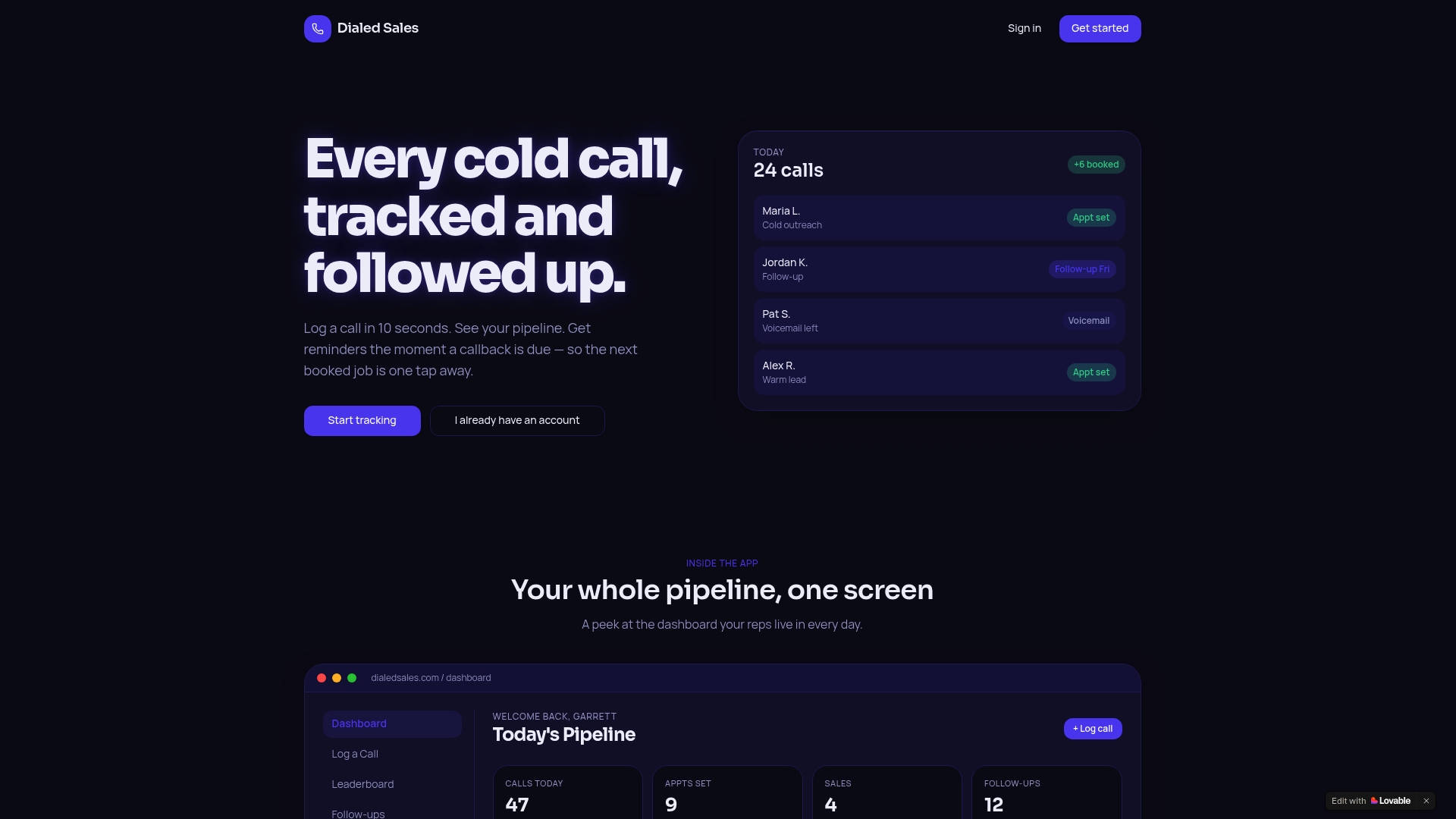
Ready to stop losing callbacks? Dialedsales logs every call in 10 seconds, surfaces follow-ups the moment they're due, and gives you a clear view of your pipeline without the complexity. Try Dialedsales free and see how much easier outbound gets when nothing slips through.
Key Takeaways
Outbound prospecting gives sales teams direct control over pipeline creation by initiating contact with cold prospects through targeted, signal-led, multi-channel outreach.
| Point | Details |
|---|---|
| Outbound vs. inbound | Outbound starts cold with rep-initiated contact; inbound starts warm with buyer-initiated contact. |
| Pipeline contribution | Top-performing reps generate 47% of their pipeline through outbound activity. |
| Signal-led outreach | Teams using signal-based targeting and multi-channel sequences see significantly higher reply rates than volume-based approaches. |
| Key metrics to track | Reply rate, meetings booked, and pipeline generated reveal outbound effectiveness far better than activity counts. |
| Follow-up consistency | Structured cadence tracking, like Dialedsales's dashboard reminders, prevents callbacks from falling through the cracks. |