
Timing in cold outreach is defined as the deliberate selection of when to contact a prospect to maximize the probability of a reply. The role of timing in cold outreach goes far beyond gut instinct. Research shows that B2B cold email sent Tuesday through Thursday between 8:00 AM and 11:00 AM local time yields 30–45% more replies than messages sent outside those windows. That single variable, send time, can double your reply rate before you change a single word of copy. Sales professionals and entrepreneurs who treat timing as a strategic decision, not an afterthought, consistently outperform those who batch and blast.
What is the role of timing in cold outreach?
The best days to send cold emails are Tuesday, Wednesday, and Thursday, with Tuesday leading for both open and reply rates. Weekends are the worst choice. Weekend sends reduce reply rates by 61% compared to mid-week sends. That gap is large enough to make or break a campaign.

The peak send window is 8:00 AM to 11:00 AM in the recipient's local time zone. A secondary window opens between 1:00 PM and 3:00 PM, after lunch when inboxes get a second check. Outside these two windows, replies drop sharply. Most prospects do not revisit emails that arrived while they were in meetings or off the clock.
Time zone accuracy matters more than most sales professionals expect. Ignoring recipient time zones can cut open rates by approximately 16%. Sending at 9:00 AM your time when your prospect is three time zones ahead means your email lands at noon, buried under a morning's worth of messages.
| Day | Relative open rate | Relative reply rate |
|---|---|---|
| Monday | Below average | Below average |
| Tuesday | Highest | Highest |
| Wednesday | High | High |
| Thursday | High | Moderate |
| Friday | Below average | Low |
| Saturday | Low | Very low |
| Sunday | Low | Very low |
Pro Tip: Spread your sends across a two to three hour window rather than firing all emails at once. Human-like send patterns prevent spam filters from flagging your campaign and protect your sender reputation.
How does recipient role affect timing strategies?
Timing must be segmented by prospect role, not applied uniformly across your list. A field operations manager and a Chief Revenue Officer have completely different daily rhythms. Sending both the same email at the same time wastes one of those sends.
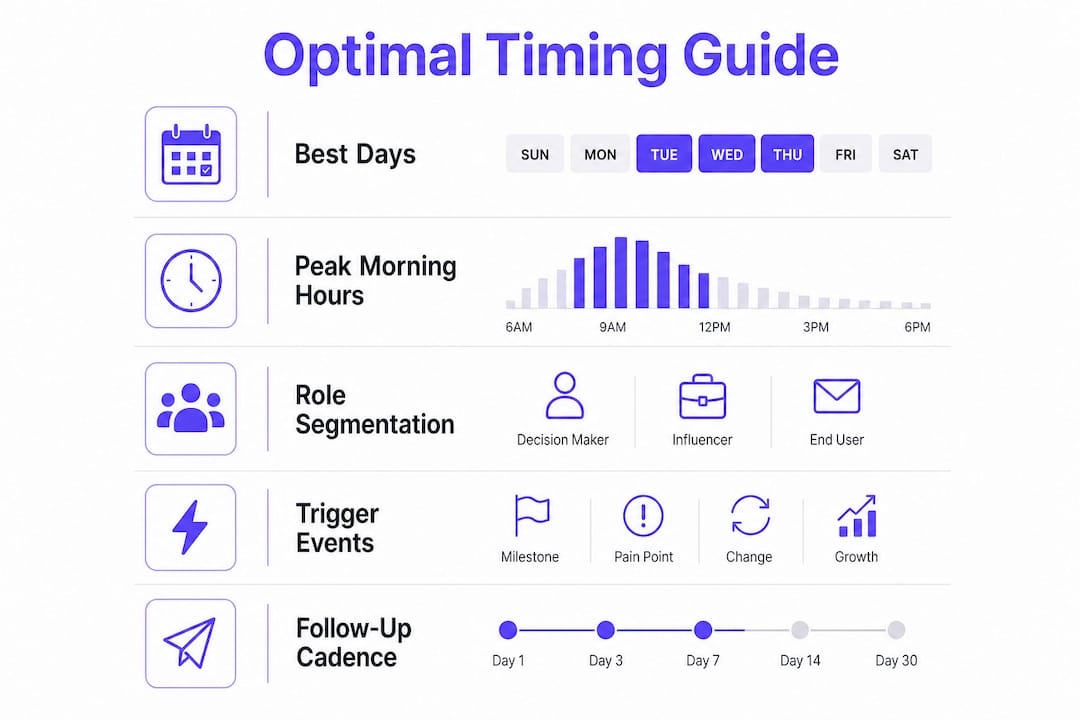
C-suite executives are the clearest example of role-based timing. Early morning sends between 6:00 AM and 8:00 AM and late evening sends between 8:00 PM and 11:00 PM reach executives at up to 6.52% reply rates in specific segments. Executives check email before and after core business hours, when their inbox is quieter and their attention is less divided.
Mid-level managers and team leads respond best during standard business hours, particularly the 8:00 AM to 11:00 AM window. They are in back-to-back meetings during the afternoon, so morning sends catch them before the day accelerates. Frontline operators and field-based roles often respond better mid-morning or just after lunch, when they have natural breaks in their workflow.
Here is a practical segmentation framework by role:
- C-suite executives: 6:00 AM to 8:00 AM or 8:00 PM to 11:00 PM, Tuesday or Wednesday
- VP and director level: 7:30 AM to 9:30 AM, Tuesday through Thursday
- Mid-level managers: 8:00 AM to 11:00 AM, Tuesday through Thursday
- Field and frontline roles: 9:00 AM to 11:00 AM or 12:30 PM to 2:00 PM, any weekday
Pro Tip: Pull your prospect list into role-based segments before scheduling a campaign. Timing as a segmented variable rather than a blanket setting is one of the fastest ways to lift reply rates without rewriting your messaging.
Why do trigger events outperform standard timing windows?
Generic timing windows give you a baseline. Trigger events give you an edge. A trigger event is a public or observable change at a prospect's company that signals a new need, budget, or priority. Examples include new executive hires, funding announcements, product launches, geographic expansions, and regulatory changes affecting the industry.
Signal-informed timing increases reply rates by 3–4 times compared to generic outreach. That is not a marginal improvement. It reflects the fact that a well-timed message after a relevant trigger lands when the prospect is already thinking about the problem you solve.
The logic is straightforward. A company that just raised a Series B round is actively building out its sales team. A business that just hired a new VP of Sales is evaluating tools and processes. Your outreach, sent within one to two weeks of that trigger, arrives at exactly the right moment.
| Trigger event | Ideal outreach window | Why it works |
|---|---|---|
| New executive hire | Within 7–14 days | New leaders evaluate existing tools and vendors |
| Funding announcement | Within 7 days | Budget is available and growth plans are active |
| Product launch | Within 3–7 days | Teams are scaling and need support |
| Geographic expansion | Within 14 days | New markets create new operational needs |
| Industry regulation change | Within 14–21 days | Compliance pressure creates urgency |
One caution: avoid outreach during company crises, layoffs, or public controversies. Timing your pitch during a difficult period signals poor awareness and damages your credibility before the conversation starts.
Pro Tip: Set up Google Alerts and monitor LinkedIn for company news on your top prospects. The sales prospecting workflow that integrates trigger monitoring consistently outperforms one that relies on static lists.
What is the optimal follow-up cadence after initial outreach?
A single cold email almost never closes a deal. Sequences of 4–7 emails produce a 27% reply rate compared to just 9% for sequences of 1–3 emails. Three times the replies from three times the persistence, spaced correctly.
The spacing between touchpoints matters as much as the number of touches. Early in the sequence, wait 3–7 days between contacts. Later in the sequence, extend gaps to 7–14 days. This mirrors natural human communication and avoids the spam-like feel of daily follow-ups.
A practical 6-step sequence looks like this:
- Day 1: Initial cold email, sent Tuesday or Wednesday morning
- Day 4: Follow-up email, brief and direct, referencing the first
- Day 8: Phone call attempt, logged immediately in your tracking tool
- Day 14: LinkedIn connection or message with a relevant insight
- Day 21: Second phone call with a new angle or value point
- Day 35: Final email, low-pressure, leaving the door open
Response speed after a prospect replies is a separate but critical timing variable. Responding within 5 minutes of a prospect's reply triples booking rates compared to responding within 24 hours. Booking rates of 25–35% within five minutes drop to 8–12% when you wait a full day. That gap closes deals or loses them.
Stop the sequence the moment a prospect replies, regardless of their answer. Continuing automated follow-ups after a response signals that you are not paying attention. It is one of the fastest ways to destroy trust you spent weeks building.
- Sync email, phone, and LinkedIn touches across the sequence for channel reinforcement
- Log every call outcome immediately so follow-up dates auto-surface on your dashboard
- Track reply rates by sequence step to identify where prospects drop off
Pro Tip: Use a cold call follow-up system that surfaces callback reminders automatically. Manual tracking causes missed follow-ups, which is the single most common reason good sequences fail.
Key Takeaways
Timing in cold outreach is a performance multiplier that works only when combined with strong messaging, accurate segmentation, and disciplined follow-up cadence.
| Point | Details |
|---|---|
| Best send window | Tuesday through Thursday, 8:00 AM to 11:00 AM local time, yields the highest reply rates. |
| Role-based timing | C-suite executives respond best outside business hours; managers respond best mid-morning. |
| Trigger event advantage | Signal-informed outreach generates 3–4 times more replies than generic timing. |
| Follow-up sequence length | Sequences of 4–7 steps produce three times the replies of shorter sequences. |
| Response speed | Replying within 5 minutes of a prospect's message triples your booking rate. |
Timing is a multiplier, not a magic fix
Here is the uncomfortable truth I have seen play out repeatedly: sales professionals spend hours obsessing over the perfect send time while their emails are generic, their lists are stale, and their sequences stop after two touches. Timing cannot save a bad message. It can only amplify a good one.
Send-time optimization shifts reply rates by about 1.5–2.5 percentage points on its own. That is real, but it is the smallest lever available. Personalization, relevance, and sequence length each move the needle far more. The teams I have seen get the best results treat timing as the final layer, applied after they have nailed their targeting, their message, and their cadence.
The trigger event approach is where I have seen the biggest wins. Reaching out within a week of a funding announcement or a new VP hire is not luck. It is research turned into timing discipline. That combination, knowing who to contact, why now, and at what hour, is what separates a 2% reply rate from a 15% one.
My honest advice: fix your message first. Then fix your sequence length. Then fix your segmentation. Once those three are solid, layer in timing precision and watch each improvement compound. Automation tools help, but the judgment about when a prospect is actually ready to hear from you still requires a human reading the signals.
— Garrett
How Dialedsales fits into your timing strategy
Timing discipline breaks down fast when you are managing 50 or 100 prospects manually. Missed callbacks, forgotten follow-ups, and sequences that stall after one email are the result of tracking calls in your head or on a spreadsheet.
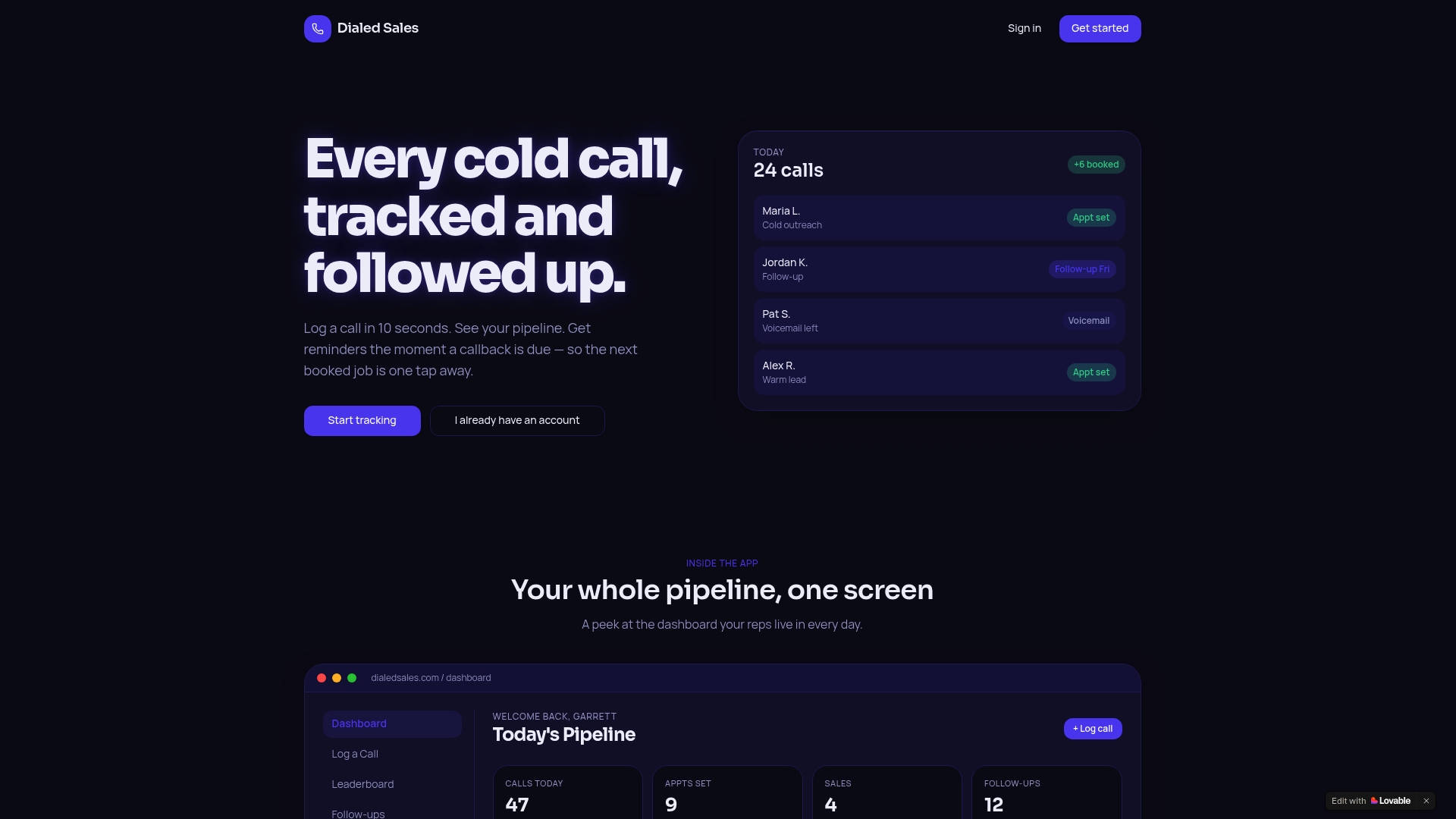
Dialedsales is built for exactly this problem. Log a call in 10 seconds, set a follow-up date, and the app surfaces that callback on your dashboard the moment it is due. Every outcome is tracked, so you can see your close rate climb in real time as your timing and cadence improve. For field sales reps and entrepreneurs running high-volume outreach, Dialedsales removes the manual overhead that causes good timing strategies to fall apart in execution.
FAQ
What are the best days for cold email outreach?
Tuesday, Wednesday, and Thursday are the top-performing days for cold email. Tuesday consistently delivers the highest open and reply rates in B2B outreach.
Does time zone matter for cold outreach?
Ignoring recipient time zones can reduce open rates by approximately 16%. Always schedule sends based on the prospect's local time, not your own.
How many follow-up emails should I send?
Sequences of 4–7 emails generate three times the reply rate of sequences with 1–3 emails. Space early follow-ups 3–7 days apart and later ones 7–14 days apart.
What is a trigger event in cold outreach?
A trigger event is a public change at a prospect's company, such as a new hire, funding round, or product launch, that signals a new need or budget. Outreach timed to these events generates 3–4 times more replies than generic timing.
How quickly should I respond to a prospect's reply?
Respond within 5 minutes of a prospect's reply. That response speed triples booking rates compared to waiting 24 hours.