
Data-driven sales decision-making is defined as the practice of using quantified evidence, analytics, and behavioral signals to guide every sales action, from prospecting to close. The role of data in sales decisions has never been more consequential. Teams that adopt analytics exceed sales quotas 58% more often than those relying on instinct. That gap is not a coincidence. Yet 91% of small to midsize businesses still prioritize gut feel over data, leaving measurable revenue on the table. This guide explains how analytics reshapes sales strategy, which data types matter most, and how to build a process that actually sticks.
How does data improve the accuracy of sales decisions?
Sales analytics replaces opinion with evidence at every stage of the pipeline. When reps score leads based on behavioral signals rather than intuition, they spend time on accounts most likely to close. When managers forecast using historical win rates and deal velocity, their numbers hold up at the end of the quarter.
The performance gap between data-led and instinct-led teams is measurable. Organizations using advanced sales analytics can boost productivity by 300–500% and shorten sales cycles by 20%, with revenue increases of 5–10% within months. Those are not marginal improvements. They represent a fundamental shift in how efficiently a team converts effort into revenue.
Data also changes how coaching works. Personalized, data-driven coaching can boost action completion rates from 8% to 38%. That means reps follow through on four times as many next steps when their manager uses data to identify the specific behavior to fix, rather than offering generic feedback.
The impact of analytics on sales extends to outreach quality as well. Personalized outreach powered by data generates six times higher response rates than generic messaging. The mechanism is simple: data tells you what a buyer cares about before you call, so your pitch lands with context instead of noise.
Key areas where data measurably improves sales performance:
- Lead scoring: Behavioral and intent signals rank prospects by readiness to buy, cutting time wasted on cold accounts.
- Pipeline management: Deal velocity and stage conversion rates expose bottlenecks before they kill the quarter.
- Sales forecasting: Historical win rates combined with real-time pipeline data produce forecasts that hold up under scrutiny.
- Coaching: Performance data at the rep level identifies specific skill gaps, not just outcomes.
What are the common types of sales data used in decisions?
Sales data is not a single stream. It comes from multiple sources, and each type answers a different question about your buyer.
Firmographic, technographic, behavioral, and intent data together create a complete picture of an account. Firmographic data covers company size, industry, and revenue. Technographic data reveals which tools a prospect already uses, which tells you whether your product fits their stack. Behavioral data tracks how a contact engages with your content, emails, and website. Intent data signals that a buyer is actively researching a problem you solve.
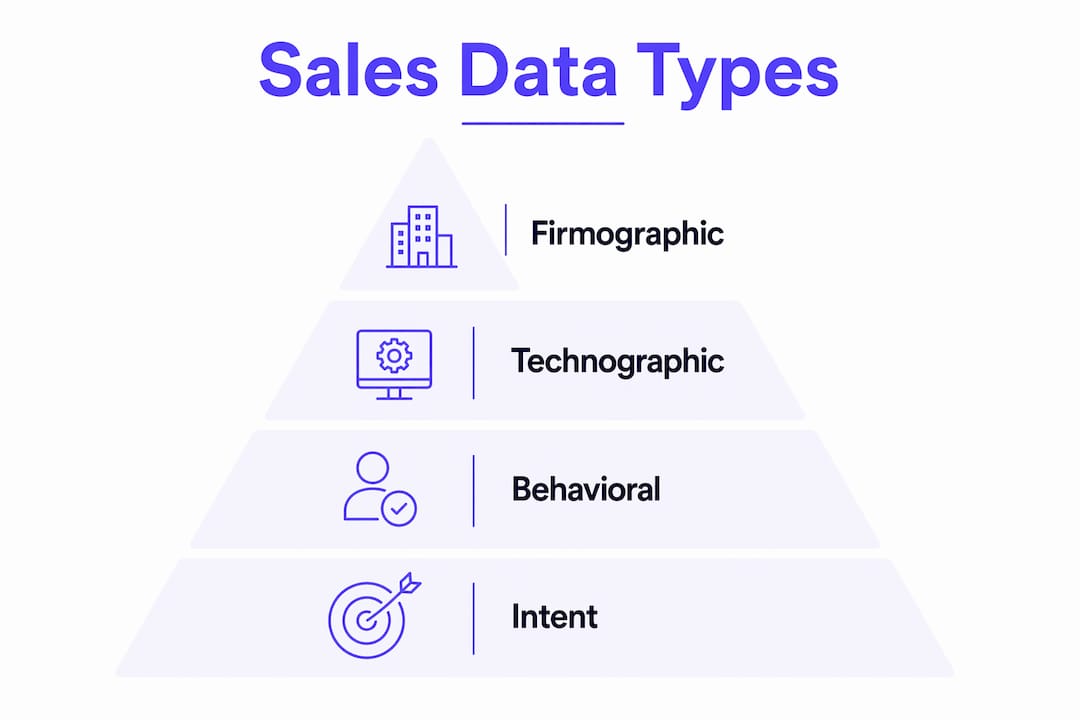
Internal CRM data is the foundation. It captures every interaction your team has had with an account, including call outcomes, email replies, and deal history. External third-party signals layer on top to show what is happening outside your relationship. The combination is far more useful than either source alone.
Real-time data and historical data serve different purposes. Real-time signals tell you when to act now. A prospect visiting your pricing page three times in one week is a buying signal worth acting on today. Historical data tells you which patterns predict wins. Knowing that deals in a certain industry close 40% faster when contacted within 24 hours of a demo request is a process rule you build from the past.
Integrated account scoring replaces the need to toggle between multiple tools. When firmographic fit, behavioral engagement, and intent signals combine into a single score, reps see one number that tells them where to focus. That simplicity drives consistent execution across the team.
Pro Tip: Build your ideal customer profile from closed-won data, not assumptions. Pull the firmographic and technographic attributes of your last 20 wins and look for the pattern. That pattern is your real ICP.
How do advanced analytics and AI enhance data-driven sales strategies?
Predictive analytics is the most direct application of AI to sales forecasting. It uses historical deal data and real-time pipeline signals with machine learning to produce probability-weighted forecasts of deal closures and churn risks. The result is a forecast built on math, not manager optimism.

The business case for AI in sales is concrete. AI-based predictive lead scoring reduced sales process time by 25.3% in longitudinal research, while real-time data integration helped drive 11.2% year-over-year revenue growth. That growth outpaces the 3.1% baseline seen without data-driven methods. The difference compounds over time.
Here is how to apply advanced analytics in a practical sequence:
- Define your forecast model inputs. Start with CRM stage data, deal age, and rep historical close rates. These three variables alone outperform most gut-feel forecasts.
- Add account scoring. Layer in firmographic fit and behavioral engagement to rank your pipeline by probability, not just deal size.
- Embed buying signal alerts. Set triggers for high-intent behaviors like pricing page visits or competitor research. Route those alerts directly into your rep's workflow.
- Use AI for next-best-action guidance. Modern platforms surface the recommended next step for each account based on where similar deals went next. Reps follow a proven path instead of improvising.
- Refresh your plays continuously. Data-driven sales plays must be updated as win/loss patterns shift. A play built on last year's data misses this year's buyer behavior.
The Alexander Group's research confirms that structured, repeatable sales plays embedded in CRM workflows unlock full seller productivity. The key word is "embedded." Plays that live in a separate document get ignored. Plays that surface inside the tool a rep uses every hour get followed.
Pro Tip: Predictive analytics turns pipeline management into a math problem. Assign probability scores to every open deal and weight your weekly effort accordingly. High-probability deals get more touches this week. Low-probability deals get a defined decision point: advance or disqualify.
How should sales teams balance data insights with human judgment?
Data does not replace judgment. It informs it. The distinction matters because over-reliance on models creates blind spots just as surely as ignoring them.
Sales teams should follow model recommendations by default and only overrule them with specific, articulated reasons. That protocol sounds rigid, but it serves a clear purpose. When a rep says "I know this deal will close even though the score is low," they should be required to state exactly why. That forces the rep to think clearly and gives the manager a record to review later.
Avoiding the "black box" problem is critical for team adoption. If reps do not understand why a model scores an account a certain way, they distrust it and ignore it. Transparency in how scores are calculated drives buy-in. Walk your team through the inputs. Show them which behaviors move a score up or down.
Training reps to interpret data is a separate skill from training them to sell. A rep can be excellent at discovery calls and still misread a pipeline report. Build a short, recurring data literacy practice into your team meetings. Review one metric together each week. Discuss what it means and what action it implies.
Key principles for balancing data and human judgment:
- Follow model recommendations by default; document every exception with a specific reason.
- Keep scoring models transparent so reps understand the inputs, not just the output.
- Treat data as the starting point for a conversation, not the end of one.
- Update your models when human exceptions consistently outperform the model's prediction.
What practical steps can sales teams take to implement data-driven decisions?
Most teams fail at data-driven sales for one reason: they buy software before defining the questions they need answered. Effective data-driven sales starts with defining key business questions first. Without that foundation, new tools add noise to existing bad habits.
Follow this sequence to build a process that holds:
- Define your three most critical business questions. Examples: Where do deals stall? Which rep behaviors predict quota attainment? Which accounts are most likely to expand? Your data strategy exists to answer these questions.
- Audit your current data quality. A CRM full of incomplete records produces unreliable insights. Clean your data before you analyze it.
- Update your ideal customer profile quarterly. Pull win/loss data every 90 days and look for shifts in which accounts close fastest and at the highest value. Your ICP should reflect reality, not a two-year-old assumption.
- Use data to identify process bottlenecks. Stage conversion rates in your sales conversion funnel show exactly where deals drop. Fix the stage with the worst conversion rate before optimizing anything else.
- Coach with data, not impressions. Pull individual rep metrics before every coaching session. Discuss specific numbers, not general performance feelings.
| Implementation step | What it fixes |
|---|---|
| Define business questions first | Prevents buying tools that answer the wrong problems |
| Audit CRM data quality | Removes noise that corrupts analysis |
| Quarterly ICP refresh | Keeps targeting aligned with current win patterns |
| Stage conversion analysis | Pinpoints the exact bottleneck in your pipeline |
| Data-led coaching sessions | Replaces vague feedback with specific, measurable improvement targets |
A structured sales prospecting workflow built on these principles gives every rep a repeatable system instead of a personal style that cannot be coached or scaled.
Key Takeaways
Sales teams that build decisions on data consistently outperform those that rely on instinct, with measurable gains in quota attainment, forecast accuracy, and revenue growth.
| Point | Details |
|---|---|
| Data beats intuition | Teams using analytics exceed quotas 58% more often than those relying on gut feel. |
| AI accelerates results | Predictive lead scoring cuts sales process time by 25.3% and drives measurable revenue growth. |
| Data types work together | Firmographic, behavioral, and intent data combined produce far better targeting than any single source. |
| Human judgment still matters | Follow model recommendations by default, but document every exception with a specific reason. |
| Start with questions, not software | Define your critical business questions before buying any analytics tool. |
What I've learned from watching teams get data wrong
The most common mistake I see is not a lack of data. It is a lack of discipline around what the data is supposed to answer. Teams buy a new analytics platform, spend three months configuring it, and then use it to confirm decisions they already made. That is not data-driven selling. That is expensive confirmation bias.
The teams that actually change their results do something different. They pick two or three metrics that directly connect to revenue, and they review those metrics every single week without exception. They do not chase every new dashboard feature. They build a habit around a small number of numbers that matter.
The other thing I have seen consistently is that data adoption lives or dies with the manager. If the manager does not use data in coaching conversations, reps will not trust it in their own decisions. The manager sets the standard. When a manager walks into a one-on-one with specific numbers and asks specific questions, reps start paying attention to those numbers before the meeting.
The future of sales is not about having more data. Every team already has more data than they act on. The advantage goes to the teams that build clear protocols for turning data into decisions, and then hold those protocols accountable week after week.
— Garrett
How Dialedsales supports data-driven sales workflows
Tracking outcomes consistently is the foundation of any data-driven sales process. Without clean call records, you cannot analyze patterns, coach effectively, or forecast with confidence.
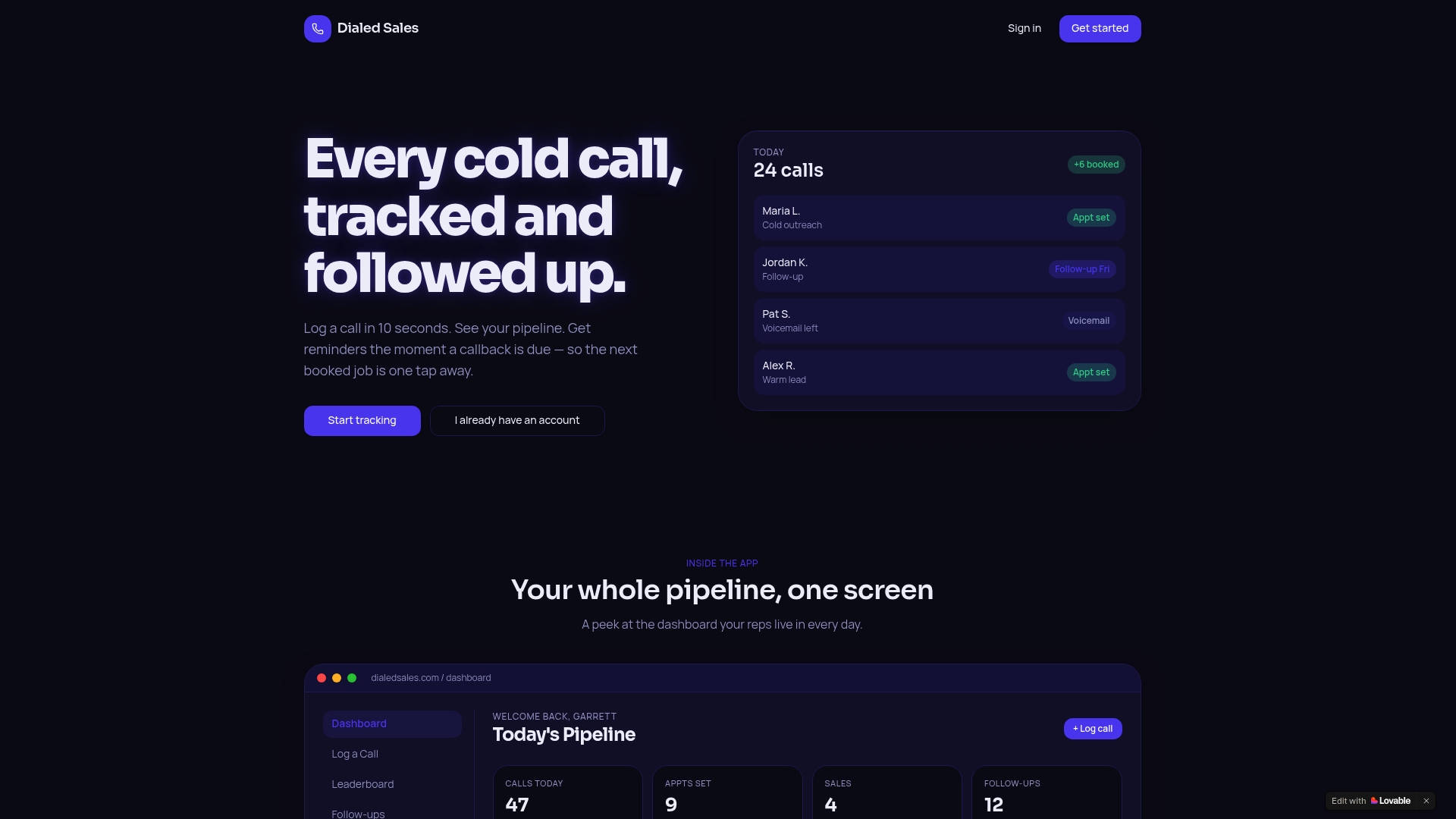
Dialedsales is built for exactly this. Sales reps and field teams can log a call in 10 seconds, capture the outcome and notes, and set a follow-up date that surfaces automatically when it is due. Every logged call feeds your pipeline view, so you can see close rates climb as your data accumulates. The workflow is direct: log, follow up, track, and improve. No complex setup. No features you will never use. Just clean data that makes every sales decision sharper.
FAQ
What is the role of data in sales decisions?
Data provides objective evidence about buyer behavior, pipeline health, and rep performance, replacing guesswork with facts. Teams that use data consistently make faster, more accurate decisions at every stage of the sales process.
How does data improve sales forecasting?
Predictive analytics combines historical win rates, deal velocity, and real-time pipeline signals to produce probability-weighted forecasts. This approach replaces manager opinion with quantified intelligence and produces forecasts that hold up at quarter end.
What types of data matter most for sales teams?
Firmographic, technographic, behavioral, and intent data together create the most complete picture of an account. Combining internal CRM records with external third-party signals produces measurably better targeting and timing than either source alone.
How do sales teams balance data with human judgment?
Model recommendations should be followed by default, with exceptions allowed only when a rep can state a specific, articulated reason. This protocol keeps decisions transparent and prevents models from becoming black boxes that reps distrust and ignore.
Where should a sales team start with data-driven decision-making?
Start by defining the two or three business questions that most directly connect to revenue. Buying software before answering that question adds noise rather than clarity, and most teams that skip this step fail to change their results.