
Sales tracking is defined as the systematic capture and analysis of sales activities, pipeline stages, and deal outcomes to drive measurable revenue growth. Sales professionals who increase sales revenue with tracking gain a clear view of where deals stall, which reps need coaching, and where the next dollar is coming from. Without that visibility, revenue targets become guesswork. With it, every decision connects to a real number.
How does tracking sales metrics increase revenue?
Sales tracking works because it turns daily activity into data you can act on. When you log calls, meetings, and outcomes, you stop relying on memory and start relying on patterns. Patterns tell you which behaviors produce closed deals and which ones waste time.
The core mechanism is simple. Tracking creates a feedback loop between activity and result. A rep who makes 40 calls a day but closes nothing has a quality problem. A rep who closes well but only makes 15 calls has a volume problem. You cannot tell the difference without data.
Sales activity management turns daily actions into performance indicators, connecting activity to revenue in a way that makes coaching specific and effective. That specificity is what separates teams that grow from teams that plateau. Generic feedback does not change behavior. Evidence tied to a rep's own numbers does.

What sales metrics should you track for revenue growth?
The most important distinction in sales analytics is the difference between leading and lagging indicators. Leading indicators predict future revenue. Lagging indicators confirm past results. Tracking both is the standard practice for any team serious about consistent growth.
Leading indicators include:
- Call volume and connection rate
- Meetings booked per week
- Pipeline progression rate (deals moving from stage to stage)
- Follow-up completion rate
Lagging indicators include:
- Closed revenue per rep
- Win rate by deal type or territory
- Average deal size
- Sales cycle length
Tracking both types is the only way to catch problems before they hit your quarterly number. A drop in meetings booked this week becomes a revenue gap in six weeks. If you only watch closed revenue, you see the problem too late to fix it.
A common mistake is tracking volume without connecting it to outcomes. High call counts feel productive. But if those calls never convert, the metric is noise. Every activity metric needs a paired outcome metric to be meaningful.
| Metric category | Example metrics | Revenue impact |
|---|---|---|
| Activity (leading) | Calls made, emails sent, demos booked | Predicts pipeline fill rate |
| Pipeline health (leading) | Stage progression, deal age, next step logged | Predicts close timing and accuracy |
| Outcome (lagging) | Win rate, closed revenue, average deal size | Confirms what activity produced |
| Forecast accuracy | Projected vs. actual close rate | Reduces revenue surprises |
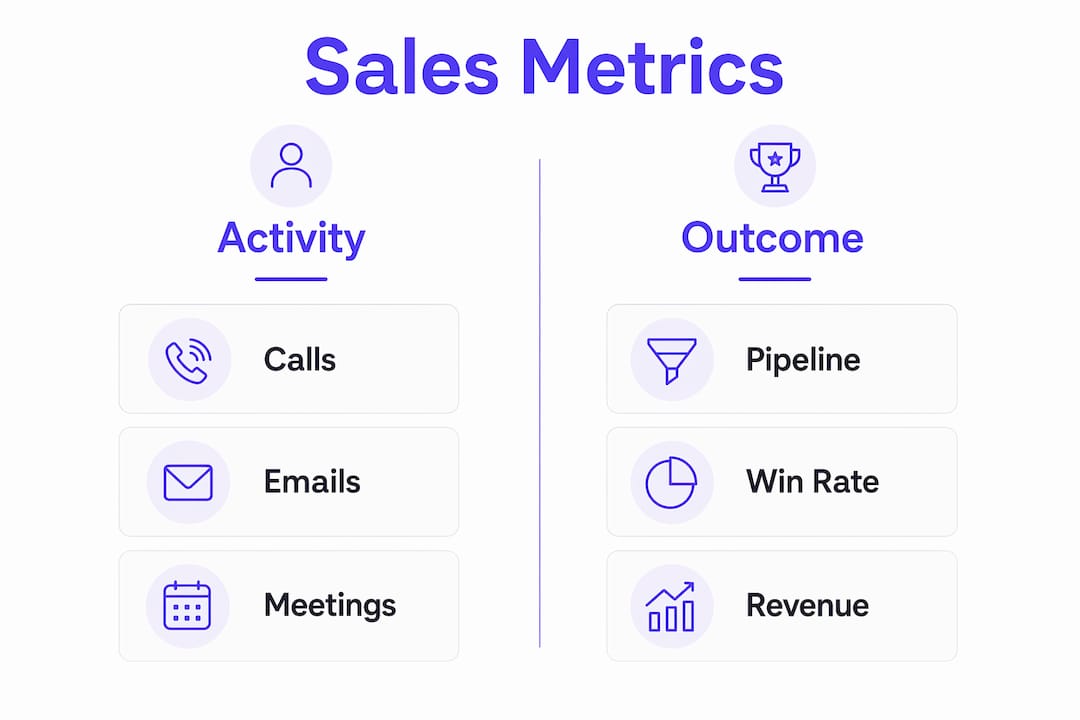
Pro Tip: Never review activity metrics in isolation. Always pair them with the outcome metric they are supposed to drive. Calls without conversion data is just a count.
What tools and techniques make sales tracking effective?
Automated tracking outperforms manual spreadsheets in every measurable way. Manual tracking methods are prone to errors and omissions as business scales, while automated tracking integrated with communication tools provides real-time, accurate data without increasing admin overhead. The difference compounds quickly on a team of five or more reps.
The most effective tracking setups connect four systems: your CRM, your email, your calendar, and your dialer or call logger. When these tools share data, every touchpoint gets captured automatically. Reps spend less time typing notes and more time selling.
Automated tracking integrated with email, calendars, and telephony increases data quality and reduces errors compared to manual tracking that relies on human memory. That accuracy matters most when you are forecasting revenue or coaching a rep on a specific deal.
Role-specific scorecards make activity visible and measurable for both reps and managers. A scorecard shows each rep exactly where they stand against their activity targets. It removes ambiguity and makes performance conversations factual instead of subjective.
Transitioning from manual to automated tracking can reclaim up to 30% of daily time previously spent on administrative data management. That time goes back to selling, which is the only activity that directly produces revenue.
Pro Tip: Require a "next step + date" field for every logged interaction. A deal with no next step is a stalled deal. This one habit keeps your pipeline moving and your forecast honest.
How do you implement sales tracking to increase profits?
A practical implementation follows a clear sequence. Start with your revenue target, then work backward to the daily activities required to hit it.
- Set your revenue goal. Define the monthly or quarterly number you need to hit.
- Calculate required pipeline volume. Divide your revenue target by your average deal size and win rate. That gives you the number of active deals you need at any time.
- Identify the activities that fill pipeline. For most teams, this means calls, emails, and meetings. Set daily and weekly targets for each.
- Log every interaction. Use a tool that makes logging fast. Dialedsales lets reps log a call in 10 seconds, which removes the friction that kills adoption.
- Review activity daily. A five-minute morning check on yesterday's numbers keeps reps on track before problems compound.
- Run weekly scorecard check-ins. Compare each rep's activity against targets. Identify who is ahead, who is behind, and why.
- Conduct quarterly audits. Review win rates, deal sizes, and sales cycle lengths. Adjust targets and coaching priorities based on what the data shows.
Dashboards and reporting workflows help identify growth blockers and prioritize high-value deals before they negatively affect revenue. The key is reviewing dashboards on a set cadence, not just when something feels wrong.
Targeted, evidence-based coaching connects activity patterns directly to deal outcomes, increasing the likelihood of consistent revenue growth. When a manager can show a rep exactly which stage their deals stall at, the coaching conversation becomes a problem-solving session instead of a performance review.
Pro Tip: Reverse-engineer your revenue target every quarter. If your win rate drops from 30% to 25%, your pipeline needs to grow immediately to compensate. Tracking gives you that signal in real time.
Sequencing follow-ups is another area where tracking pays off. A rep who logs every callback with a due date never lets a warm prospect go cold. Dialedsales surfaces follow-up reminders automatically when they are due, so nothing falls through.
What are the common challenges in sales tracking?
The three most common problems in sales tracking are poor data quality, low rep adoption, and optimism bias in forecasts. Each one undermines the revenue benefits that tracking is supposed to deliver.
Data quality suffers when reps log incomplete information or skip logging altogether. The fix is automation. When your dialer or email tool captures activity automatically, data quality improves without asking reps to do more work.
Low adoption is the most dangerous problem. A tracking system that reps avoid produces no data at all. Simple tools used consistently outperform complex systems that sales reps avoid. The lesson is clear: choose ease of use over feature count every time.
Optimism bias distorts forecasts when reps mark deals as likely to close based on gut feeling rather than pipeline evidence. Tracking systems eliminate this by anchoring revenue projections to real-time pipeline movement and historical win/loss data, not assumptions. The result is a forecast you can actually plan around.
Stale deals are the silent killers of accurate forecasts. A deal that has not moved in 30 days is not a deal. It is a wish. Regular pipeline reviews force reps and managers to confront that reality before it becomes a missed quarter.
Pipeline hygiene requires a weekly review of every open deal. Flag any deal with no logged activity in the past two weeks. Remove deals that have no realistic path to close. A smaller, accurate pipeline is always more useful than a large, inflated one.
Pro Tip: Set a maximum deal age for each pipeline stage. Any deal that exceeds that age without progression gets flagged automatically. This forces honest conversations before the quarter ends.
Key Takeaways
Consistent, automated sales tracking is the most direct path to predictable revenue growth because it connects daily activity to outcomes, removes forecast bias, and creates the data needed for targeted coaching.
| Point | Details |
|---|---|
| Track leading and lagging indicators | Pair activity metrics with outcome metrics to catch problems before they hit revenue. |
| Automate data capture | Automated tracking reclaims selling time and improves data accuracy over manual methods. |
| Enforce next-step logging | Requiring a next step and date for every interaction keeps pipeline moving and forecasts honest. |
| Use dashboards on a set cadence | Daily and weekly reviews catch bottlenecks early, before they become quarterly misses. |
| Prioritize adoption over complexity | A simple system used daily beats a complex system ignored by reps. |
Why I think most teams are tracking the wrong things
Most sales teams I have seen track activity volume and call it done. They count calls, count emails, and report those numbers up the chain. The problem is that volume without outcome context is just noise dressed up as data.
The teams that actually grow are the ones who connect every activity to a stage movement or a deal outcome. They ask not "how many calls did we make?" but "how many calls moved a deal forward?" That shift in question changes everything about how you coach and where you focus.
The other thing I have learned is that complexity kills adoption faster than anything else. I have watched teams spend months building elaborate tracking systems that reps quietly stopped using by week three. A simple tracking habit applied every day produces better data than a sophisticated system applied inconsistently.
Early intervention is the real payoff. When you catch a pipeline problem in week two of the quarter, you have time to fix it. When you catch it in week eleven, you are just documenting a miss. Tracking gives you the early warning. What you do with it is the job.
— Garrett
How Dialedsales fits into your tracking workflow
Sales teams that want to increase profits with tracking need a tool that removes friction, not one that adds to it.
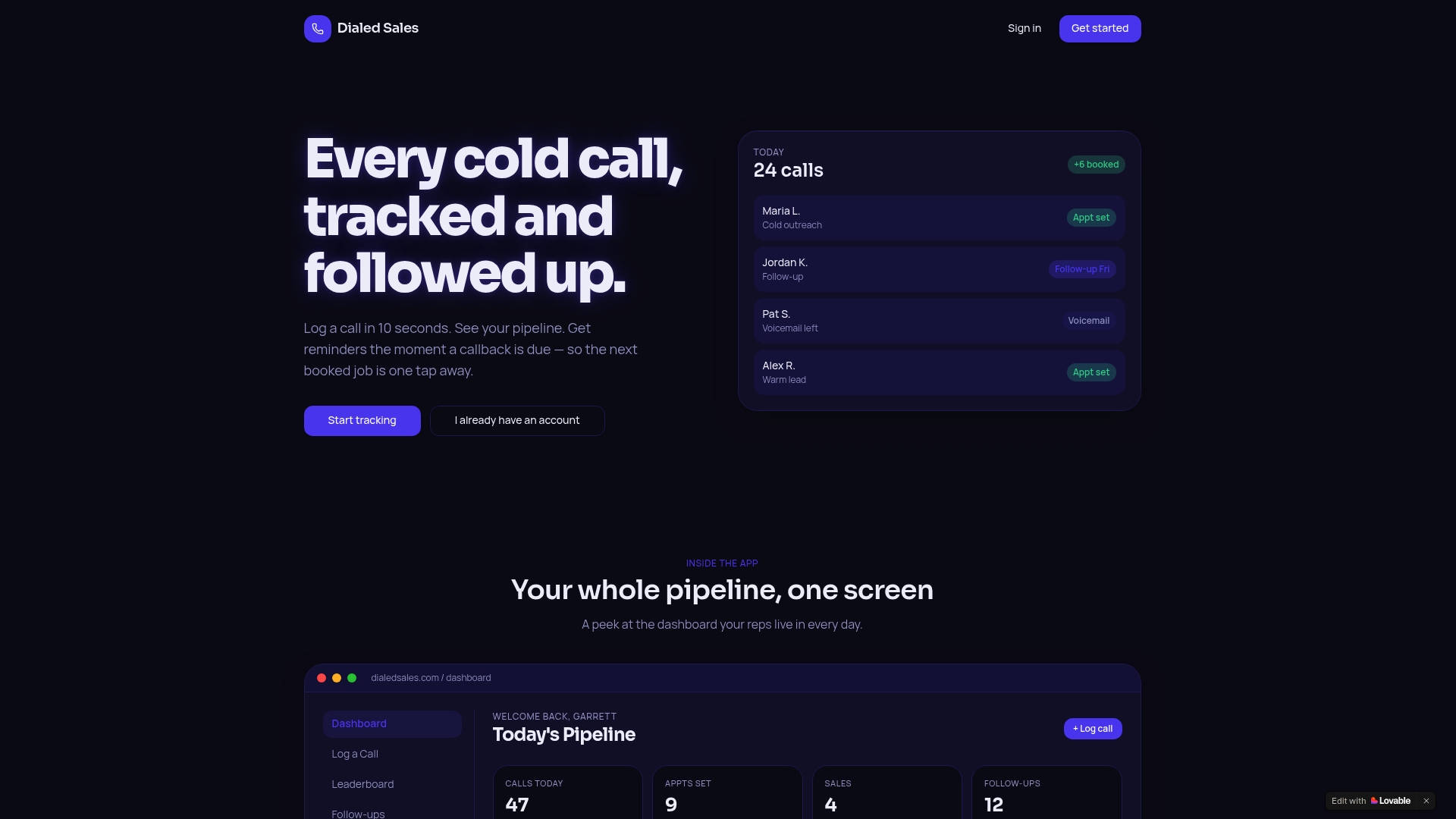
Dialedsales is built for exactly that. Reps log a call in 10 seconds, set a follow-up date, and move on. The dashboard surfaces every callback the moment it is due, so nothing slips. Every outcome gets tracked automatically, which means your close rate data is always current. For field teams and cold callers who need a fast call tracker that actually gets used, Dialedsales removes the admin burden and keeps the pipeline honest. Check out how Dialedsales supports your sales prospecting workflow from the first call to the closed deal.
FAQ
What does sales tracking mean for revenue growth?
Sales tracking means capturing every sales activity, pipeline stage, and deal outcome so you can connect daily behavior to revenue results. Teams that track consistently identify problems earlier and close more deals.
Why do leading indicators matter more than closed revenue?
Leading indicators like call volume and meetings booked predict future revenue weeks before it shows up in closed deals. Tracking them gives you time to correct course before a shortfall becomes a miss.
How do you fix low adoption of sales tracking tools?
Choose the simplest tool your team will actually use every day. Adoption rates matter more than feature count. A minimal system used consistently produces better data than a complex one that reps avoid.
What is optimism bias in sales forecasting?
Optimism bias happens when reps forecast deals as likely to close based on feeling rather than pipeline evidence. Automated tracking corrects this by anchoring projections to real-time data and historical win rates.
How often should you review your sales pipeline?
Review activity metrics daily, run scorecard check-ins weekly, and conduct full pipeline audits quarterly. This cadence catches stale deals and coaching gaps before they affect your revenue number.