
A sales callback strategy is a systematic, scheduled approach to following up with prospects after initial contact, using context from prior conversations to drive each subsequent call toward a close. It is not simply "calling people back." The strategy covers when you call, what you say, how many times you try, and how you log every outcome so nothing slips through.
The core components of a well-built callback strategy include:
- Specific date and time booking before the first call ends, not vague "call me next week" commitments
- Local time dialing so you reach prospects during their most receptive windows
- Contextual references that tie each call back to the pain or goal the prospect raised previously
- A defined call cadence with clear spacing between attempts and a set endpoint
- Outcome logging after every attempt so the next rep or the next call starts with full context
- Backup coverage so a promised callback never dies when one rep is unavailable
Get all six working together and you have a callback strategy. Miss even one and you are just making calls.
Why a callback strategy is the engine of your sales pipeline
80% of B2B sales require five or more follow-ups to close, yet 48% of sales reps never make a single follow-up call after initial contact. That gap is not a motivation problem. It is a process problem, and a disciplined callback strategy is the fix.
Statistic: Companies that respond to callback requests within 5 minutes convert leads 391% more often than those who wait longer, yet most sales teams treat callback requests with far less urgency than they deserve.
When someone asks you to call them back at a specific time, they are giving you explicit permission to interrupt their day. That is the highest-intent signal in sales. Treating it casually is one of the most expensive mistakes a rep can make.
Disciplined callback strategies also accelerate pipeline velocity. A follow-up call to a prospect who already knows your name converts at a meaningfully higher rate than a cold dial, because the context is already established. Speed of resolution, not just speed of answer, drives customer satisfaction in callback scenarios, which means showing up prepared matters as much as showing up on time.
Pro Tip: Lock in a specific callback date and time before you hang up on the first call. Sales trainer Jim Domanski identifies this as the single most critical step, because vague commitments are where deals go to die. Use call reminders to make sure that booked time actually surfaces on your dashboard.
How to build and execute effective callback strategies
The best callback strategies share a handful of non-negotiable practices. Here is how to put each one into action.
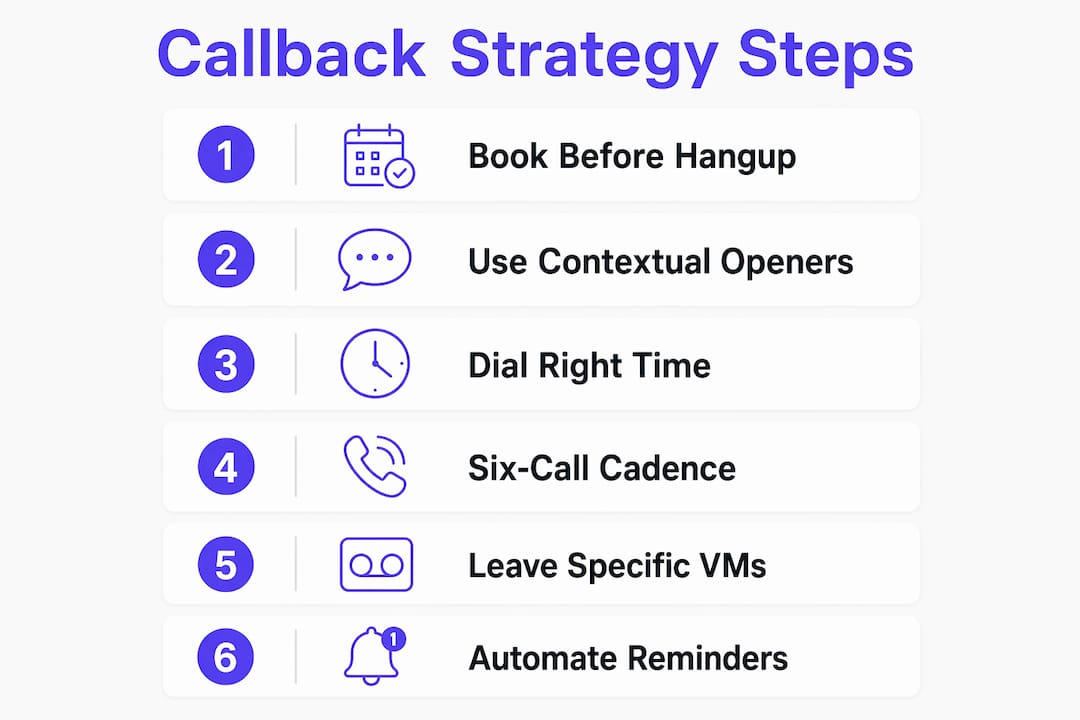
Set the callback before you hang up
Ask for a specific date and time at the end of every first call. "I'll follow up sometime next week" is not a commitment; it is a polite way to let the deal stall. A confirmed time slot gives the prospect a reason to show up and gives you a reason to prepare.

Use context to open every callback
Generic openers kill callbacks fast. Instead of "just checking in," open by referencing the exact pain or goal the prospect raised on the first call. Something like: "When we spoke last Tuesday, you mentioned the renewal date was a concern. I wanted to walk through that specifically today." That framing signals preparation and cuts through the noise.
Dial during the right time windows
Late afternoon in the prospect's local time zone, roughly 4:00–5:00 PM, consistently produces higher connect rates than morning or midday dials. Pair that with time zone scheduling best practices to avoid the timezone confusion that quietly kills a large share of promised callbacks.

Run a six-call cadence with clear spacing
Calls three through six account for 80% of closed deals, with connect rates plateauing after the sixth call. A practical sequence runs on day 1, day 3, day 7, day 14, day 21, and day 30. After multiple calls with no response, move the prospect to a nurture track triggered by a real buying signal, not a calendar timer.
Leave voicemails with a specific callback time
Vague voicemails get ignored. Voicemails that state a specific callback time generate noticeably more return calls than open-ended messages. Keep the voicemail under 25 seconds: your name, company, a one-sentence reference to the prior interaction, and a concrete time you will try again.
Use a script framework, not a script
A good callback opener runs four beats: introduce yourself by full name and company, remind the prospect of the specific pain or goal from the first call, state a short agenda, and end with a low-pressure close like "then we'll determine next steps, if any." That phrase reduces resistance because it signals no hard sell.
Centralize scheduling and backup coverage
Many callbacks fail not because reps forget, but because the rep who took the request is unavailable and no one else knows about it. A shared, timezone-explicit calendar with assigned backup coverage solves this. Centralizing callback requests is the structural fix most teams skip.
Automate reminders and outcome logging
Manual tracking breaks under volume. Tools that auto-surface due callbacks on your dashboard, log outcomes with structured codes (connect, voicemail, no-answer), and route the next step based on outcome remove the human failure points that cause leads to go cold. Dialedsales is built for exactly this: log a call in 10 seconds, set the follow-up date, and the dashboard surfaces it the moment it is due.
Pro Tip: When a callback is scheduled far out, use that gap to ask two or three targeted qualifying questions before you hang up. This approach, drawn from advanced callback tactics, uncovers current pain points and resets rapport so the actual callback starts warm, not cold.
Common mistakes that quietly kill your callback results
Most callback failures are not dramatic. They are small, repeatable errors that compound over time.
- Vague commitments. "Call me next week" without a booked time is not a callback strategy. It is a hope. Jim Domanski's research is direct: failing to secure a specific date and time is the single biggest mistake reps make.
- Quitting after one or two attempts. Given that calls three through six account for 80% of closed B2B deals, reps who stop early forfeit a large share of their closeable pipeline to competitors who stay in the game.
- Generic "just checking in" openers. These signal zero preparation and give the prospect no reason to engage. Reference the prior conversation every time.
- Timezone errors. Promising a 2:00 PM callback without specifying the timezone is a coordination failure waiting to happen, especially on remote or distributed teams.
- No backup coverage. When the rep who took the callback request is sick or in a demo, that callback dies unless someone else is assigned to cover it.
- Calling outside the right window. Early morning and midday dials consistently underperform late afternoon local time. Timing is not a minor detail.
- Not every call needs a callback. Urgent, emotional, or high-value calls require immediate routing, not a deferred callback. Applying a one-size-fits-all callback threshold wastes resources and frustrates the callers who needed help right now.
The common thread across all of these is treating callbacks as a low-priority task rather than a core performance discipline. The reps who close the most are the ones who follow up with a plan.
What the research says about callback performance in 2026
The data on callback performance is consistent and, for most sales teams, uncomfortable.
The six-call cadence data reinforces this. Calls three through six account for 80% of closed deals, yet 48% of sales reps never make a single follow-up call after initial contact. That is not a pipeline problem. It is a discipline gap that a structured callback strategy closes directly.
On the voicemail side, the difference between a specific and a vague message is measurable. Stating "I'll try you Thursday at 2:00 PM" rather than "call me when you get a chance" lifts return call rates by 22%. Short, value-driven messages that reference the prior interaction perform best.
The message-first callback model adds another layer. Answering immediately, capturing the caller's intent and urgency, and then calling back with full context produces better first-call resolution than routing every caller into a generic queue. Speed of resolution drives satisfaction more than speed of answer alone.
For teams managing high callback volume, centralizing requests in a shared, timezone-explicit calendar with backup coverage significantly improves completion rates. Manual workflows break under volume. The cold call follow-up discipline that separates top performers from average ones comes down to systems, not willpower.
Key Takeaways
A structured sales callback strategy, built on specific timing, contextual openers, and a capped six-call cadence, is the single highest-leverage discipline for closing more B2B deals.
| Point | Details |
|---|---|
| Book the callback before hanging up | Vague commitments stall deals; a specific date and time is the minimum viable commitment. |
| Run a six-call cadence | Calls three through six account for 80% of closed deals; quitting early forfeits most of your closeable pipeline. |
| Use specific voicemail times | Voicemails with a stated callback time generate 22% more return calls than open-ended messages. |
| Centralize and automate tracking | Shared calendars with backup coverage and tools like Dialedsales prevent callbacks from dying in manual workflows. |
| Not every call needs a callback | Urgent or emotional calls require immediate routing; applying callbacks universally wastes resources and frustrates high-priority callers. |
Stop losing deals to missed callbacks. Dialedsales logs every call in 10 seconds, auto-surfaces follow-ups the moment they are due, and keeps your entire pipeline visible at a glance. Built for sales reps and field teams across every industry.
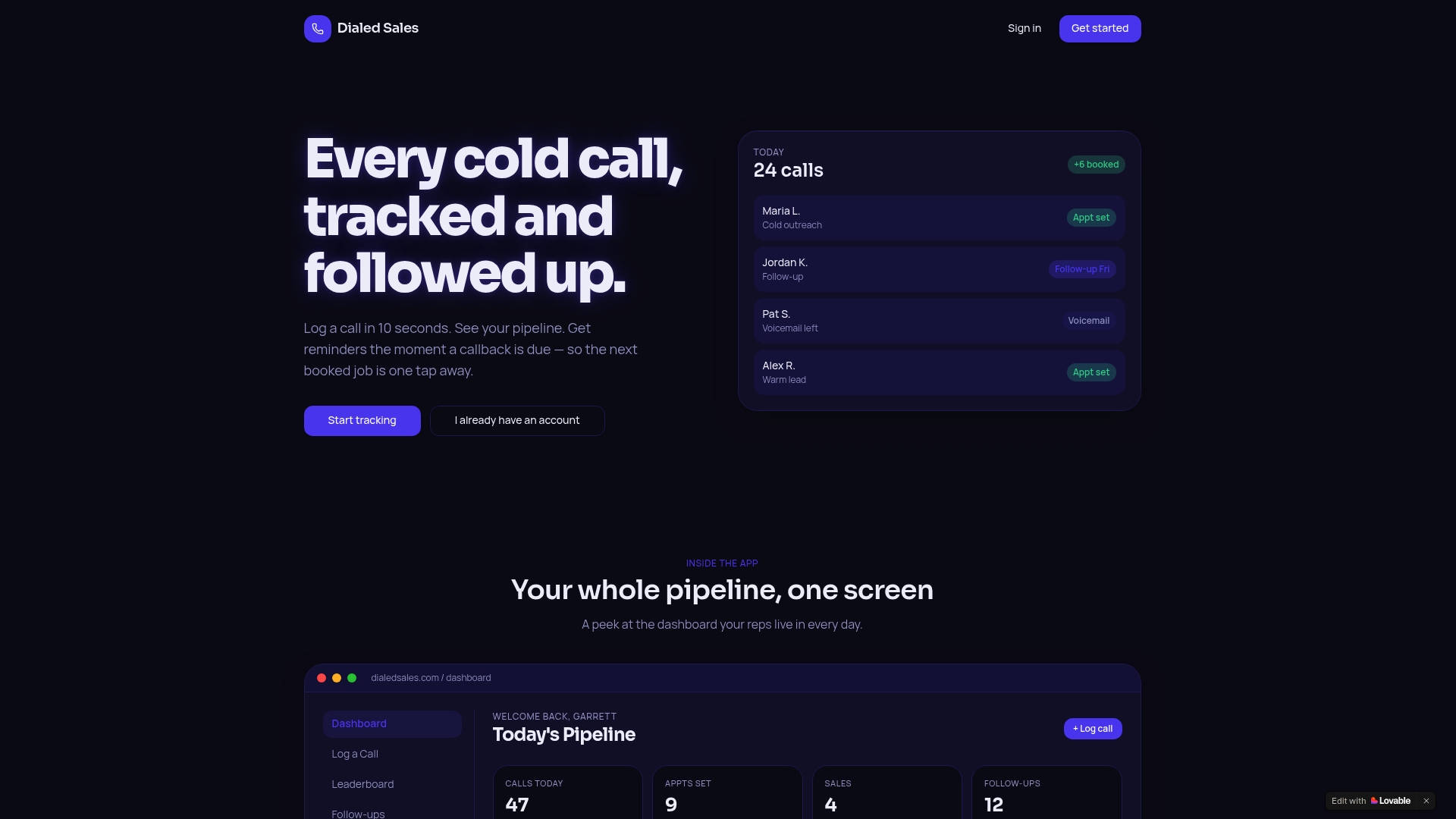
Start tracking callbacks with Dialedsales and see your close rate climb.