
Sales pipeline management is defined as the systematic process of tracking, organizing, and advancing sales deals through specific stages from first contact to close. It gives sales professionals and business managers real-time visibility into where every deal stands, which opportunities need attention, and how much revenue is likely to close in a given period. Without it, forecasting becomes guesswork and deals fall through the cracks. With it, you can prioritize high-value opportunities, catch stalled deals early, and build a predictable revenue engine.
What is sales pipeline management and why does it matter?
Sales pipeline management tracks individual deals through defined stages, monitoring conversion rates and velocity to forecast revenue accurately. The pipeline is not a static report. It is a living tool that reflects the real-time health of your sales operation. Teams that manage their pipeline actively can reallocate resources from stalled deals to high-probability opportunities before the quarter ends.
The core benefit is visibility. You see exactly how many deals are in each stage, how long they have been there, and what it will take to move them forward. That visibility feeds better decisions at every level, from the individual rep deciding which call to make next, to the sales manager adjusting headcount or territory coverage. Pipeline management also creates a shared language across sales, marketing, and customer success, reducing friction and accelerating deal progress.

Most B2B teams require a pipeline coverage ratio significantly greater than 1:1 depending on win rates and sales cycle length. That means you need more pipeline than your quota to reliably hit your number. Building and maintaining that buffer is the core discipline of pipeline management.
What are the common sales pipeline stages?
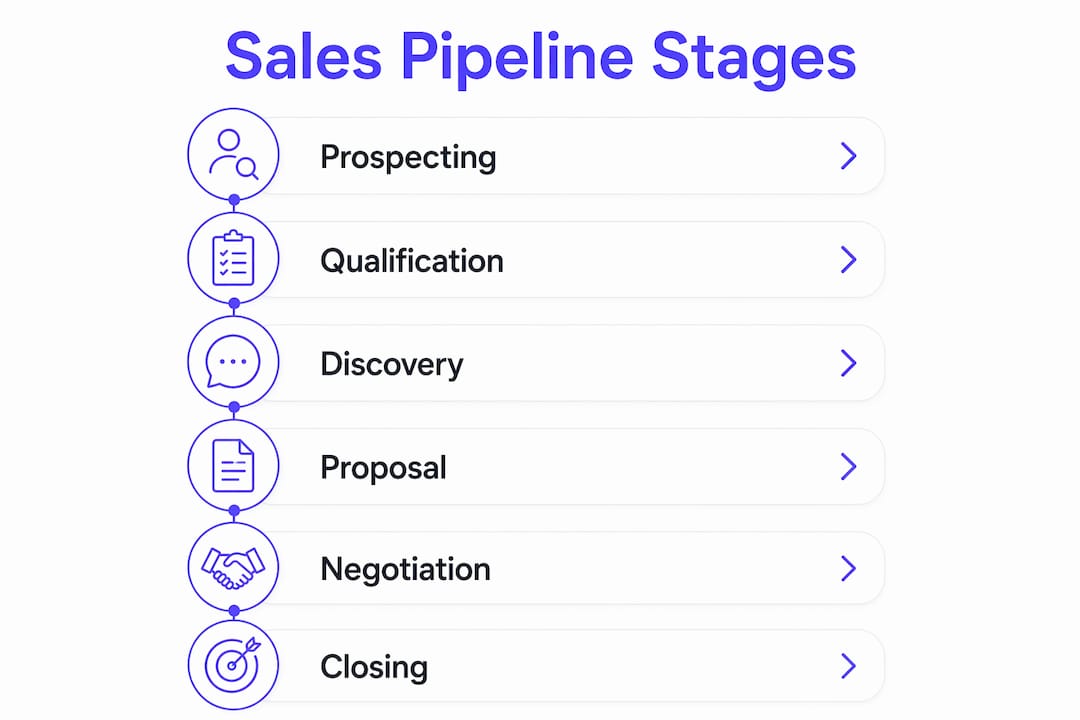
Typical sales pipeline frameworks include 5–7 stages: Prospecting, Qualification, Discovery, Proposal, Negotiation, and Closed (Won/Lost). Stage count varies by sales complexity. High-velocity B2C sales use fewer stages. Complex B2B enterprise deals add layers for legal review, procurement, and executive approval.
| Stage | Purpose | Exit criteria |
|---|---|---|
| Prospecting | Identify potential buyers | Contact made, basic fit confirmed |
| Qualification | Confirm budget, authority, need, timeline | BANT criteria verified in CRM |
| Discovery | Understand buyer's specific problem | Pain points documented, stakeholders mapped |
| Proposal | Present solution and pricing | Proposal sent, verbal interest confirmed |
| Negotiation | Align on terms and pricing | Redlines agreed, legal review complete |
| Closed Won/Lost | Deal finalized | Contract signed or opportunity archived |
Exit criteria must be binary and objectively verifiable to keep pipeline data clean and forecasts reliable. A vague criterion like "prospect seems interested" is useless. A clear criterion like "budget confirmed in writing and decision-maker identified" is actionable and consistent across your entire team.
Pro Tip: Build your exit criteria around buyer actions, not seller activities. "Sent proposal" is a seller action. "Prospect confirmed receipt and scheduled review call" is a buyer action. Buyer-focused criteria produce far more accurate stage data.
How to manage a sales pipeline for better forecasting
Effective pipeline management runs on three disciplines: hygiene, metrics, and reviews. Skip any one of them and your pipeline becomes a graveyard of wishful thinking.
Pipeline hygiene
Removing stale "zombie" deals regularly is the single most underrated practice in sales management. Stale deals inflate your pipeline size artificially and waste rep time without producing revenue. A quarterly purge of deals with no buyer activity in 30 or more days keeps your forecast honest and your team focused on winnable opportunities.
Key metrics to track
Three metrics tell you most of what you need to know about pipeline health:
- Pipeline coverage ratio. Divide total pipeline value by your quota. A ratio below your historical win rate signals you need more top-of-funnel activity immediately.
- Sales velocity. Pipeline velocity measures how quickly deals move through stages and convert into revenue, factoring in deal count, average deal size, win rate, and sales cycle length. A drop in velocity signals a process problem, not just a people problem.
- Stage duration. Analyzing time in stage helps managers diagnose pipeline health and coach reps on where deals get stuck. Deals stuck too long in Proposal usually mean pricing or authority issues. Deals moving too fast may have skipped qualification entirely.
Regular pipeline reviews
Weekly or monthly pipeline review meetings improve team alignment and forecast accuracy. The format matters. Reviews should focus on deal progression, not activity reports. Ask "what has the buyer done since last week?" not "how many calls did you make?"
Pro Tip: Set a standard pipeline coverage target based on your team's historical win rate. If you close 25% of pipeline, you need 4x quota in active deals at all times. Build that number into your weekly review dashboard so every rep sees it without being asked.
What is the difference between a sales pipeline and a sales funnel?
Sales professionals confuse these two terms constantly, and the confusion causes real problems. Sales pipelines track individual deals and their current stage. Sales funnels measure aggregate conversion rates and lead drop-off across the entire prospect base. They answer different questions and serve different purposes.
The sales conversion funnel is analytical and strategic. It tells you what percentage of leads become qualified opportunities, what percentage of opportunities become proposals, and where the biggest drop-off points are across your whole market. The pipeline is operational and tactical. It tells you what to do today with the specific deals in front of you.
Here is why the distinction matters in practice:
- Pipeline view: "Deal with Acme Corp is stuck in Negotiation for 18 days. Rep needs coaching on objection handling."
- Funnel view: "We lose 60% of deals at the Proposal stage. Our pricing or value messaging needs work."
- Combined use: Use funnel data to fix process problems at scale. Use pipeline data to win individual deals.
Confusing pipeline and funnel metrics leads to misaligned sales efforts. A manager who treats funnel analysis as pipeline management will make broad process changes when the real problem is one underperforming rep. A rep who treats pipeline tracking as funnel analysis will miss the individual deal signals that predict a lost opportunity.
How does technology improve sales pipeline management?
CRM software is the backbone of any modern pipeline. It centralizes deal data, enforces stage definitions, and gives managers a single source of truth across the entire team. Without a CRM, pipeline management relies on spreadsheets and memory. Both fail at scale.
AI adds a second layer of value on top of CRM data. Automated pipeline tools outperform manual spreadsheet methods in time savings and prediction accuracy. Specifically, AI-powered features deliver:
- Lead scoring. AI ranks deals by close probability based on historical patterns, so reps focus on the highest-value opportunities first.
- Deal risk prediction. The system flags deals that show warning signs, such as no buyer contact in two weeks or a missing decision-maker, before the rep notices.
- Automated follow-up reminders. Reps get notified the moment a callback is due, eliminating the "I forgot to follow up" problem entirely.
- Visual pipeline boards. A drag-and-drop stage view lets reps and managers see the entire pipeline at a glance and spot gaps in coverage instantly.
Dialedsales is built specifically for this workflow. Reps log a call in 10 seconds, set a follow-up date, and the dashboard surfaces that deal automatically when the callback is due. That kind of pipeline visibility removes the cognitive load of remembering who to call and when, so reps spend their time selling instead of managing their to-do list.
Sales pipeline best practices for sustainable growth
A well-managed pipeline does not happen by accident. It requires consistent habits, clear standards, and team-wide discipline. The following practices separate high-performing sales teams from average ones.
- Keep your pipeline simple. More stages do not mean more control. Align your stages to the buyer's actual decision process, not your internal approval workflow. Buyers do not care about your procurement steps.
- Train managers, not just reps. Pipeline management requires regular reviews to identify bottlenecks and adjust resources. Managers who know how to run a pipeline review create teams that consistently hit forecast.
- Standardize terminology across departments. Pipeline stage alignment creates a shared language for revenue teams, increasing efficiency and post-sale customer retention. When marketing, sales, and customer success define "qualified" the same way, handoffs become frictionless.
- Improve incrementally. Do not overhaul your entire pipeline process at once. Change one stage definition, measure the impact for 60 days, then adjust the next. Wholesale changes create confusion and destroy historical data comparisons.
- Tie pipeline health to revenue targets. Predictable revenue comes from disciplined pipeline management. Teams that review coverage ratios weekly and purge stale deals quarterly outperform those that treat the pipeline as a passive record.
Pro Tip: Run a "pipeline autopsy" on every lost deal. Document which stage it stalled in and why the buyer disengaged. After 10 autopsies, patterns emerge that no amount of win-rate analysis will show you.
Key Takeaways
Effective sales pipeline management requires stage clarity, consistent hygiene, and metric-driven reviews to produce accurate forecasts and predictable revenue.
| Point | Details |
|---|---|
| Define clear exit criteria | Use binary, buyer-verified criteria at each stage to keep forecast data reliable. |
| Practice pipeline hygiene | Remove stale deals quarterly to prevent inflated forecasts and wasted rep effort. |
| Track the right metrics | Monitor pipeline coverage ratio, sales velocity, and stage duration every week. |
| Separate pipeline from funnel | Use pipeline data for individual deal decisions and funnel data for process improvements. |
| Use technology purposefully | CRM and AI tools reduce manual tracking and surface follow-up reminders automatically. |
The pipeline mistake I see most often
Most sales teams I have worked with treat their pipeline as a filing system. Deals go in, deals sit there, and managers review a list of names and dollar amounts once a month. That is not pipeline management. That is a spreadsheet with a fancier name.
The real mistake is tracking seller activity instead of buyer progression. When a rep marks a deal as "Proposal" because they sent a document, that tells you nothing about whether the buyer read it, shared it internally, or has any intention of moving forward. The stage should only advance when the buyer takes a verifiable action. That one shift in thinking changes everything about how accurate your forecast becomes.
The second mistake is treating pipeline reviews as status updates. The question "where does this deal stand?" produces a narrative. The question "what did the buyer do this week?" produces a fact. Facts are what you can forecast from.
My honest recommendation: start with hygiene before you invest in any new technology. Clean your pipeline of deals with no buyer activity in the last 30 days. Then run one week of buyer-focused pipeline reviews. You will learn more about your actual sales process in those two steps than from any dashboard or AI tool. Once your data is clean, technology multiplies its value. Applied to dirty data, it just gives you faster wrong answers.
— Garrett
Dialedsales fits directly into your pipeline workflow
Field reps and sales managers need a pipeline tool that works at the speed of a real sales day, not a software demo.
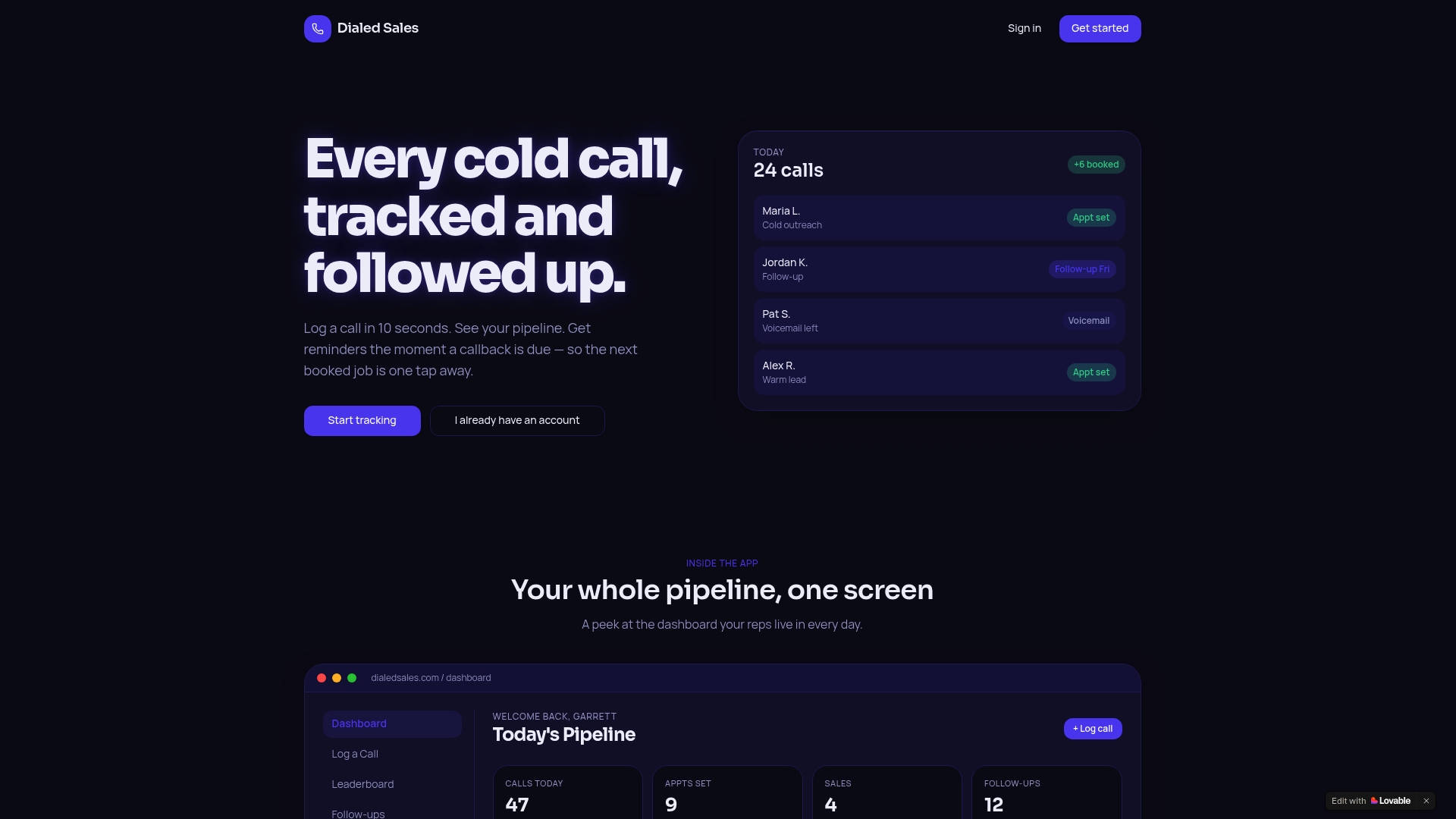
Dialedsales is a lightweight cold call tracker built for reps who make high volumes of calls and cannot afford to lose a follow-up. Log a call in 10 seconds, attach an outcome and notes, and set a callback date. The dashboard surfaces every due follow-up automatically so nothing slips. For teams managing active pipelines across multiple industries, Dialedsales keeps the process tight without adding complexity. See how it fits your workflow at dialedsales.com.
FAQ
What is sales pipeline management in simple terms?
Sales pipeline management is the process of tracking sales deals through defined stages from first contact to close. It gives sales teams visibility into deal status, forecast accuracy, and where to focus their effort.
What is a sales pipeline stage?
A sales pipeline stage is a defined step in the buying process that a deal must pass through before closing. Common stages include Prospecting, Qualification, Discovery, Proposal, Negotiation, and Closed Won or Lost.
How often should you review your sales pipeline?
Weekly pipeline reviews produce the best results for most sales teams. Monthly reviews work for longer sales cycles, but weekly check-ins catch stalled deals and forecasting gaps before they become quarter-end problems.
What is the difference between a sales pipeline and a sales funnel?
A sales pipeline tracks individual active deals by stage. A sales funnel measures aggregate conversion rates across all leads. Pipelines are operational; funnels are analytical. Both are needed to manage and improve a sales process.
How does CRM software support pipeline management?
CRM software centralizes deal data, enforces stage definitions, and automates follow-up reminders. It replaces manual spreadsheet tracking and gives managers a single accurate view of pipeline health across the entire team.