
The fastest fix for a falling connect rate is also the least glamorous: pull every flagged number out of rotation, cap dials per line, and rotate before you touch anything else. List hygiene and call timing matter, but they're wasted effort on a burned Caller ID. Most teams see measurable recovery within days of remediating or replacing flagged lines, not weeks.
TL;DR:
- Removing flagged numbers from rotation and capping daily dial volume per Caller ID can recover 40 to 70 percent in answer rates within days.
- Regularly audit for invalid, disconnected, or duplicate numbers and verify AMD accuracy to prevent masking real human pickups.
- Registering CNAM, enabling STIR/SHAKEN, and using private local presence numbers significantly increase answer likelihood and trust with carriers.
- Tracking connect and contact rates separately helps identify whether issues stem from list targeting or number reputation, allowing targeted fixes.
- Consistent daily habits like zoning calls, warming up new numbers, and sending pre-call texts support sustained high connect rates.
Table of Contents
- What's Really Killing Your Call Connection Rate?
- Fix Number Health Before You Fix Anything Else
- Daily Habits That Keep Connect Rates High
- Which Metrics Actually Predict a Recovery?
- A Simple Workflow for Turning Recovered Numbers Into Revenue
- Connect Rate and Contact Rate Aren't the Same Metric
- Why Carrier Networks Make or Break Your Connect Rate
- Your Caller ID Is Doing More Work Than Your Script
- Scripts and Training That Actually Reduce Abandonment
- Compliance Rules That Shape Every Dial You Make
- How AI and Analytics Are Changing Connect Rate Prediction
- Numbers Are Assets. Treat Them Like It.
- Put the Fixes Into a Workflow You'll Actually Use
- Sources
What's Really Killing Your Call Connection Rate?
Before you touch scripts or timing, find out what's actually broken. Most connect rate collapses come from one of four places: a flagged number, a stale list, sloppy dialer settings, or bad timing. Guessing which one wastes days you don't have.
Start with a spam label check on every active outbound number. Free and paid tools (carrier-run lookup services, or your dialer's built-in reputation checker) will tell you if a line is showing "Scam Likely" or similar tags to recipients. A flagged number can cause an immediate 40 to 70 percent collapse in answer rate, and no script or timing fix will undo that damage.
Next, pull your per-number dial volume for the last seven days. Numbers dialing more than 70 to 100 times a day sit in a danger zone where carriers start auto-flagging, regardless of how clean your list is.
Then sample your data. Pull 200 to 500 numbers at random and check for disconnected lines, landlines mixed into a mobile-targeted list, or duplicate records. A high invalid rate here means your dialer is burning attempts on numbers that were never going to connect.
Finally, audit 500 recent calls for answering machine detection (AMD) accuracy. False positives routinely mask real human pickups as machine answers, deflating your reported connect rate without any actual drop in performance.
| Diagnostic step | What you're checking | Red flag threshold |
|---|---|---|
| Spam/reputation check | Caller ID label on outbound numbers | Any "Scam Likely" tag |
| Dial volume per number | Calls per Caller ID per day | 70 to 100+ dials/day |
| List sample audit | Landline, invalid, or duplicate rate | Sample of 200 to 500 records |
| AMD accuracy audit | Manual review vs. dialer classification | Sample of 500 calls |
| Timing histogram | Connect rate by hour/day | Wasted attempts outside peak windows |
Fix Number Health Before You Fix Anything Else
Once you know which numbers are flagged, act immediately. Don't keep dialing a burned line hoping the label clears itself. It rarely does, and every dial on a flagged number trains the carrier's algorithm to flag it harder.
- Pull flagged numbers from rotation the moment you find them. Submit remediation requests through carrier reputation services like Hiya, First Orion, or TNS where available, and don't reintroduce the number until the flag clears.
- Set a hard daily dial cap per Caller ID. A range of 50 to 75 dials per number per day is a reasonable operational guideline that keeps individual lines under the threshold carriers watch for robocall patterns. Automate rotation across a pool of numbers so no single ID absorbs your full daily volume.
- Register CNAM and branded calling, and enable STIR/SHAKEN attestation where your carrier supports it. CNAM controls what name displays alongside your number; STIR/SHAKEN is the cryptographic framework carriers use to verify a call actually originates from the number it claims. Full "A" attestation tells receiving carriers the call is legitimate, which directly improves pickup likelihood.
- Warm up every new number gradually. Start around 20 to 30 calls a day and ramp over 7 to 14 days rather than launching a fresh line straight into full volume. Numbers behave like new hires. Overload them on day one and you'll burn them out before they've built any track record.
- Choose private, account-owned local presence numbers over shared pools. A shared number inherits the reputation of every other team that dialed through it before you, including their bad habits.
Pro Tip: Treat every Caller ID like a reputation score attached to your business, not a disposable string of digits. A number that's earned trust with carriers for six months is worth protecting with a lower dial cap, not pushing harder because it's "working."
Daily Habits That Keep Connect Rates High
Technical fixes buy you back a healthy number. Daily habits keep it that way. This is where most teams quietly undo their own progress by reverting to old dialing patterns within a few weeks.
- Batch your calls by the prospect's time zone and pull a 30-day connect histogram to find your team's actual best-performing hours, not the hours you assume are best.
- Send a short SMS or email before the call. A brief warm-up message reduces the "unknown caller" reflex and consistently lifts pickup rates because the prospect recognizes the outreach before the phone rings.
- Segment lists by recency. Records under 30 days old should get priority dialing; anything past 90 days needs a fresh verification pass before it re-enters rotation.
- Leave a voicemail only on select attempts, not every one. Long, generic voicemails left on every call are one of the fastest ways to train a number into spam territory.
- Spread attempts across 6 to 10 touches per prospect over one to two weeks. Fewer than that and you're leaving connects on the table; more, and you risk harassment complaints that trigger carrier scrutiny.
Pro Tip: Pair every cold call attempt with a text sent an hour beforehand referencing something specific to the prospect's business. It reads as intentional outreach, not a mass blast, and prospects answer numbers they half-recognize far more often than ones that feel random.
Partner resources like call center script best practices can help standardize what your reps say once someone picks up, so the connect doesn't go to waste.
Which Metrics Actually Predict a Recovery?
Track connect rate at three levels: per number, per campaign, and per rep. A team average can look fine while two burned numbers drag down everyone dialing through them. Set a weekly floor trigger, something like 8 percent connect rate per number, and flag anything below it for review before it drags down the whole pool.
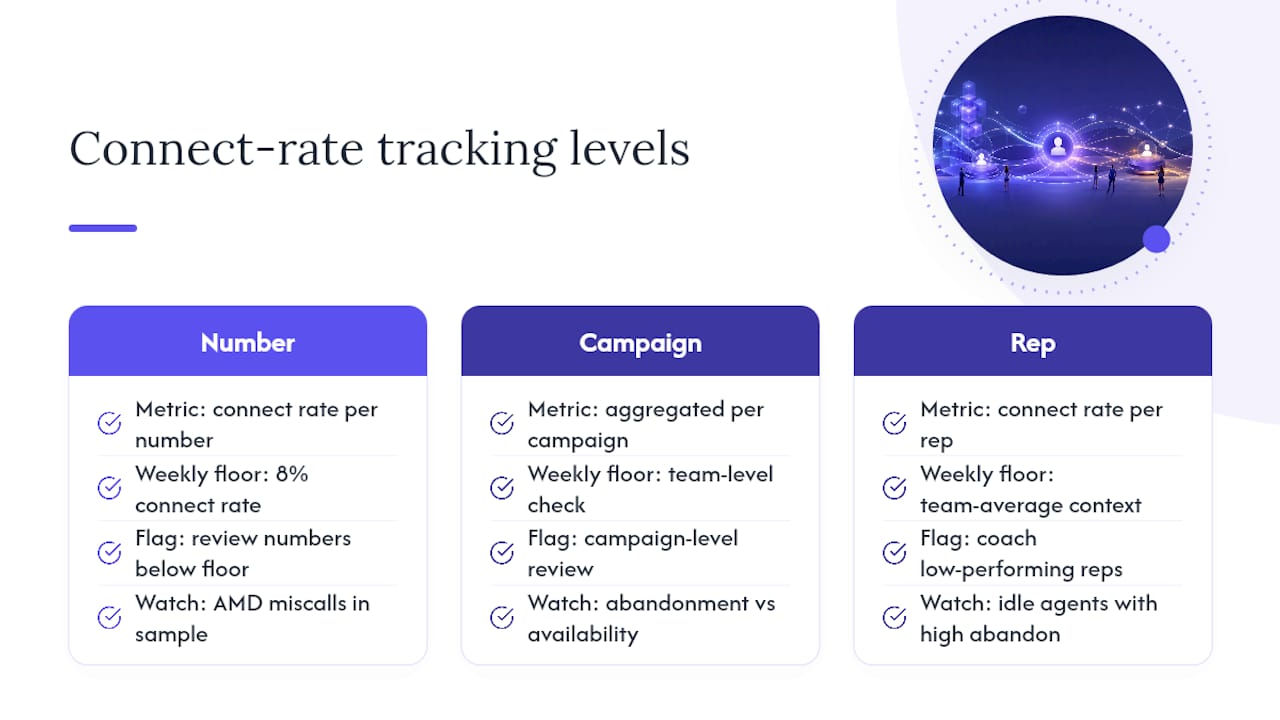
Audit AMD accuracy on a rolling basis using a manual sample, since misclassified answering machines can hide real connects inside your "no answer" bucket. Watch failed-call and dropped-call rates too. Anything above 5 percent usually points to a VoIP or carrier-routing issue rather than anything happening on the sales floor.
If you're running a predictive or power dialer, monitor abandonment rate alongside agent availability. A high abandon rate paired with idle agents means your pacing settings are miscalibrated, not that your list is bad.
When you're evaluating tools, prioritize features that support this whole approach: reputation API checks, automated number rotation, private local presence, STIR/SHAKEN support, and dashboards broken out per number rather than blended team totals. Tracking dials at this granularity is what separates teams that catch decay early from teams that only notice after a quarter's gone sideways.
Build a weekly cadence around it: Monday reputation audit, mid-week cadence check on dial volume and answer trends, Friday tuning session to decide what rotates out next week.
A Simple Workflow for Turning Recovered Numbers Into Revenue
Fixing a number's reputation only pays off if the connects that follow actually get worked. This is where a lot of teams lose the gain they just fought for: a rep connects, jots a note somewhere, and the follow-up never surfaces again. Dialed Sales was built around closing exactly that gap.
- Ten-second call logging captures customer name, outcome, and notes right after a connect, so nothing gets lost in a notebook or forgotten by end of day.
- A follow-up date set at logging time auto-surfaces on the dashboard the moment it's due, which matters most right after you've recovered a number and every connect counts double.
- Per-rep activity stats and team leaderboards map directly onto the caps and rotation discipline described above, since managers can see which reps are respecting dial limits and which are ignoring them.
- A real-world follow-up workflow looks like this: a number gets flagged Monday, rotated out and logged in the app, a prospect picks up Wednesday after rotation, the rep logs the outcome and sets a callback for Friday, and the dashboard surfaces it automatically when Friday arrives.
Connect Rate and Contact Rate Aren't the Same Metric
Connect rate measures how often a call reaches a live human, machine, or answered line at all, meaning it counts any pickup, including voicemail systems and answering machines depending on how your dialer classifies them. Contact rate is narrower: it only counts calls where you actually reached and spoke with the intended person, not a gatekeeper, not a voicemail, not a wrong number.
Confusing the two leads teams to celebrate progress that isn't there. You can raise your connect rate by fixing number reputation and still see contact rate stay flat if your list has outdated titles or wrong direct lines. Conversely, a low connect rate with a high contact-to-connect ratio might mean your number health is fine but your dial volume is simply too low to hit target conversations.
Track both separately. Connect rate tells you whether your infrastructure and reputation are healthy. Contact rate tells you whether your list and targeting are accurate. A dip in one without the other points you toward a completely different fix, and blending them into one blended "answer rate" metric hides exactly the diagnostic signal you need.
Why Carrier Networks Make or Break Your Connect Rate
Carriers now run sophisticated analytics engines that score every outbound number based on call patterns, complaint volume, and answer behavior, largely independent of what your dialer or CRM reports back to you. This means two identical sales teams running the same script and list can see wildly different results purely based on which carrier networks their numbers route through and how those numbers have behaved historically.
VoIP infrastructure adds another layer of variability. Poor routing, congested trunks, or a provider with weak peering relationships to major mobile carriers can introduce latency or dropped connections that look like a "bad list" problem but are actually a network problem. If your failed-call rate sits above 5 percent, look at your carrier or VoIP provider before you touch your CRM data.
Mobile carriers in particular have tightened enforcement around unwanted call analytics in recent years, applying machine-learning classifiers that flag patterns like rapid sequential dialing from a single number or unusually short average call durations. A number that behaves like a robocaller, even if a human is dialing it manually, gets treated like one.
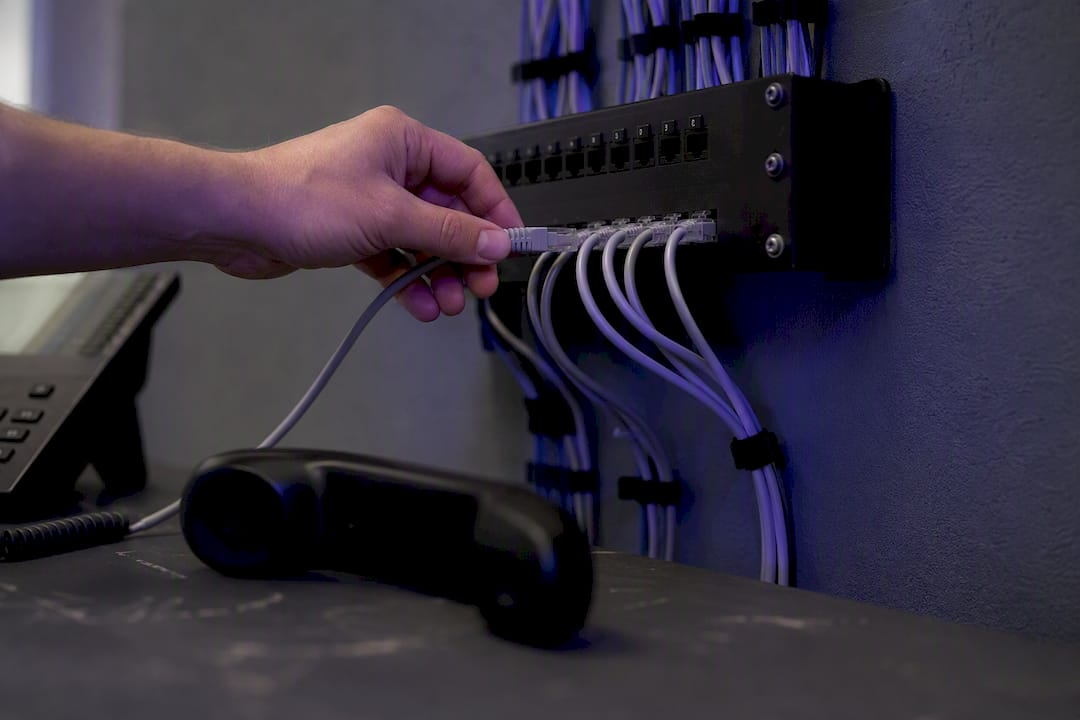
This is exactly why private local presence numbers, registered properly with CNAM and STIR/SHAKEN attestation, outperform shared pools. The carrier network is scoring the number's behavior history, not your intent, and a private pool gives you full control over that history.
Your Caller ID Is Doing More Work Than Your Script
A prospect decides whether to answer within the first second or two of seeing the screen, long before your script gets a chance to matter. That decision hinges almost entirely on what displays: a recognizable area code, a branded business name through CNAM, or a bare, unfamiliar ten-digit number with no context.
Branded calling solves the biggest piece of this. When your business name displays instead of a raw number, answer rates climb because the prospect has context before they pick up. Registering for CNAM display isn't universal across carriers yet, but where it's available, it consistently outperforms unbranded calls.
Local presence dialing, using a number that matches the prospect's area code, works on a similar psychological principle: familiarity beats caution. But it only works on clean numbers. A flagged local number performs no better than a flagged toll-free line, since the reputation problem overrides any area-code advantage.
Verify your source numbers before you ever dial through them. Tools built specifically for phone number verification catch disconnected lines, wrong carriers, and reassigned numbers before they burn a dial attempt or, worse, trigger a compliance issue.
Scripts and Training That Actually Reduce Abandonment
Call abandonment happens two ways: the prospect hangs up early, or your dialer drops the call before an agent connects. Both are fixable, and both usually trace back to preparation rather than luck.
On the script side, the first ten seconds carry disproportionate weight. Reps who open with a generic pitch instead of a specific, relevant reason for calling lose prospects fast. Training reps to lead with something that proves the call isn't random, a recent company event, a specific pain point tied to the prospect's role, keeps people on the line long enough to hear the actual offer.
Role-playing objection handling matters more than memorizing a script word for word. Reps who sound like they're reading lose credibility within seconds; reps who've internalized the structure but speak naturally hold attention far longer.
On the dialer side, abandonment often comes from predictive or power dialers over-pacing calls relative to agent availability. If your dialer connects a call before an agent is free to take it, the prospect hears silence and hangs up, and that gets logged as an abandoned call against your compliance metrics, not just a missed opportunity. Pacing settings need regular tuning against actual agent availability, not a fixed ratio set once and forgotten.
Compliance Rules That Shape Every Dial You Make
Connect rate strategy doesn't exist in a vacuum separate from compliance. The National Do Not Call Registry restricts telemarketing calls to registered numbers, and violations carry real financial penalties, so every outbound list needs a scrub against the registry before it enters rotation.
The Telephone Consumer Protection Act (TCPA) adds further restrictions around automated dialing systems and prerecorded messages, and courts have increasingly scrutinized what counts as an "automatic telephone dialing system." If your dialer uses any predictive or automated pacing, confirm your consent and disclosure practices align with current TCPA guidance for your specific use case, since the legal definitions here shift with case law and aren't static.
Attempt frequency matters for compliance, not just for connect rate optimization. Dialing the same number repeatedly in a short window can trigger harassment complaints that carriers use as a flagging signal, which loops back into the reputation problem covered earlier. The 6 to 10 attempt spread recommended for connect rate reasons also happens to be the range that keeps you clear of harassment thresholds most carriers and regulators watch for.
None of this is legal advice specific to your business. Compliance requirements vary by state and by how your dialing technology is classified, so confirm your specific setup against current federal and state rules rather than relying on general guidance.
How AI and Analytics Are Changing Connect Rate Prediction
Modern call analytics platforms now score prospects and numbers before a single dial happens, predicting the likelihood of a connect based on historical answer patterns, time of day, and even the specific carrier a prospect's number routes through. This shifts the strategy from "dial everyone the same way" to prioritizing the contacts and time windows most likely to convert.
AI-assisted dialers extend this further by adjusting pacing and number selection in real time based on live connect data rather than a fixed schedule set at the start of the day. Platforms like Sdr apply this at scale, running multiple simultaneous dial attempts and using live answer data to optimize which numbers and windows perform best for a given list.
The same AI layer helps with the AMD accuracy problem covered earlier in diagnosis. Machine learning models trained specifically to distinguish human speech patterns from answering machine greetings catch far more nuance than legacy tone-detection systems, which historically misclassified a meaningful share of real human pickups as machines.
None of this replaces the fundamentals. An AI dialer optimizing pacing on top of a pool of flagged numbers just burns those numbers faster and more efficiently. Analytics and prediction tools are a multiplier on a healthy foundation, not a substitute for fixing number reputation first.
Numbers Are Assets. Treat Them Like It.
Most sales floors still think about connect rate as a volume problem: dial more, connect more. That framing has quietly wrecked more Caller IDs than any competitor ever could. A number that took months to build trust with carriers gets burned in a week once a manager decides the fix for a slow quarter is "just dial harder."
The teams that actually recover connect rate treat numbers less like a resource to consume and more like a badge earning trust over time. My short weekly checklist: run the spam check Monday, review per-number dial counts against your cap, and sample last week's AMD calls before you plan next week's volume.
One line worth repeating to any manager watching a dashboard: your team average is hiding the number that's already dead. Measure per number, not just per team.
— Garrett
Put the Fixes Into a Workflow You'll Actually Use
Everything above works better with a system tracking it, not a spreadsheet someone forgets to update by Wednesday. Dialed Sales gives sales reps and team leads a place to log every call in ten seconds, flat, with customer name, outcome, and notes, so the reputation and rotation work you just did doesn't go to waste on a connect nobody follows up on.
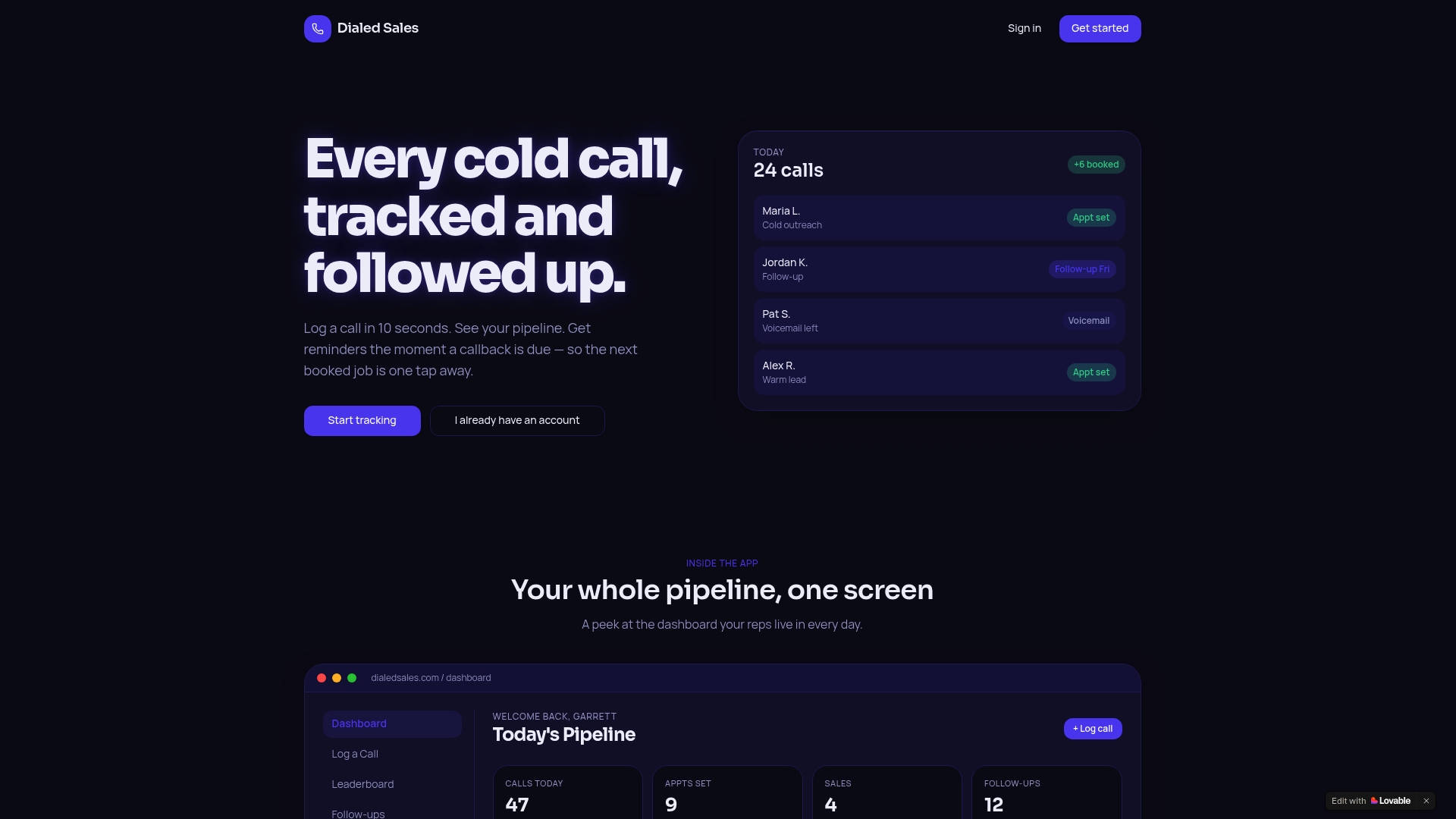
It maps directly onto the tactics in this guide: per-number activity shows up in your dashboard so you catch a burned line before it tanks a week's numbers, automatic follow-up reminders surface the moment a callback is due, and per-rep stats and leaderboards give managers a real way to enforce dial caps instead of guessing who's over-dialing. If you're rebuilding a connect rate strategy around number health and measurement, start a Dialed Sales trial and get your first week of per-number data before your next reputation audit.
Sources
- Low Connect Rate on Calls: Causes, Diagnosis & Fixes
- How to Improve Sales Call Connection Rate: The 2026 Master Guide - Nexdial
- How to Double Your Call Pickup Rates in a Zero-Trust World (2026 Guide)